Altan-Bonnet Grégoire, Germain Ronald N
Lymphocyte Biology Section, Laboratory of Immunology, National Institute of Allergy and Infectious Disease, National Institutes of Health, Bethesda, Maryland, United States of America.
PLoS Biol. 2005 Nov;3(11):e356. doi: 10.1371/journal.pbio.0030356. Epub 2005 Oct 25.
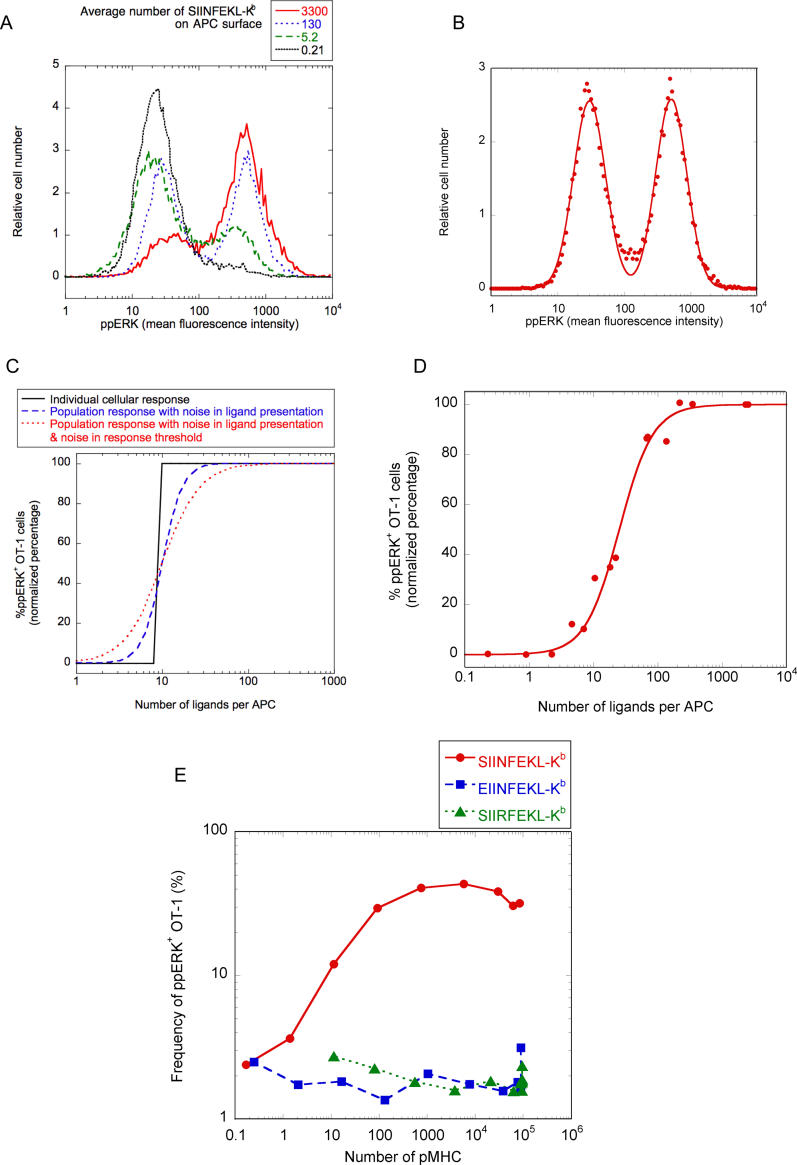
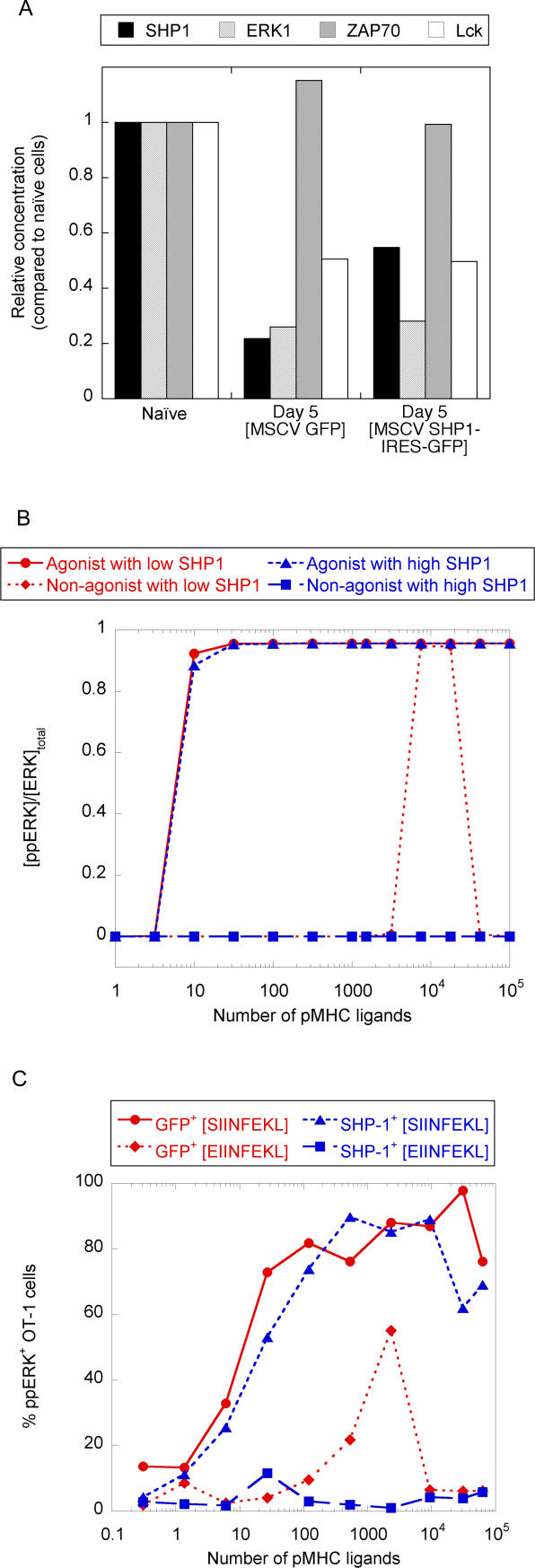
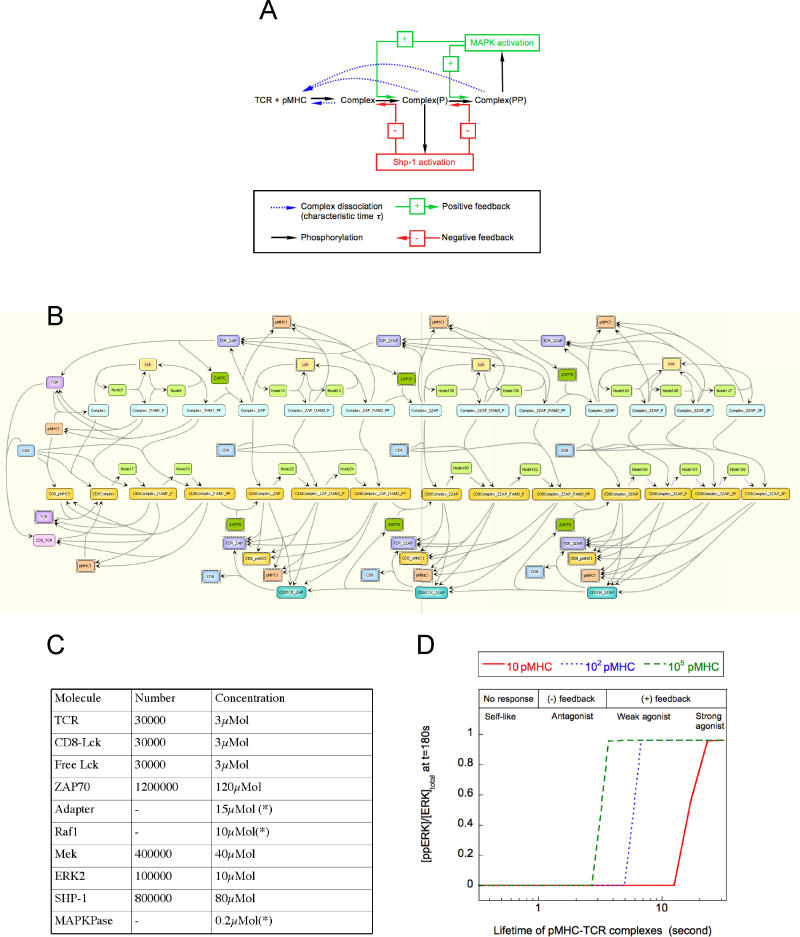
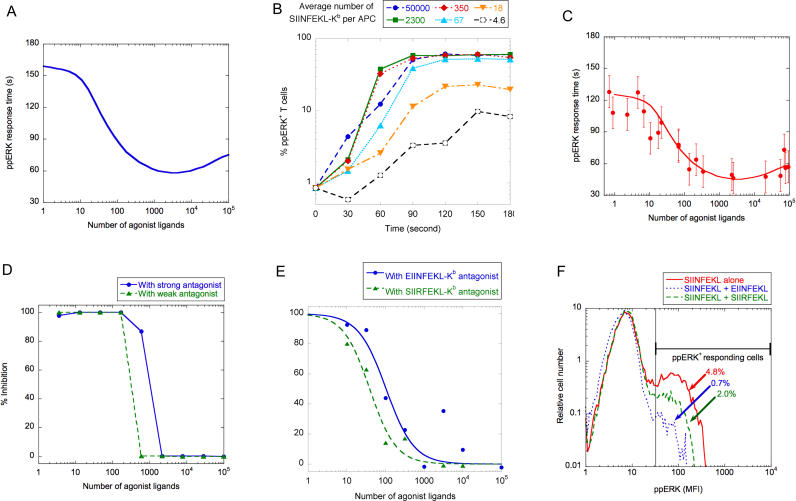
T-lymphocyte activation displays a remarkable combination of speed, sensitivity, and discrimination in response to peptide-major histocompatibility complex (pMHC) ligand engagement of clonally distributed antigen receptors (T cell receptors or TCRs). Even a few foreign pMHCs on the surface of an antigen-presenting cell trigger effective signaling within seconds, whereas 1 x 10(5)-1 x 10(6) self-pMHC ligands that may differ from the foreign stimulus by only a single amino acid fail to elicit this response. No existing model accounts for this nearly absolute distinction between closely related TCR ligands while also preserving the other canonical features of T-cell responses. Here we document the unexpected highly amplified and digital nature of extracellular signal-regulated kinase (ERK) activation in T cells. Based on this observation and evidence that competing positive- and negative-feedback loops contribute to TCR ligand discrimination, we constructed a new mathematical model of proximal TCR-dependent signaling. The model made clear that competition between a digital positive feedback based on ERK activity and an analog negative feedback involving SH2 domain-containing tyrosine phosphatase (SHP-1) was critical for defining a sharp ligand-discrimination threshold while preserving a rapid and sensitive response. Several nontrivial predictions of this model, including the notion that this threshold is highly sensitive to small changes in SHP-1 expression levels during cellular differentiation, were confirmed by experiment. These results combining computation and experiment reveal that ligand discrimination by T cells is controlled by the dynamics of competing feedback loops that regulate a high-gain digital amplifier, which is itself modulated during differentiation by alterations in the intracellular concentrations of key enzymes. The organization of the signaling network that we model here may be a prototypic solution to the problem of achieving ligand selectivity, low noise, and high sensitivity in biological responses.
T淋巴细胞激活在响应克隆分布的抗原受体(T细胞受体或TCR)与肽-主要组织相容性复合体(pMHC)配体的结合时,展现出速度、敏感性和辨别力的显著结合。即使抗原呈递细胞表面上有少数外来pMHC,也能在数秒内触发有效的信号传导,而1×10⁵ - 1×10⁶个自身pMHC配体(可能与外来刺激仅相差一个氨基酸)却无法引发这种反应。现有的模型都无法解释这种密切相关的TCR配体之间几乎绝对的区别,同时还能保留T细胞反应的其他典型特征。在这里,我们记录了T细胞中细胞外信号调节激酶(ERK)激活出人意料的高度放大和数字化性质。基于这一观察结果以及竞争的正反馈和负反馈回路有助于TCR配体辨别的证据,我们构建了一个新的近端TCR依赖性信号传导数学模型。该模型明确表明,基于ERK活性的数字化正反馈与涉及含SH2结构域的酪氨酸磷酸酶(SHP-1)的模拟负反馈之间的竞争,对于定义一个尖锐的配体辨别阈值同时保留快速和敏感的反应至关重要。该模型的几个重要预测,包括该阈值对细胞分化过程中SHP-1表达水平的微小变化高度敏感这一观点,都通过实验得到了证实。这些结合计算和实验的结果表明,T细胞的配体辨别是由调节高增益数字放大器的竞争反馈回路的动力学控制的,而该放大器本身在分化过程中会因关键酶细胞内浓度的改变而受到调节。我们在此建模的信号网络组织可能是在生物反应中实现配体选择性、低噪声和高敏感性问题的一个原型解决方案。