Fiegna Francesca, Velicer Gregory J
Max-Planck Institute for Developmental Biology, Tüebingen, Germany.
PLoS Biol. 2005 Nov;3(11):e370. doi: 10.1371/journal.pbio.0030370. Epub 2005 Nov 1.
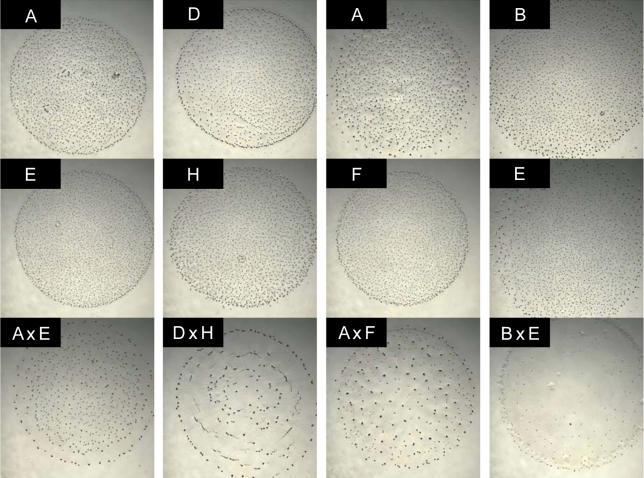
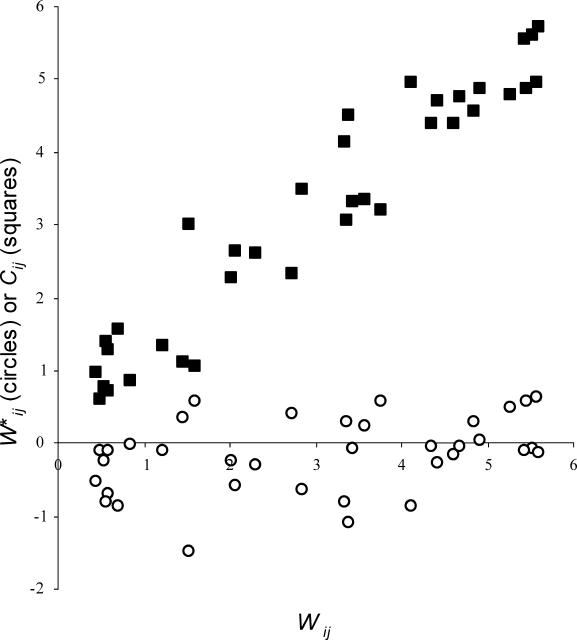
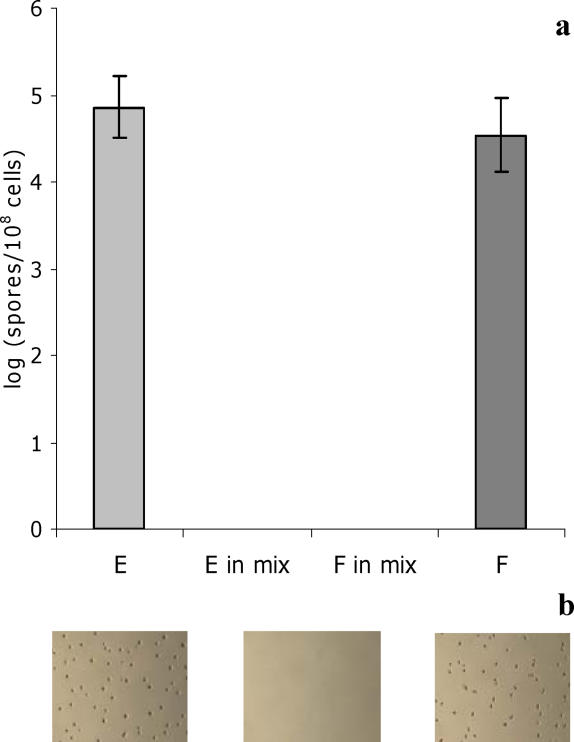
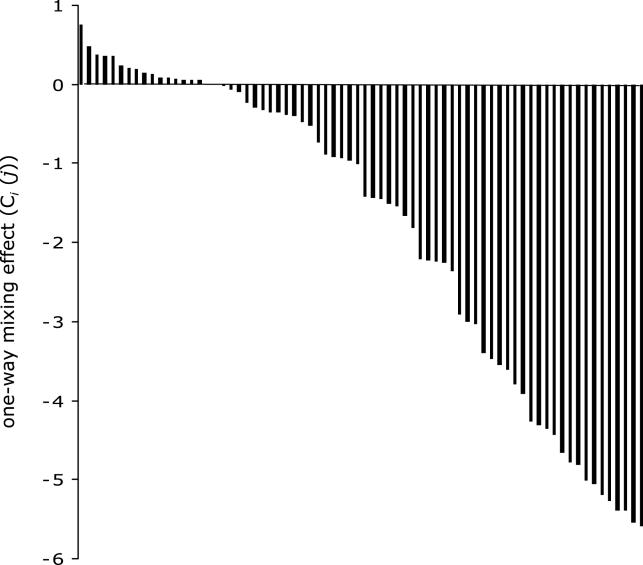
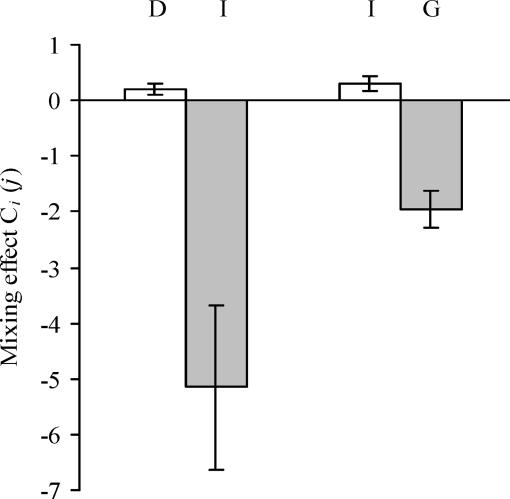
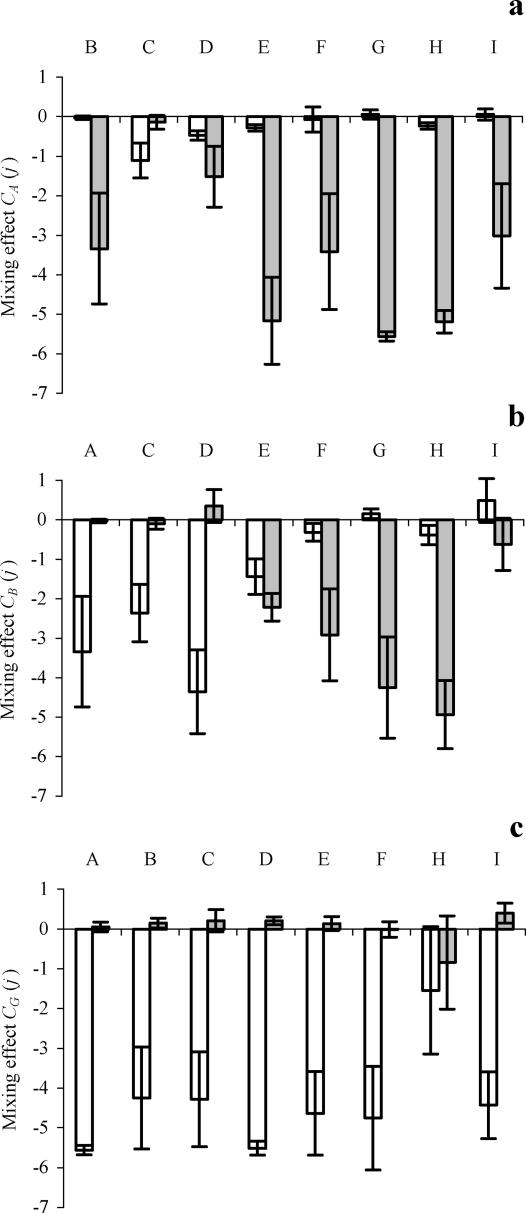
Social organisms that cooperate with some members of their own species, such as close relatives, may fail to cooperate with other genotypes of the same species. Such noncooperation may take the form of outright antagonism or social exploitation. Myxococcus xanthus is a highly social prokaryote that cooperatively develops into spore-bearing, multicellular fruiting bodies in response to starvation. Here we have characterized the nature of social interactions among nine developmentally proficient strains of M. xanthus isolated from spatially distant locations. Strains were competed against one another in all possible pairwise combinations during starvation-induced development. In most pairings, at least one competitor exhibited strong antagonism toward its partner and a majority of mixes showed bidirectional antagonism that decreased total spore production, even to the point of driving whole populations to extinction. Differential response to mixing was the primary determinant of competitive superiority rather than the sporulation efficiencies of unmixed populations. In some competitive pairings, the dominant partner sporulated more efficiently in mixed populations than in clonal isolation. This finding represents a novel form of exploitation in bacteria carried out by socially competent genotypes and is the first documentation of social exploitation among natural bacterial isolates. Patterns of antagonistic superiority among these strains form a highly linear dominance hierarchy. At least some competition pairs construct chimeric, rather than segregated, fruiting bodies. The cooperative prokaryote M. xanthus has diverged into a large number of distinct social types that cooperate with clone-mates but exhibit intense antagonism toward distinct social types of the same species. Most lengthy migration events in nature may thus result in strong antagonism between migratory and resident populations, and this antagonism may have large effects on local population sizes and dynamics. Intense mutual antagonism appears to be more prevalent in this prokaryotic social species than has been observed in the eukaryotic social slime mold Dictyostelium discoideum, which also exhibits multicellular development. The finding of several cases of facultative social exploitation among these natural isolates suggests that such exploitation may occur frequently in nature in many prokaryotes with cooperative traits.
与自身物种的某些成员(如近亲)合作的社会性生物,可能无法与同一物种的其他基因型生物合作。这种不合作可能表现为直接的对抗或社会剥削。黄色黏球菌是一种高度社会化的原核生物,在饥饿时会合作发育成产孢子的多细胞子实体。在这里,我们描述了从空间上相距遥远的地点分离出的9株发育能力良好的黄色黏球菌菌株之间社会互动的性质。在饥饿诱导发育过程中,菌株以所有可能的两两组合相互竞争。在大多数配对中,至少有一个竞争者对其伙伴表现出强烈的对抗,并且大多数组合表现出双向对抗,这降低了总孢子产量,甚至导致整个种群灭绝。对混合的差异反应是竞争优势的主要决定因素,而不是未混合种群的孢子形成效率。在一些竞争配对中,占主导地位的伙伴在混合种群中比在克隆分离中孢子形成更有效。这一发现代表了具有社会能力的基因型在细菌中进行的一种新型剥削形式,并且是自然细菌分离株之间社会剥削的首次记录。这些菌株之间的对抗优势模式形成了一个高度线性的优势等级制度。至少一些竞争对构建嵌合的而非分离的子实体。合作的原核生物黄色黏球菌已经分化成大量不同的社会类型,这些类型与克隆伙伴合作,但对同一物种的不同社会类型表现出强烈的对抗。因此,自然界中大多数漫长的迁移事件可能导致迁移种群和定居种群之间的强烈对抗,并且这种对抗可能对当地种群规模和动态产生重大影响。与同样表现出多细胞发育的真核生物社会黏菌盘基网柄菌相比,这种强烈相互对抗在这种原核生物社会物种中似乎更为普遍。在这些自然分离株中发现了几例兼性社会剥削的情况,这表明这种剥削在自然界中许多具有合作特征的原核生物中可能经常发生。