Zhu Jieqing, Jiang Xiuli, Liu Yueyong, Tien Po, Gao George F
Center For Molecular Virology, Institute of Microbiology, Chinese Academy of Sciences, Zhongguancun Beiyitiao, Beijing 100080, China.
J Mol Biol. 2005 Dec 2;354(3):601-13. doi: 10.1016/j.jmb.2005.08.078. Epub 2005 Oct 10.
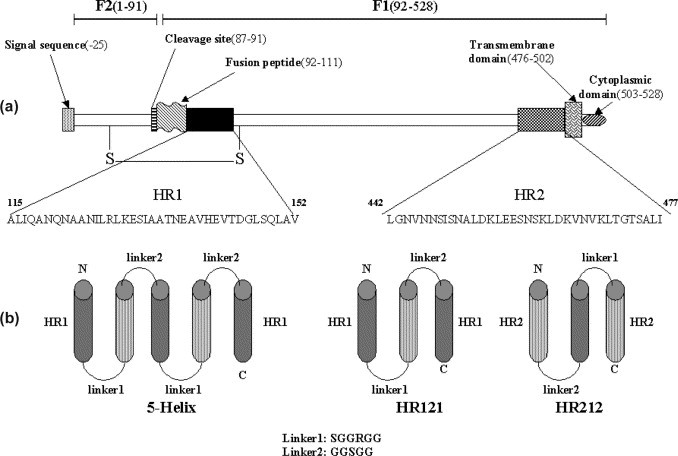
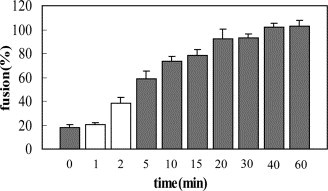
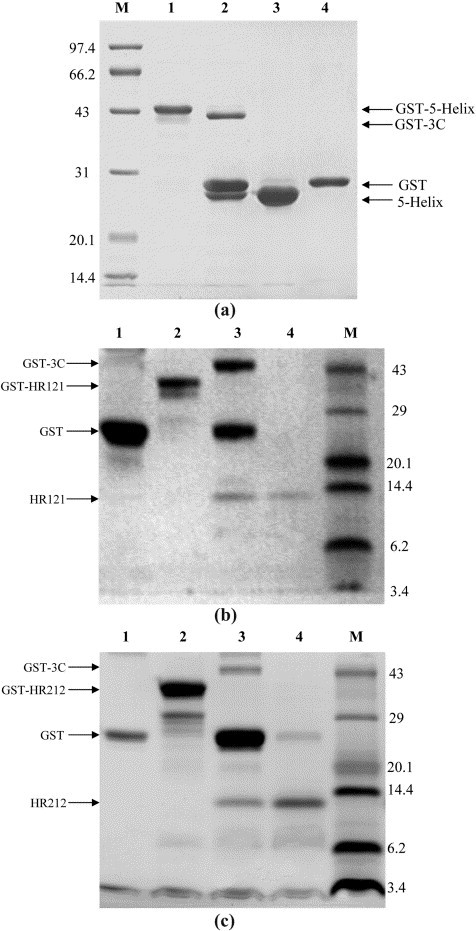
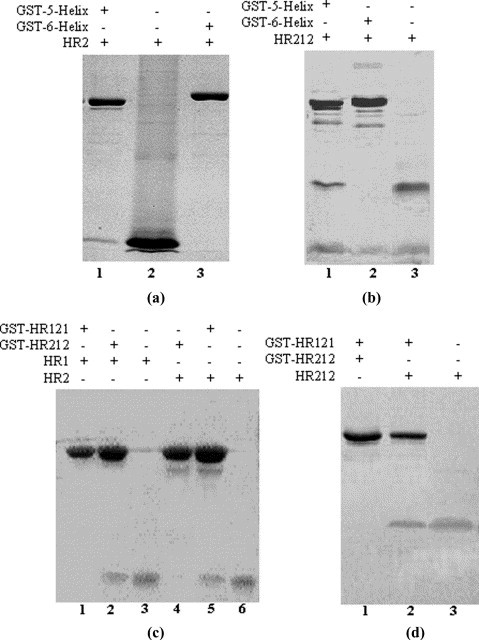
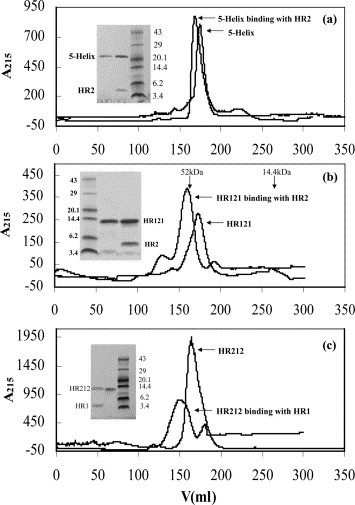
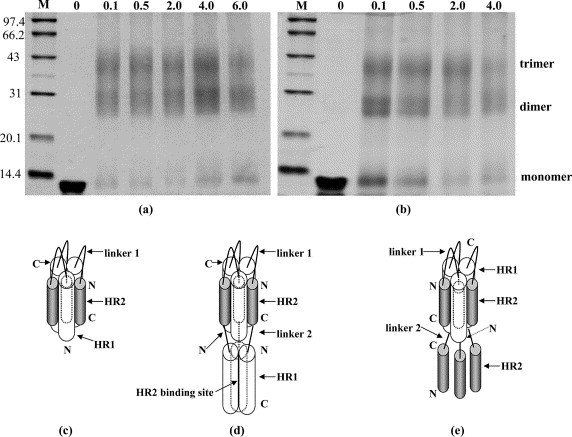
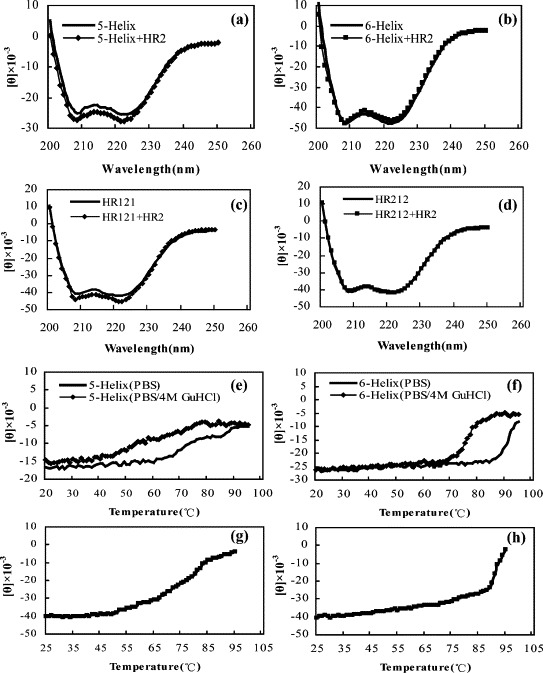
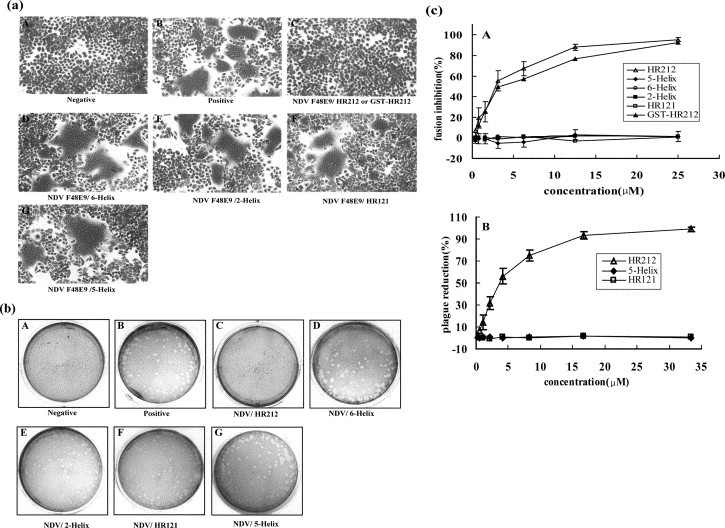
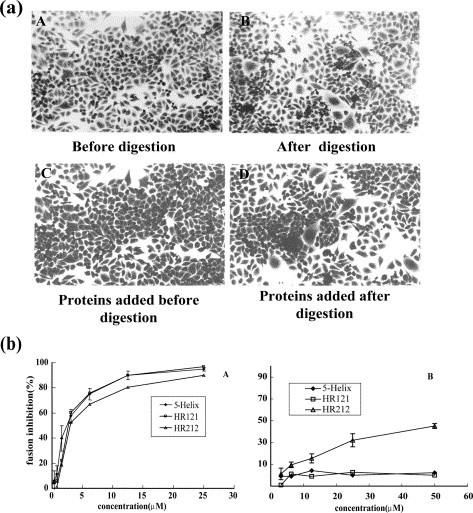
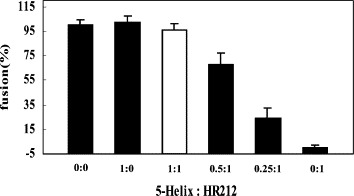
Paramyxovirus infections can be detected worldwide with some emerging zoonotic viruses and currently there are no specific therapeutic treatments or vaccines available for many of these diseases. Recent studies have demonstrated that peptides derived from the two heptad repeat regions (HR1 and HR2) of paramyxovirus fusion proteins could be used as inhibitors of virus fusion. The mechanism underlying this activity is in accordance with that of class I virus fusion proteins, of which human immunodeficiency virus (HIV) and influenza virus fusion proteins are members. For class I virus fusion proteins, the HR1 fragment binds to HR2 to form a six-helix bundle with three HR1 fragments forming the central coiled bundle surrounded by three coiled HR2 fragments in the post fusion conformational state (fusion core). It is hypothesized that the introduced exogenous HR1 or HR2 can compete against their endogenous counterparts, which results in fusion inhibition. Using Newcastle disease virus (NDV) as a model, we designed several protein inhibitors, denoted HR212 as well asHR121 and 5-Helix, which could bind the HR1 or HR2 region of fusion protein, respectively. All the proteins were expressed and purified using a GST-fusion expression system in Escherichia coli. The HR212 or GST-HR212 protein, which binds the HR1 peptide in vitro, displayed inhibitory activity against NDV-mediated cell fusion, while the HR121 and 5-Helix proteins, which bind the HR2 peptide in vitro, inhibited virus fusion from the avirulent NDV strain when added before the cleavage of the fusion protein. These results showed that the designed HR212, HR121 or 5-Helix protein could serve as specific antiviral agents. These data provide additional insight into the difference between the virulent and avirulent strains of NDV.
副粘病毒感染在全球范围内都能被检测到,其中一些是新出现的人畜共患病毒,目前许多这类疾病都没有特效治疗方法或疫苗。最近的研究表明,源自副粘病毒融合蛋白两个七肽重复区域(HR1和HR2)的肽可作为病毒融合的抑制剂。这种活性的潜在机制与I类病毒融合蛋白一致,人类免疫缺陷病毒(HIV)和流感病毒融合蛋白都属于I类病毒融合蛋白。对于I类病毒融合蛋白,HR1片段与HR2结合形成六螺旋束,在融合后构象状态(融合核心)下,三个HR1片段形成中央卷曲束,被三个卷曲的HR2片段包围。据推测,引入的外源性HR1或HR2可以与它们的内源性对应物竞争,从而导致融合抑制。以新城疫病毒(NDV)为模型,我们设计了几种蛋白抑制剂,分别命名为HR212、HR121和5 - 螺旋,它们可以分别结合融合蛋白的HR1或HR2区域。所有蛋白均使用大肠杆菌中的GST融合表达系统进行表达和纯化。在体外与HR1肽结合的HR212或GST - HR212蛋白对NDV介导的细胞融合具有抑制活性,而在体外与HR2肽结合的HR121和5 - 螺旋蛋白在融合蛋白裂解前添加时,可抑制无毒NDV株的病毒融合。这些结果表明,设计的HR212、HR121或5 - 螺旋蛋白可作为特异性抗病毒剂。这些数据为NDV强毒株和无毒株之间的差异提供了更多见解。