Altmann Markus, Hammerschmidt Wolfgang
Department of Gene Vectors, GSF-National Research Center for Environment and Health, München, Germany.
PLoS Biol. 2005 Dec;3(12):e404. doi: 10.1371/journal.pbio.0030404. Epub 2005 Nov 15.
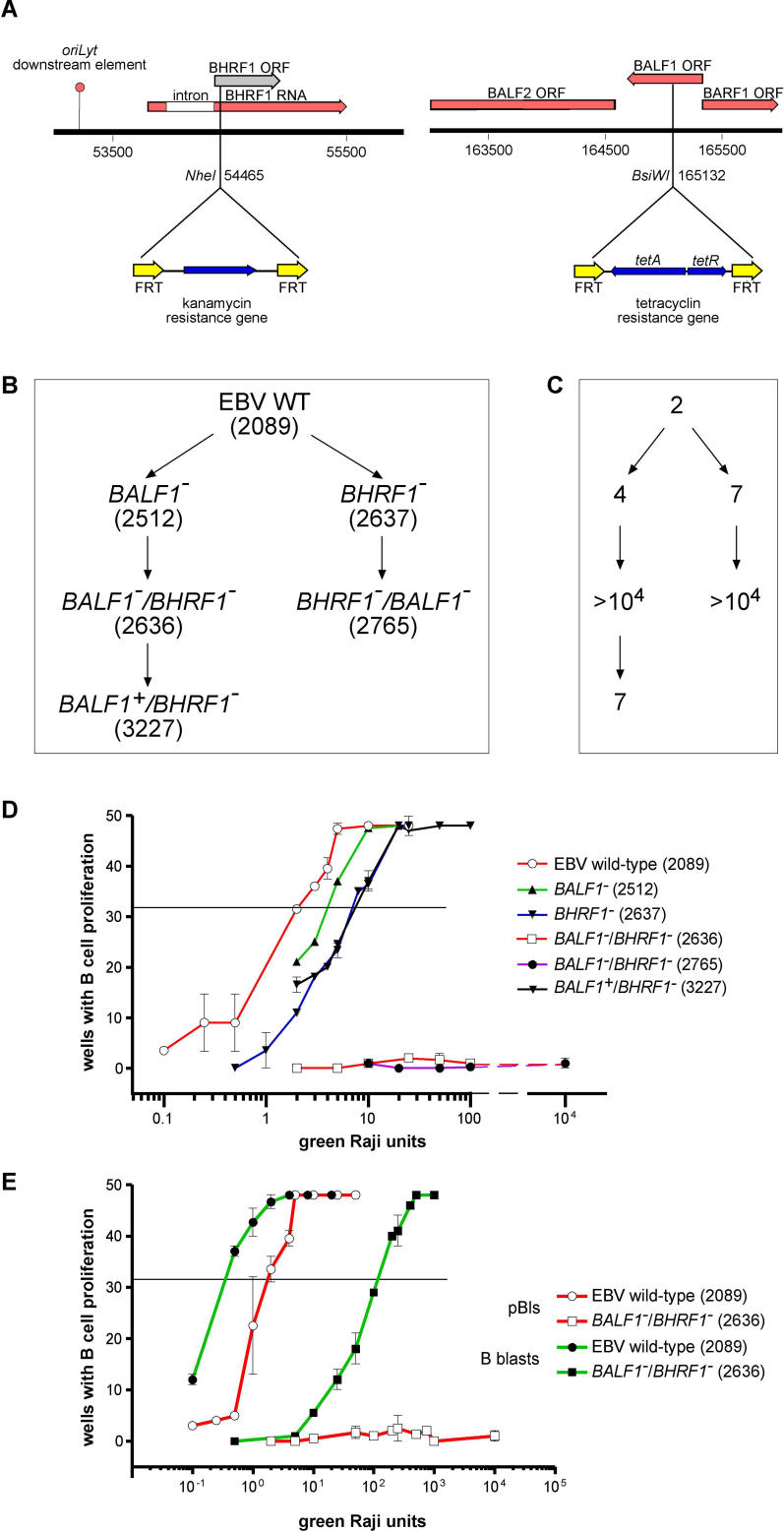
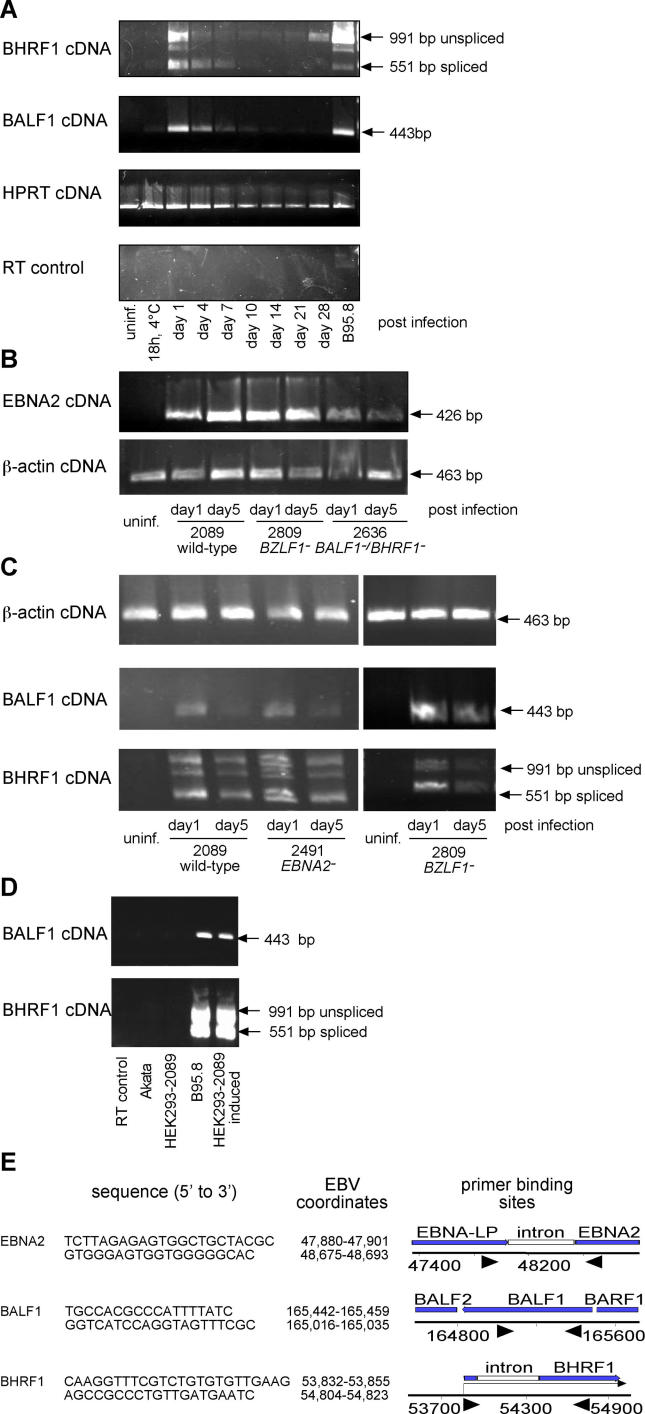
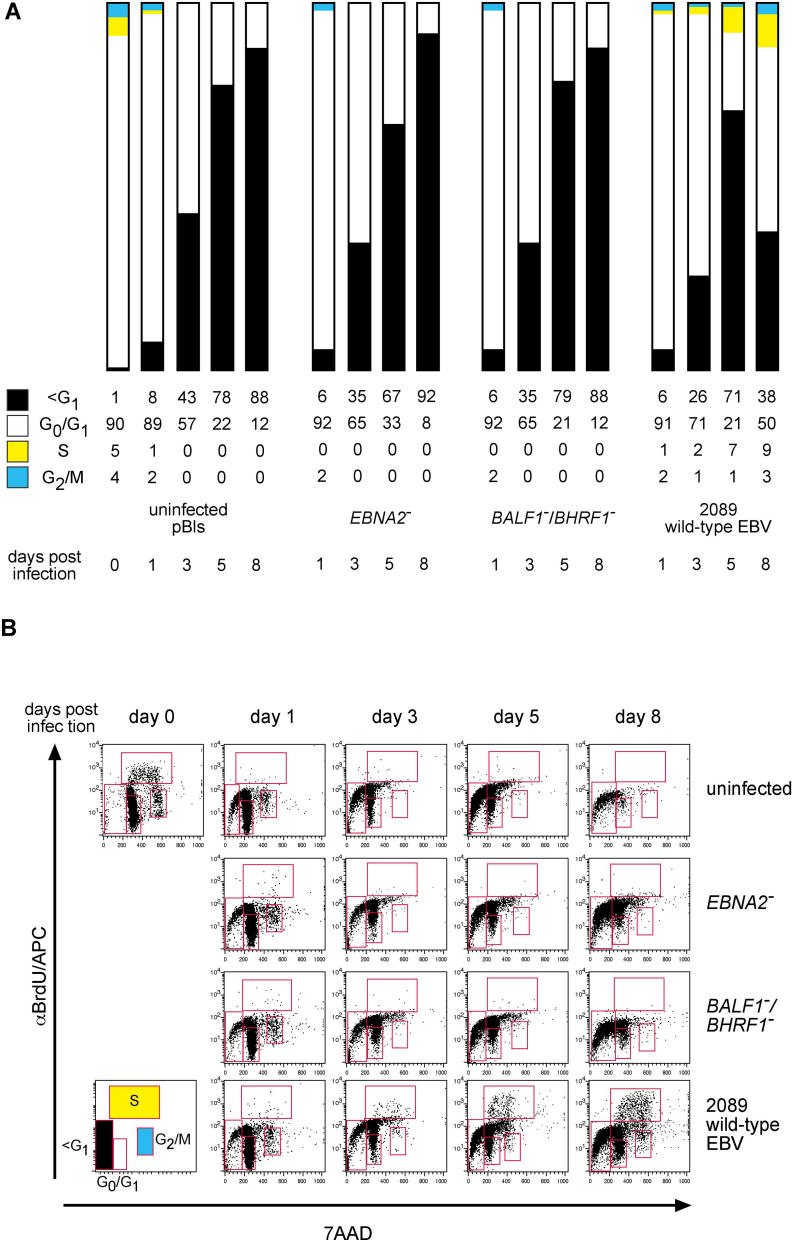
DNA viruses such as herpesviruses are known to encode homologs of cellular antiapoptotic viral Bcl-2 proteins (vBcl-2s), which protect the virus from apoptosis in its host cell during virus synthesis. Epstein-Barr virus (EBV), a human tumor virus and a prominent member of gamma-herpesviruses, infects primary resting B lymphocytes to establish a latent infection and yield proliferating, growth-transformed B cells in vitro. In these cells, 11 viral genes that contribute to cellular transformation are consistently expressed. EBV also encodes two vBcl-2 genes whose roles are unclear. Here we show that the genetic inactivation of both vBcl-2 genes disabled EBV's ability to transform primary resting B lymphocytes. Primary B cells infected with a vBcl-2-negative virus did not enter the cell cycle and died of immediate apoptosis. Apoptosis was abrogated in infected cells in which vBcl-2 genes were maximally expressed within the first 24 h postinfection. During latent infection, however, the expression of vBcl-2 genes became undetectable. Thus, both vBcl-2 homologs are essential for initial cellular transformation but become dispensable once a latent infection is established. Because long-lived, latently infected memory B cells and EBV-associated B-cell lymphomas are derived from EBV-infected proapoptotic germinal center B cells, we conclude that vBcl-2 genes are essential for the initial evasion of apoptosis in cells in vivo in which the virus establishes a latent infection or causes cellular transformation or both.
诸如疱疹病毒之类的DNA病毒已知会编码细胞抗凋亡病毒Bcl-2蛋白(vBcl-2)的同源物,这些同源物在病毒合成过程中保护病毒免受宿主细胞凋亡的影响。爱泼斯坦-巴尔病毒(EBV)是一种人类肿瘤病毒,也是γ-疱疹病毒的重要成员,它感染原发性静止B淋巴细胞以建立潜伏感染,并在体外产生增殖的、生长转化的B细胞。在这些细胞中,11个有助于细胞转化的病毒基因持续表达。EBV还编码两个vBcl-2基因,其作用尚不清楚。在这里,我们表明两个vBcl-2基因的基因失活使EBV转化原发性静止B淋巴细胞的能力丧失。感染vBcl-2阴性病毒的原代B细胞未进入细胞周期,并因立即凋亡而死亡。在感染后最初24小时内vBcl-2基因最大程度表达的感染细胞中,凋亡被消除。然而,在潜伏感染期间,vBcl-2基因的表达变得无法检测到。因此,两个vBcl-2同源物对于初始细胞转化至关重要,但一旦建立潜伏感染就变得可有可无。由于长寿的、潜伏感染的记忆B细胞和EBV相关的B细胞淋巴瘤源自EBV感染的促凋亡生发中心B细胞,我们得出结论,vBcl-2基因对于病毒在体内建立潜伏感染或导致细胞转化或两者兼而有之的细胞中最初逃避凋亡至关重要。