Zhang Haibo, Lee Ju Youn, Tian Bin
Department of Biochemistry and Molecular Biology, New Jersey Medical School, University of Medicine and Dentistry of New Jersey, 185 South Orange Avenue, Newark, NJ 07101-1709, USA.
Genome Biol. 2005;6(12):R100. doi: 10.1186/gb-2005-6-12-r100. Epub 2005 Nov 28.
Alternative polyadenylation is one of the mechanisms in human cells that give rise to a variety of transcripts from a single gene. More than half of the human genes have multiple polyadenylation sites (poly(A) sites), leading to variable mRNA and protein products. Previous studies of individual genes have indicated that alternative polyadenylation could occur in a tissue-specific manner.
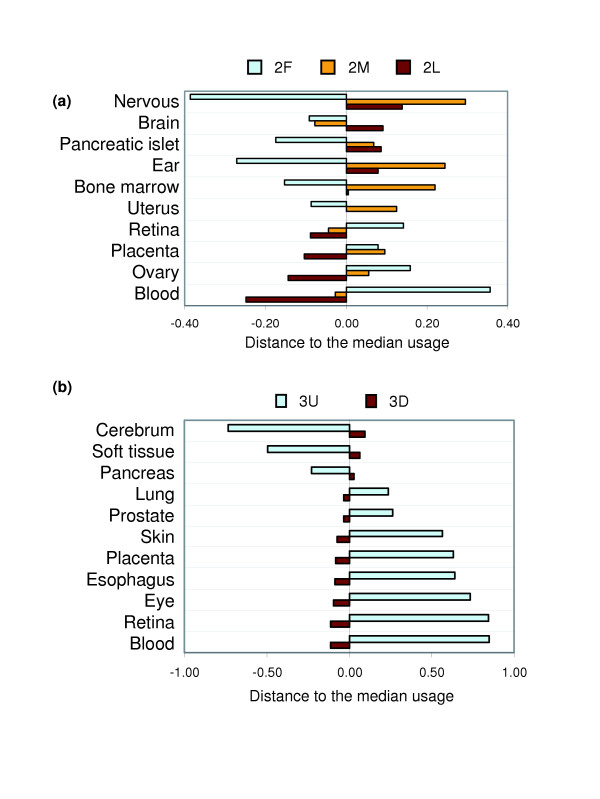
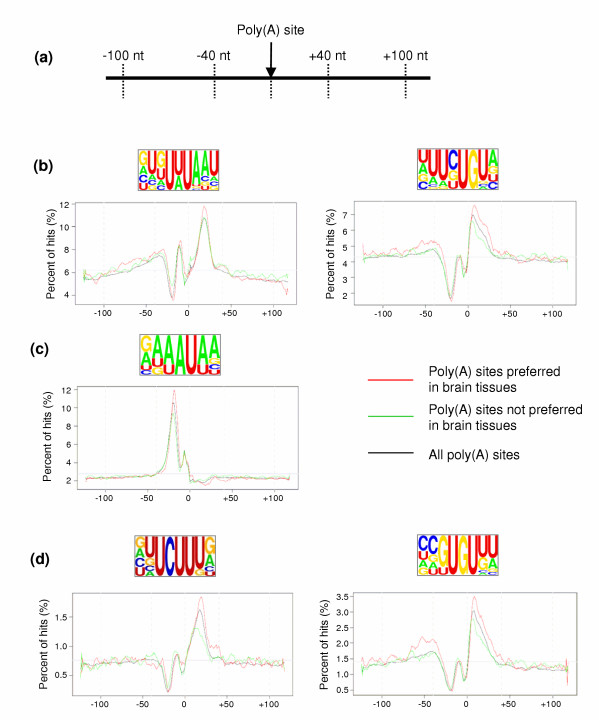
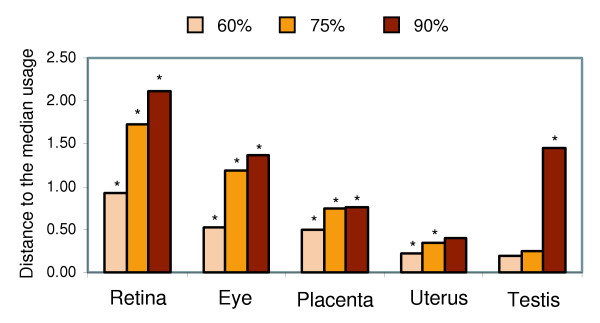
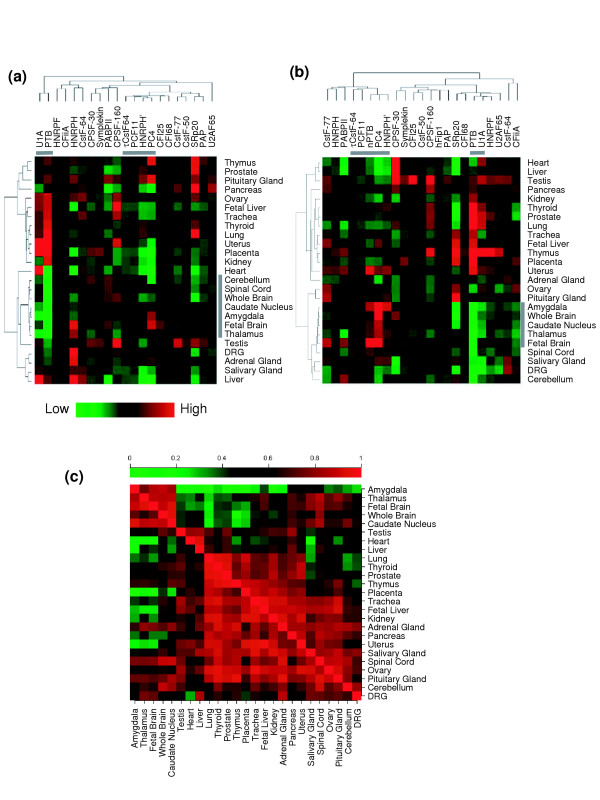
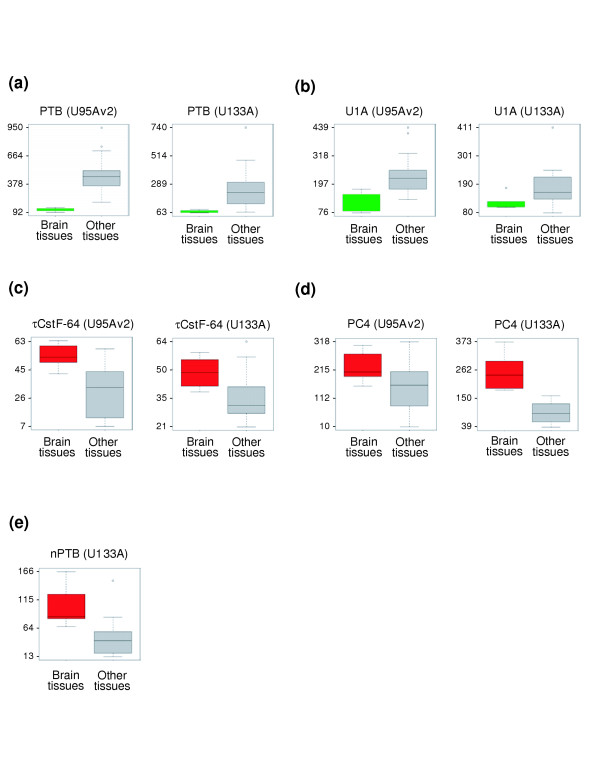
We set out to systematically investigate the occurrence and mechanism of alternative polyadenylation in different human tissues using bioinformatic approaches. Using expressed sequence tag (EST) data, we investigated 42 distinct tissue types. We found that several tissues tend to use poly(A) sites that are biased toward certain locations of a gene, such as sites located in introns or internal exons, and various sites in the exon located closest to the 3' end. We also identified several tissues, including eye, retina and placenta, that tend to use poly(A) sites not frequently used in other tissues. By exploring microarray expression data, we analyzed over 20 genes whose protein products are involved in the process or regulation of mRNA polyadenylation. Several brain tissues showed high concordance of gene expression of these genes with each other, but low concordance with other tissue types. By comparing genomic regions surrounding poly(A) sites preferentially used in brain tissues with those in other tissues, we identified several cis-regulatory elements that were significantly associated with brain-specific poly(A) sites.
Our results indicate that there are systematic differences in poly(A) site usage among human tissues, and both trans-acting factors and cis-regulatory elements may be involved in regulating alternative polyadenylation in different tissues.
可变聚腺苷酸化是人类细胞中一种可使单个基因产生多种转录本的机制。超过半数的人类基因具有多个聚腺苷酸化位点(poly(A)位点),从而导致可变的mRNA和蛋白质产物。先前对单个基因的研究表明,可变聚腺苷酸化可能以组织特异性的方式发生。
我们着手使用生物信息学方法系统地研究不同人类组织中可变聚腺苷酸化的发生情况及机制。利用表达序列标签(EST)数据,我们研究了42种不同的组织类型。我们发现,一些组织倾向于使用偏向基因特定位置的poly(A)位点,比如位于内含子或内部外显子中的位点,以及最靠近3'端外显子中的各种位点。我们还鉴定出了几种组织,包括眼睛、视网膜和胎盘,它们倾向于使用其他组织中不常用的poly(A)位点。通过探索微阵列表达数据,我们分析了20多个其蛋白质产物参与mRNA聚腺苷酸化过程或调控的基因。几种脑组织显示出这些基因之间较高的基因表达一致性,但与其他组织类型的一致性较低。通过比较脑组织中优先使用的poly(A)位点周围的基因组区域与其他组织中的区域,我们鉴定出了几个与脑特异性poly(A)位点显著相关的顺式调控元件。
我们的结果表明,人类组织之间在poly(A)位点的使用上存在系统性差异,并且反式作用因子和顺式调控元件可能都参与了不同组织中可变聚腺苷酸化的调控。