Saban Marcia R, Hellmich Helen L, Turner Mary, Nguyen Ngoc-Bich, Vadigepalli Rajanikanth, Dyer David W, Hurst Robert E, Centola Michael, Saban Ricardo
Department of Physiology, The University Oklahoma Health Sciences Center, Oklahoma City, USA.
BMC Physiol. 2006 Jan 18;6:1. doi: 10.1186/1472-6793-6-1.
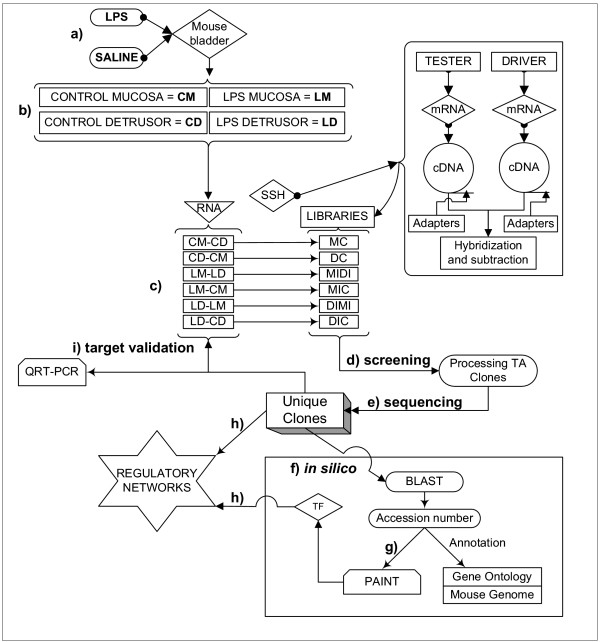
An organ such as the bladder consists of complex, interacting set of tissues and cells. Inflammation has been implicated in every major disease of the bladder, including cancer, interstitial cystitis, and infection. However, scanty is the information about individual detrusor and urothelium transcriptomes in response to inflammation. Here, we used suppression subtractive hybridizations (SSH) to determine bladder tissue- and disease-specific genes and transcriptional regulatory elements (TRE)s. Unique TREs and genes were assembled into putative networks.
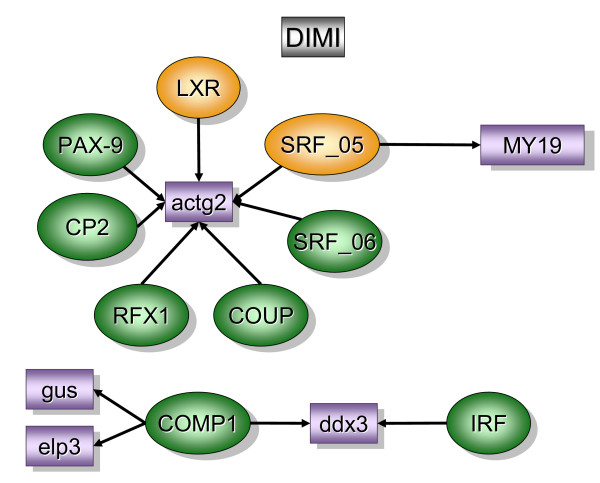
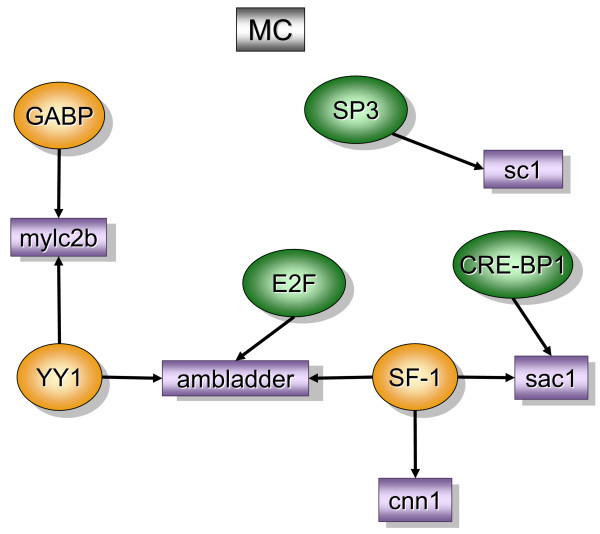
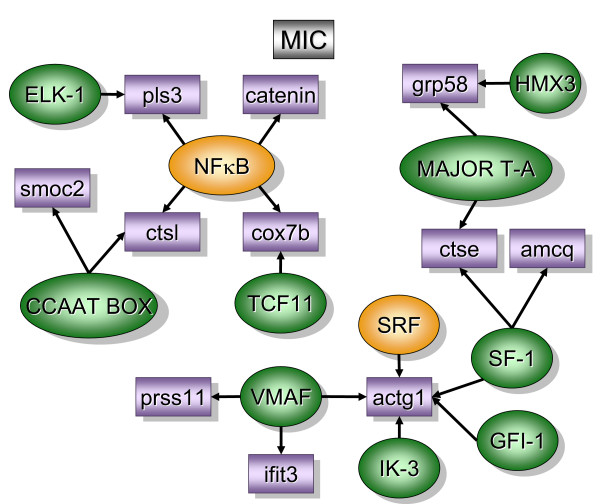
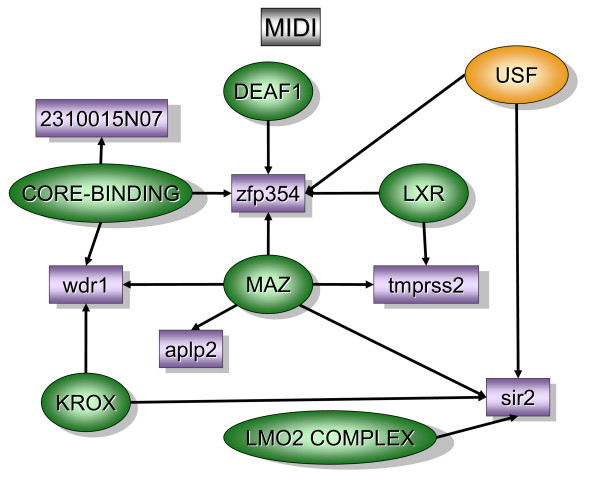
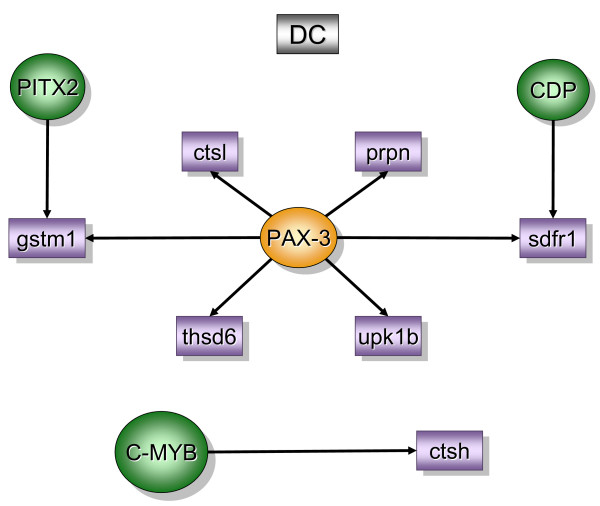
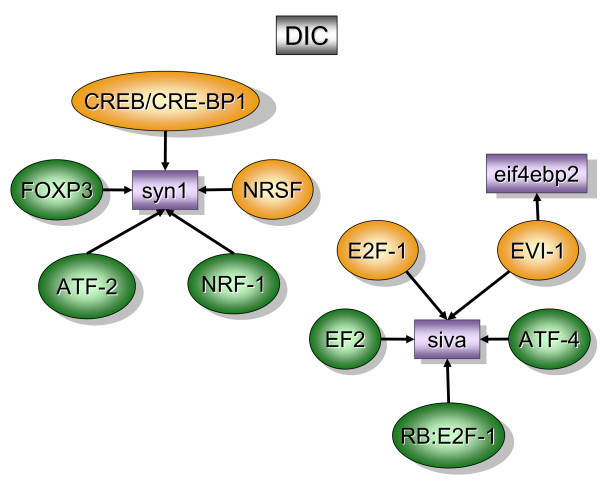
It was found that the control bladder mucosa presented regulatory elements driving genes such as myosin light chain phosphatase and calponin 1 that influence the smooth muscle phenotype. In the control detrusor network the Pax-3 TRE was significantly over-represented. During development, the Pax-3 transcription factor (TF) maintains progenitor cells in an undifferentiated state whereas, during inflammation, Pax-3 was suppressed and genes involved in neuronal development (synapsin I) were up-regulated. Therefore, during inflammation, an increased maturation of neural progenitor cells in the muscle may underlie detrusor instability. NF-kappaB was specifically over-represented in the inflamed mucosa regulatory network. When the inflamed detrusor was compared to control, two major pathways were found, one encoding synapsin I, a neuron-specific phosphoprotein, and the other an important apoptotic protein, siva. In response to LPS-induced inflammation, the liver X receptor was over-represented in both mucosa and detrusor regulatory networks confirming a role for this nuclear receptor in LPS-induced gene expression.
A new approach for understanding bladder muscle-urothelium interaction was developed by assembling SSH, real time PCR, and TRE analysis results into regulatory networks. Interestingly, some of the TREs and their downstream transcripts originally involved in organogenesis and oncogenesis were also activated during inflammation. The latter represents an additional link between inflammation and cancer. The regulatory networks represent key targets for development of novel drugs targeting bladder diseases.
诸如膀胱这样的器官由复杂的、相互作用的组织和细胞组成。炎症与膀胱的每一种主要疾病都有关联,包括癌症、间质性膀胱炎和感染。然而,关于个体逼尿肌和尿路上皮转录组对炎症反应的信息却很少。在此,我们使用抑制性消减杂交(SSH)来确定膀胱组织和疾病特异性基因以及转录调控元件(TRE)。独特的TRE和基因被组装成假定的网络。
发现对照膀胱黏膜呈现出驱动诸如肌球蛋白轻链磷酸酶和钙调蛋白1等影响平滑肌表型的基因的调控元件。在对照逼尿肌网络中,Pax - 3 TRE显著富集。在发育过程中,Pax - 3转录因子(TF)使祖细胞维持在未分化状态,而在炎症期间,Pax - 3被抑制,参与神经元发育的基因(突触素I)上调。因此,在炎症期间,肌肉中神经祖细胞成熟增加可能是逼尿肌不稳定的基础。NF - κB在炎症黏膜调控网络中特异性富集。当将炎症逼尿肌与对照进行比较时,发现了两条主要途径,一条编码突触素I,一种神经元特异性磷蛋白,另一条编码一种重要的凋亡蛋白siva。响应脂多糖诱导的炎症,肝脏X受体在黏膜和逼尿肌调控网络中均显著富集,证实了该核受体在脂多糖诱导的基因表达中的作用。
通过将SSH、实时PCR和TRE分析结果组装成调控网络,开发了一种理解膀胱肌肉 - 尿路上皮相互作用的新方法。有趣的是,一些最初参与器官发生和肿瘤发生的TRE及其下游转录本在炎症期间也被激活。后者代表了炎症与癌症之间的另一个联系。这些调控网络是开发针对膀胱疾病的新型药物的关键靶点。