Xia Xu-Gang, Zhou Hongxia, Samper Enrique, Melov Simon, Xu Zuoshang
Department of Biochemistry and Molecular Pharmacology, University of Massachusetts Medical School, Worcester, Massachusetts, United States of America.
PLoS Genet. 2006 Jan;2(1):e10. doi: 10.1371/journal.pgen.0020010. Epub 2006 Jan 27.
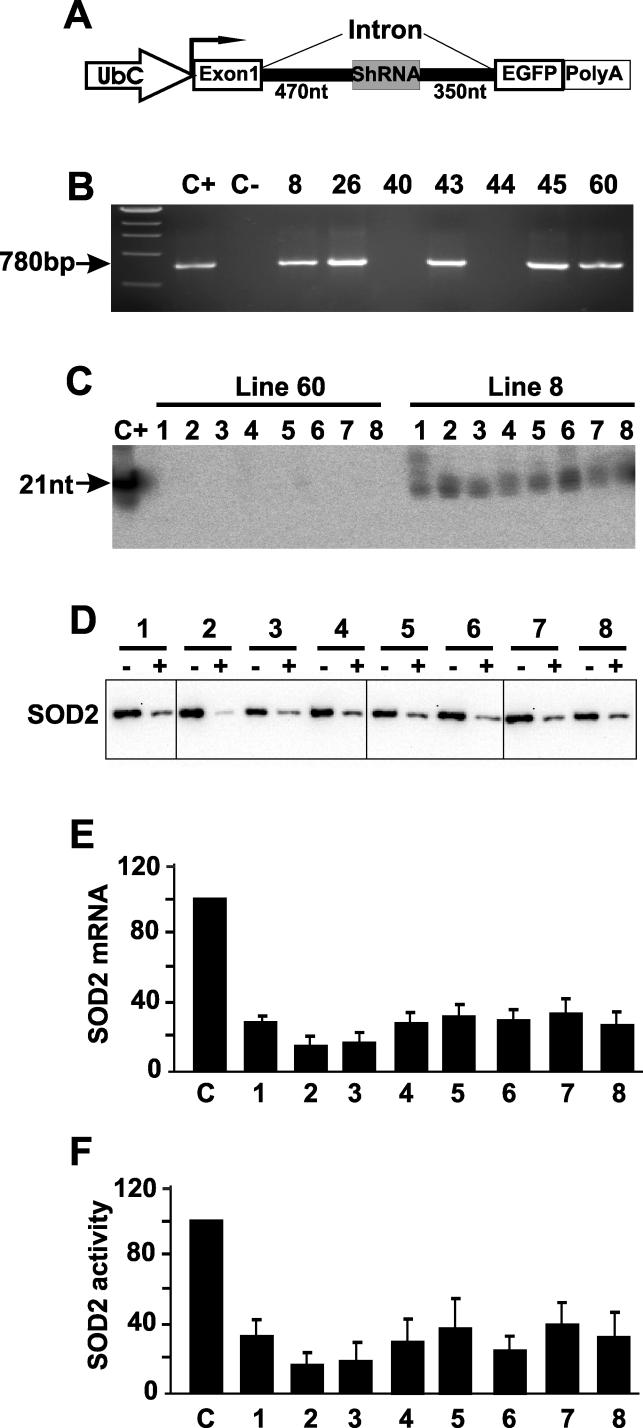
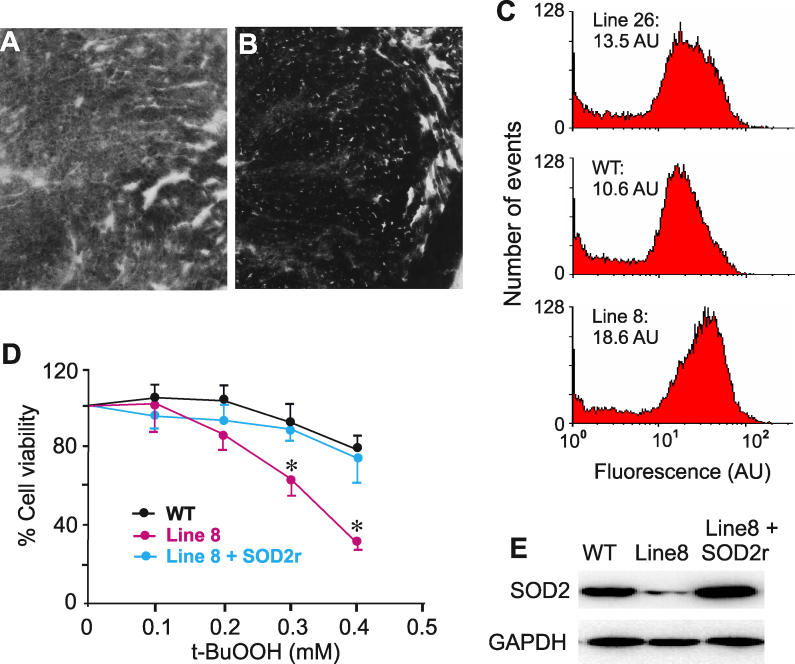
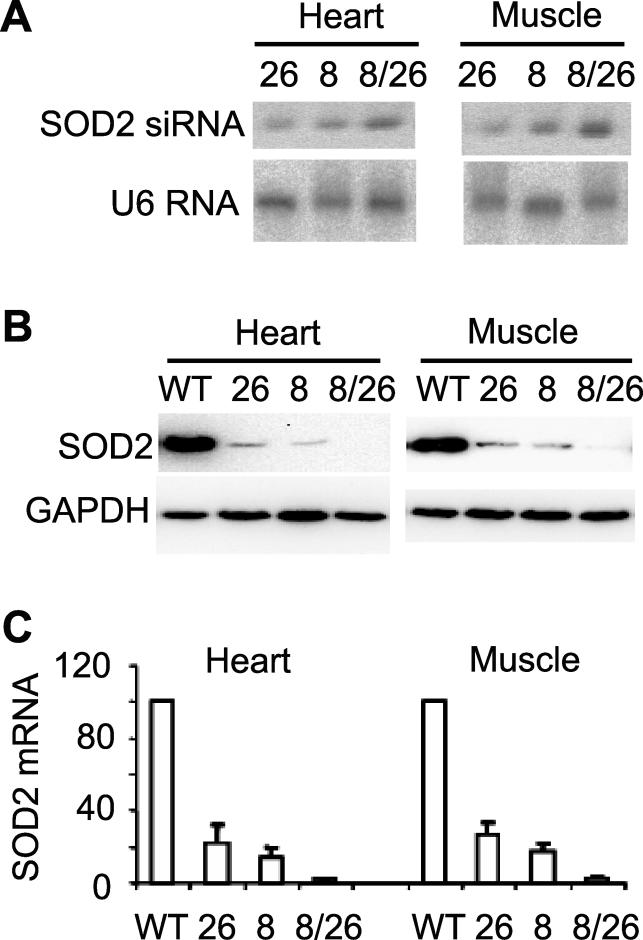
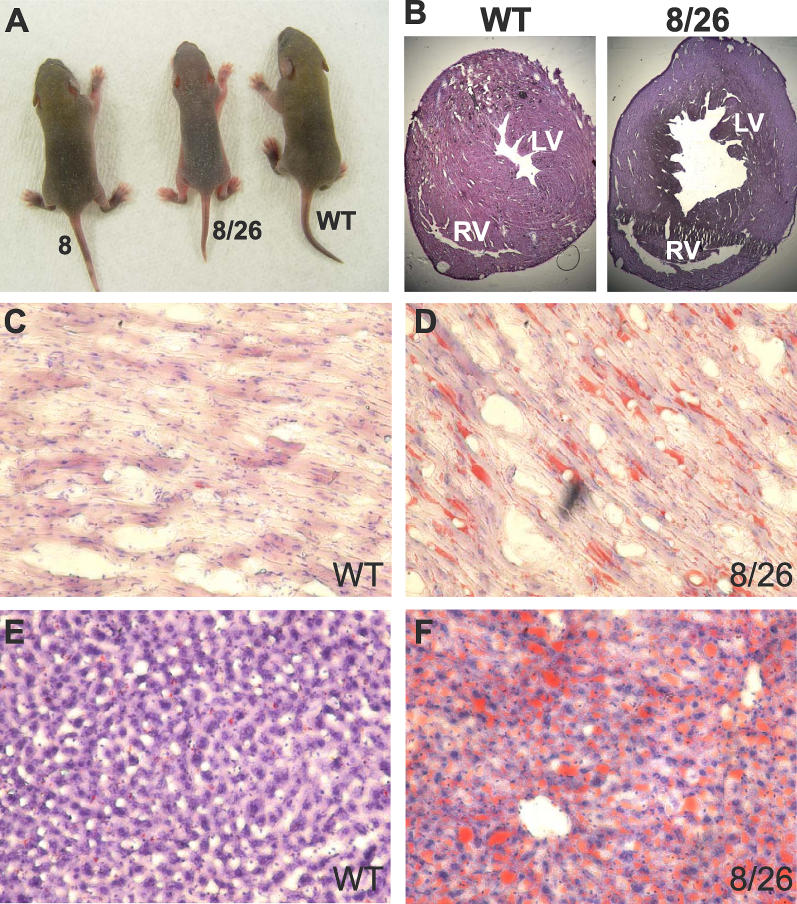
RNA interference (RNAi) has been used increasingly for reverse genetics in invertebrates and mammalian cells, and has the potential to become an alternative to gene knockout technology in mammals. Thus far, only RNA polymerase III (Pol III)-expressed short hairpin RNA (shRNA) has been used to make shRNA-expressing transgenic mice. However, widespread knockdown and induction of phenotypes of gene knockout in postnatal mice have not been demonstrated. Previous studies have shown that Pol II synthesizes micro RNAs (miRNAs)-the endogenous shRNAs that carry out gene silencing function. To achieve efficient gene knockdown in mammals and to generate phenotypes of gene knockout, we designed a construct in which a Pol II (ubiquitin C) promoter drove the expression of an shRNA with a structure that mimics human miRNA miR-30a. Two transgenic lines showed widespread and sustained shRNA expression, and efficient knockdown of the target gene Sod2. These mice were viable but with phenotypes of SOD2 deficiency. Bigenic heterozygous mice generated by crossing these two lines showed nearly undetectable target gene expression and phenotypes consistent with the target gene knockout, including slow growth, fatty liver, dilated cardiomyopathy, and premature death. This approach opens the door of RNAi to a wide array of well-established Pol II transgenic strategies and offers a technically simpler, cheaper, and quicker alternative to gene knockout by homologous recombination for reverse genetics in mice and other mammalian species.
RNA干扰(RNAi)在无脊椎动物和哺乳动物细胞的反向遗传学研究中应用越来越广泛,并且有潜力成为哺乳动物基因敲除技术的替代方法。到目前为止,只有RNA聚合酶III(Pol III)表达的短发夹RNA(shRNA)被用于制作表达shRNA的转基因小鼠。然而,在出生后小鼠中尚未证明该方法能广泛敲低基因并诱导基因敲除的表型。先前的研究表明,Pol II可合成微小RNA(miRNA),即具有基因沉默功能的内源性shRNA。为了在哺乳动物中实现有效的基因敲低并产生基因敲除的表型,我们设计了一种构建体,其中Pol II(泛素C)启动子驱动一种具有模仿人类miRNA miR - 30a结构的shRNA的表达。两个转基因品系显示出广泛且持续的shRNA表达,并有效敲低了靶基因Sod2。这些小鼠能够存活,但具有SOD2缺乏的表型。通过将这两个品系杂交产生的双基因杂合小鼠显示出几乎检测不到的靶基因表达,并且具有与靶基因敲除一致的表型,包括生长缓慢、脂肪肝、扩张型心肌病和过早死亡。这种方法为RNAi打开了通往一系列成熟的Pol II转基因策略的大门,并为小鼠和其他哺乳动物物种的反向遗传学研究提供了一种技术上更简单、更便宜且更快的同源重组基因敲除替代方法。