Plante Elena, Holland Scott K, Schmithorst Vince J
The University of Arizona, Tucson, AZ, USA.
Brain Lang. 2006 Jun;97(3):332-42. doi: 10.1016/j.bandl.2005.12.004. Epub 2006 Feb 7.
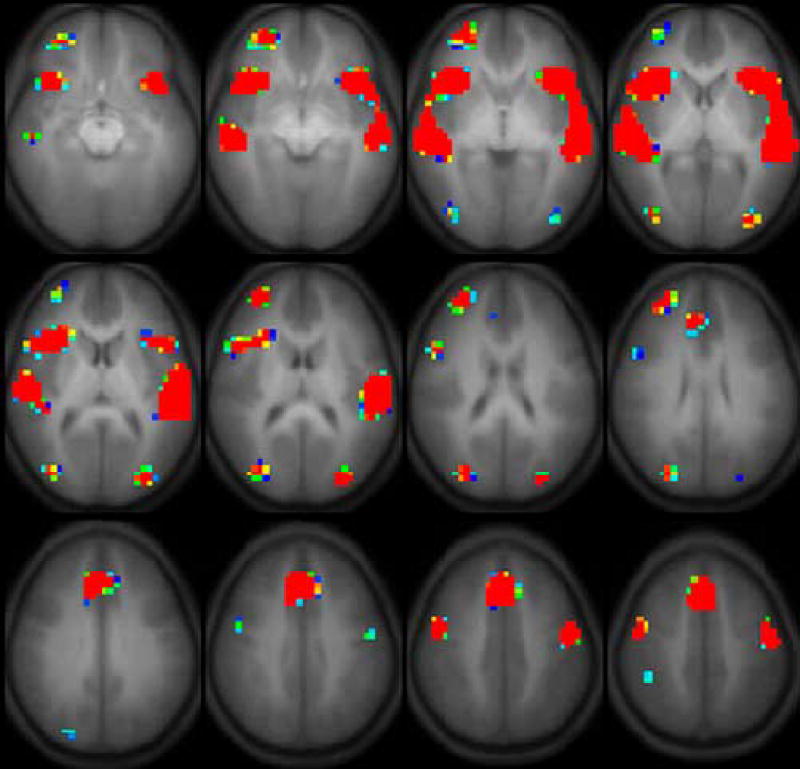
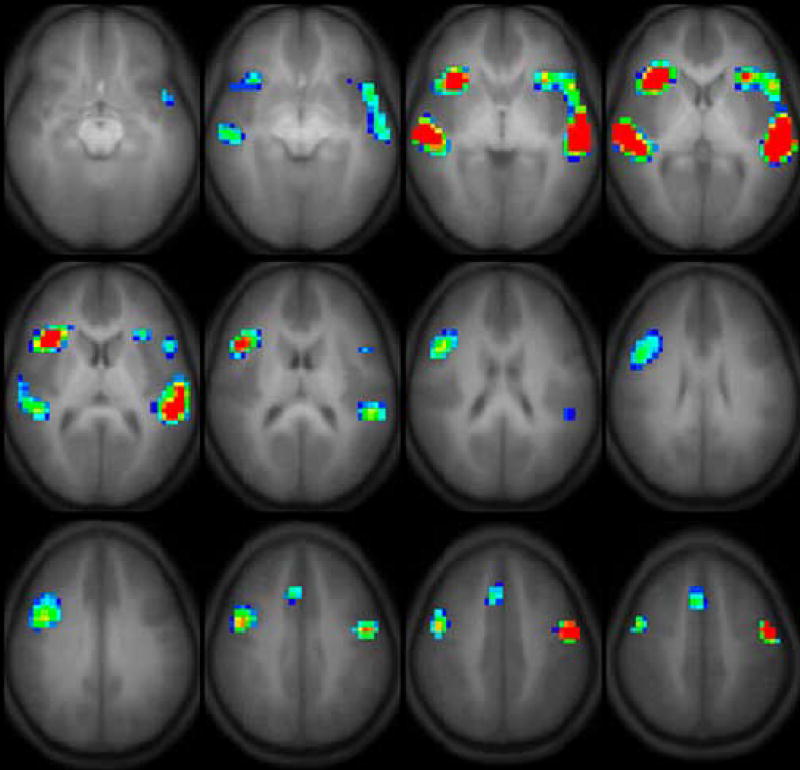
Prosodic information in the speech signal carries information about linguistic structure as well as emotional content. Although children are known to use prosodic information from infancy onward to assist linguistic decoding, the brain correlates of this skill in childhood have not yet been the subject of study. Brain activation associated with processing of linguistic prosody was examined in a study of 284 normally developing children between the ages of 5 and 18 years. Children listened to low-pass filtered sentences and were asked to detect those that matched a target sentence. fMRI scanning revealed multiple regions of activation that predicted behavioral performance, independent of age-related changes in activation. Likewise, age-related changes in task activation were found that were independent of differences in task accuracy. The overall pattern of activation is interpreted in light of task demands and factors that may underlie age-related changes in task performance.
语音信号中的韵律信息既携带有关语言结构的信息,也携带情感内容的信息。虽然已知儿童从婴儿期起就利用韵律信息来辅助语言解码,但童年期这项技能的大脑关联尚未成为研究对象。在一项对284名年龄在5至18岁之间正常发育儿童的研究中,对与语言韵律处理相关的大脑激活情况进行了检查。儿童听低通滤波后的句子,并被要求检测出与目标句子匹配的句子。功能磁共振成像扫描显示,多个激活区域可预测行为表现,且与激活的年龄相关变化无关。同样,发现了与任务激活相关的年龄变化,这些变化与任务准确性的差异无关。根据任务要求以及可能构成任务表现年龄相关变化基础的因素,对激活的总体模式进行了解释。