Bai Yan, Sanderson Michael J
Department of Physiology, University of Massachusetts Medical School, Worcester, MA 01655, USA.
Respir Res. 2006 Feb 23;7(1):34. doi: 10.1186/1465-9921-7-34.
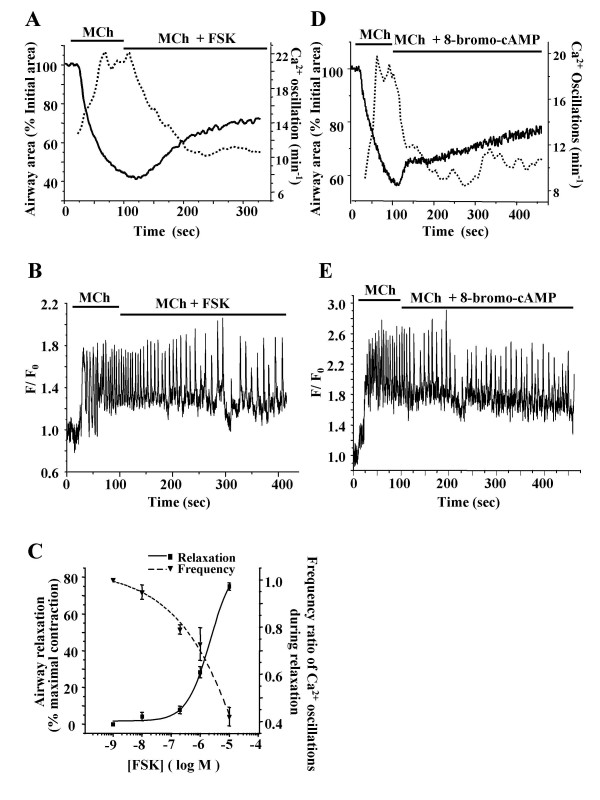
It has been shown that the contractile state of airway smooth muscle cells (SMCs) in response to agonists is determined by the frequency of Ca2+ oscillations occurring within the SMCs. Therefore, we hypothesized that the relaxation of airway SMCs induced by agents that increase cAMP results from the down-regulation or slowing of the frequency of the Ca2+ oscillations.
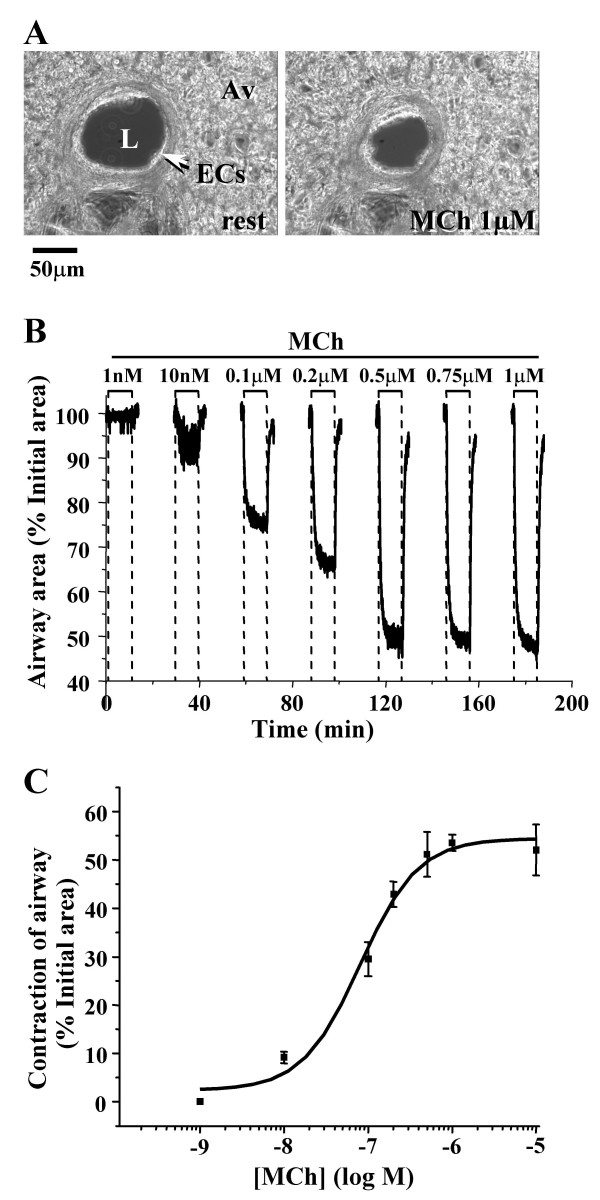
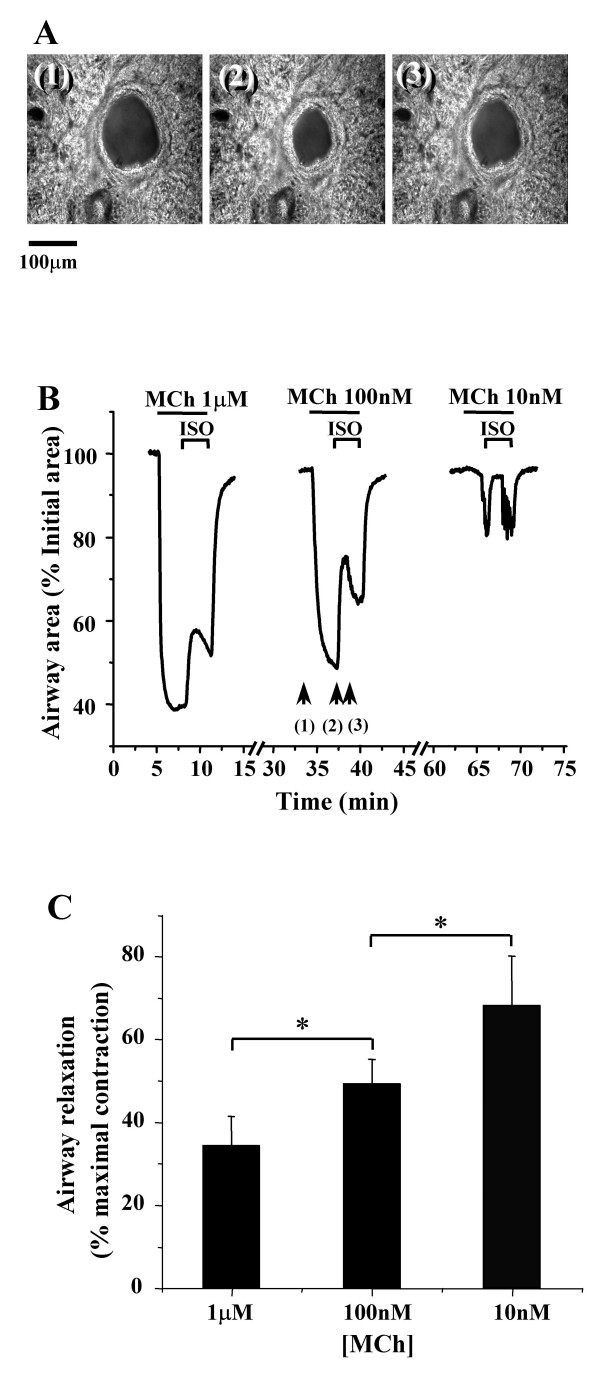
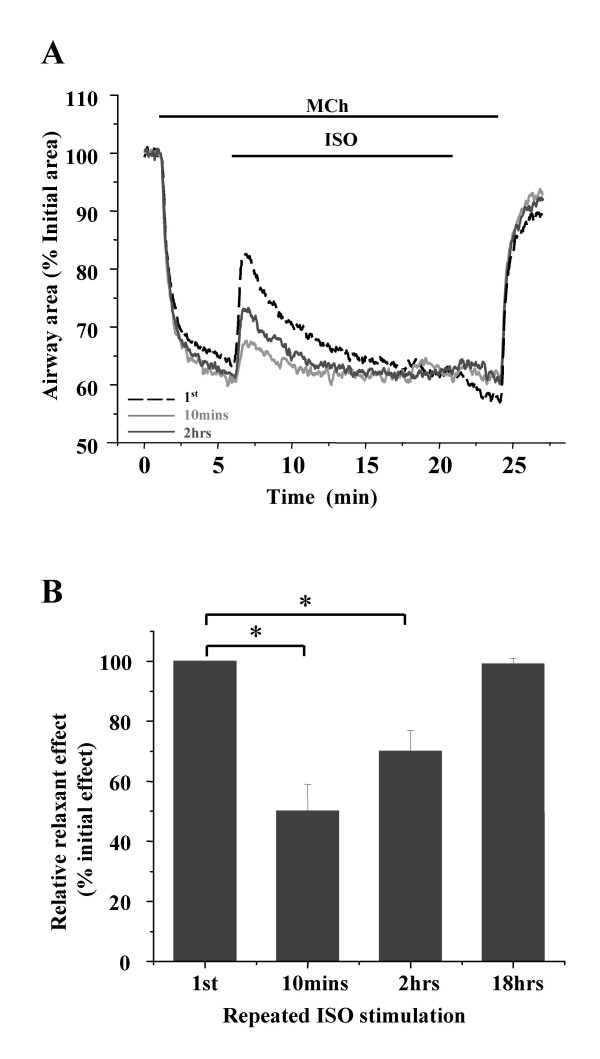
The effects of isoproterenol (ISO), forskolin (FSK) and 8-bromo-cAMP on the relaxation and Ca2+ signaling of airway SMCs contracted with methacholine (MCh) was investigated in murine lung slices with phase-contrast and laser scanning microscopy.
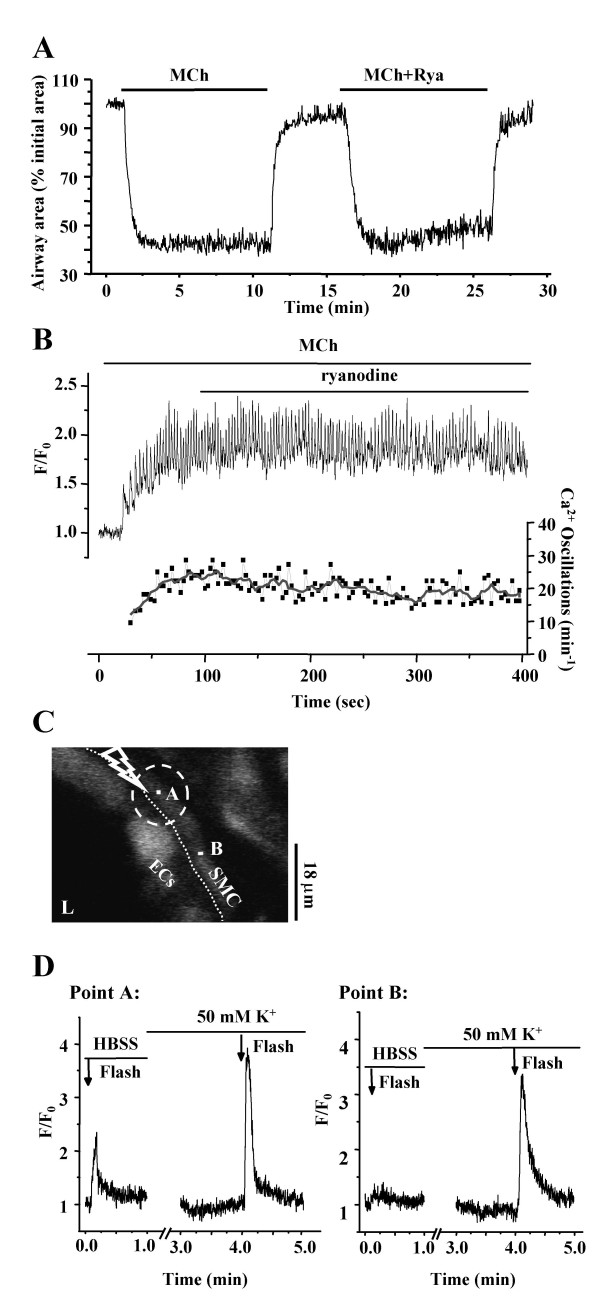
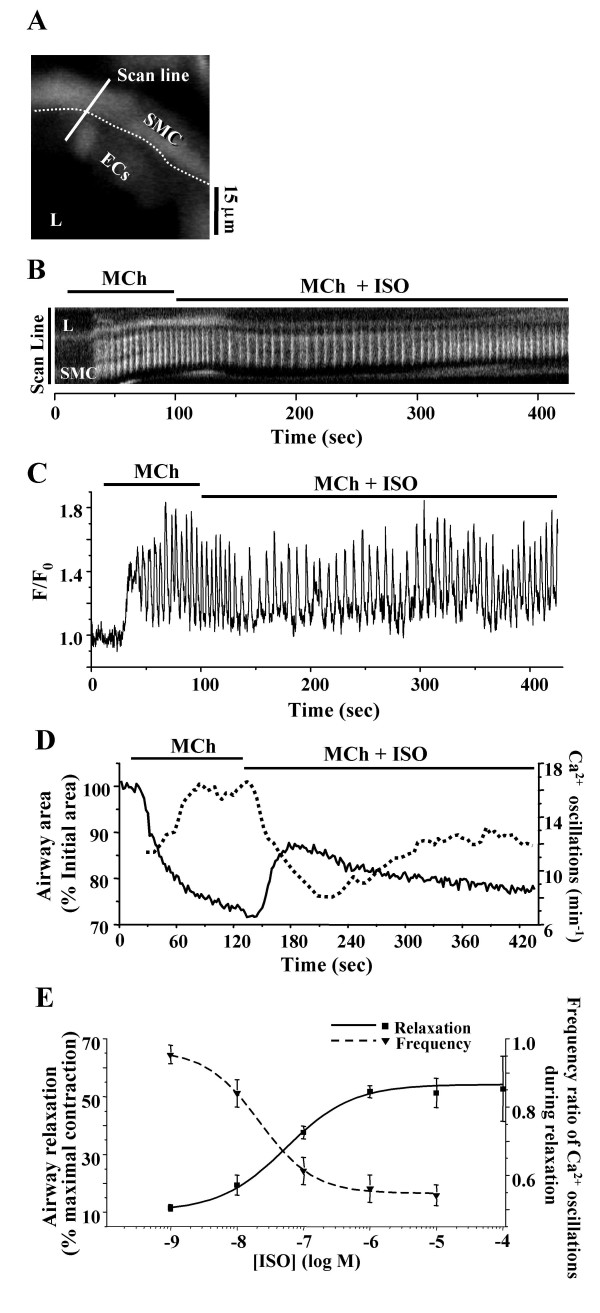
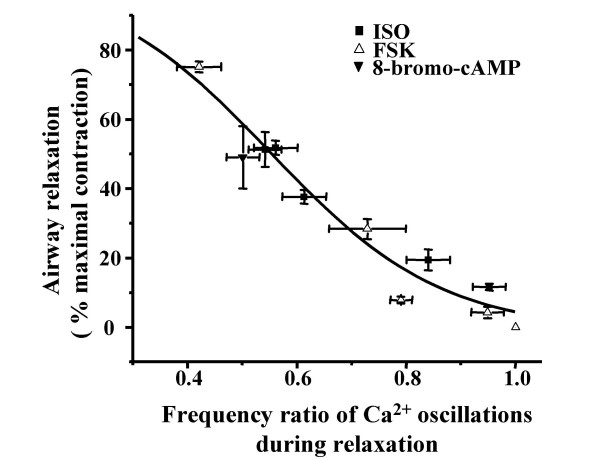
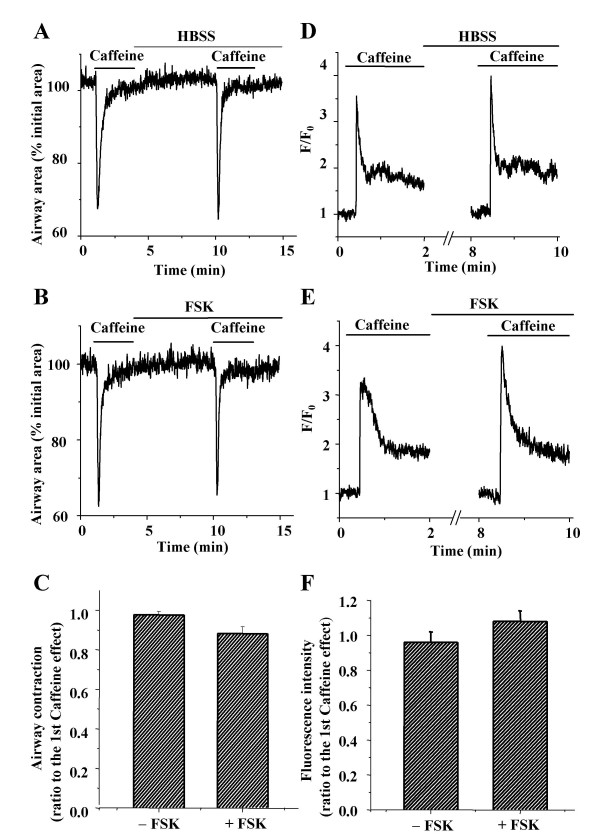
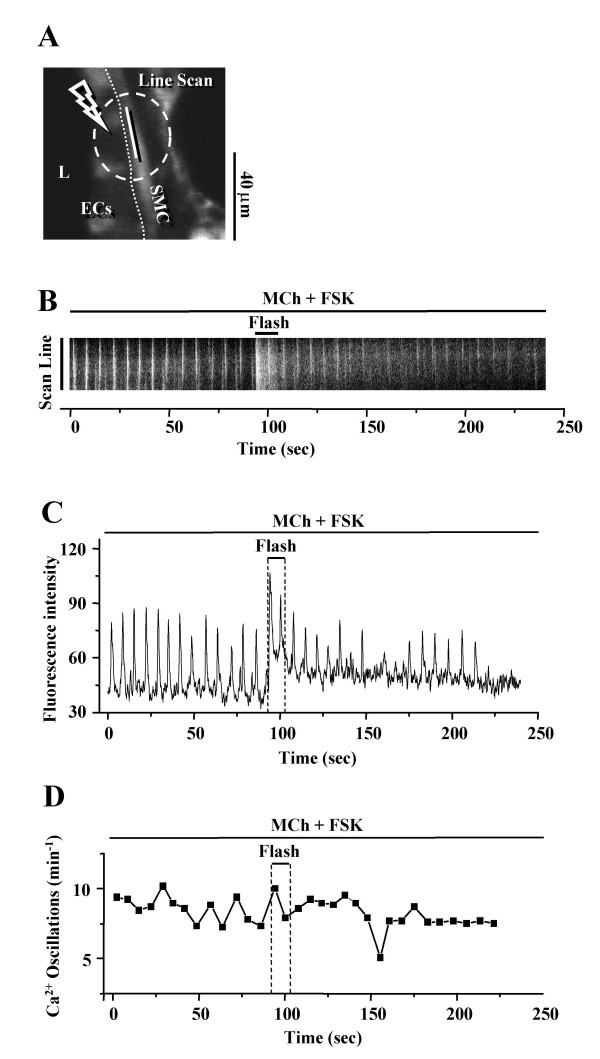
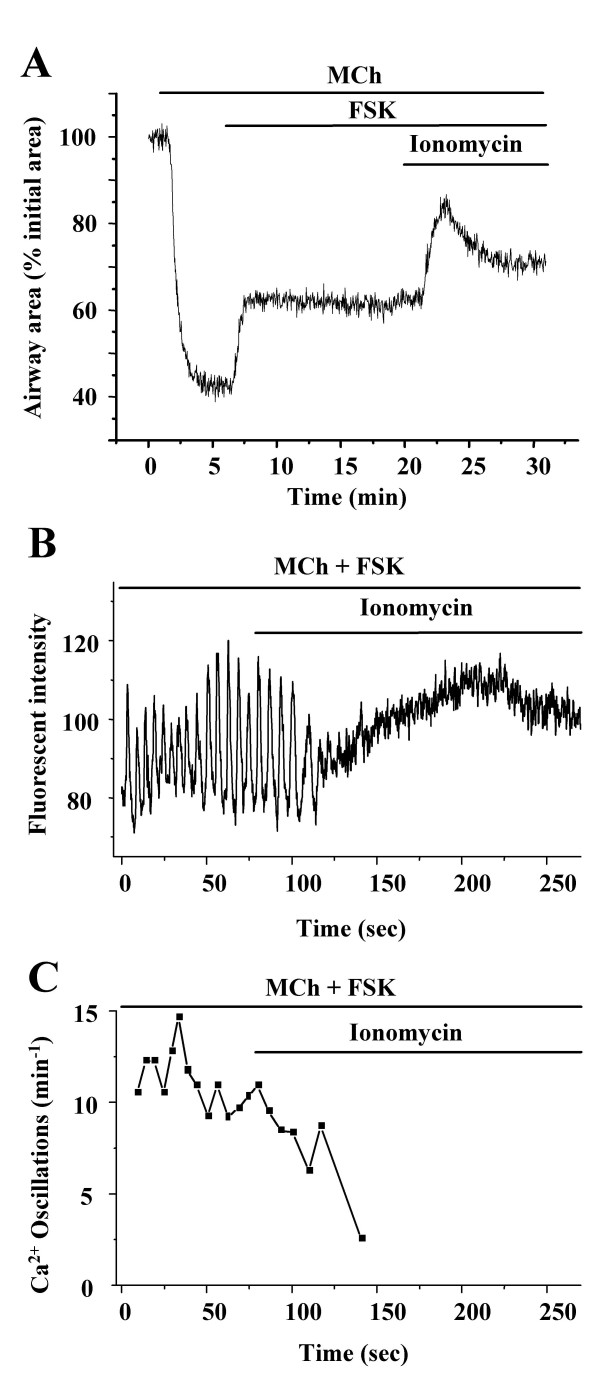
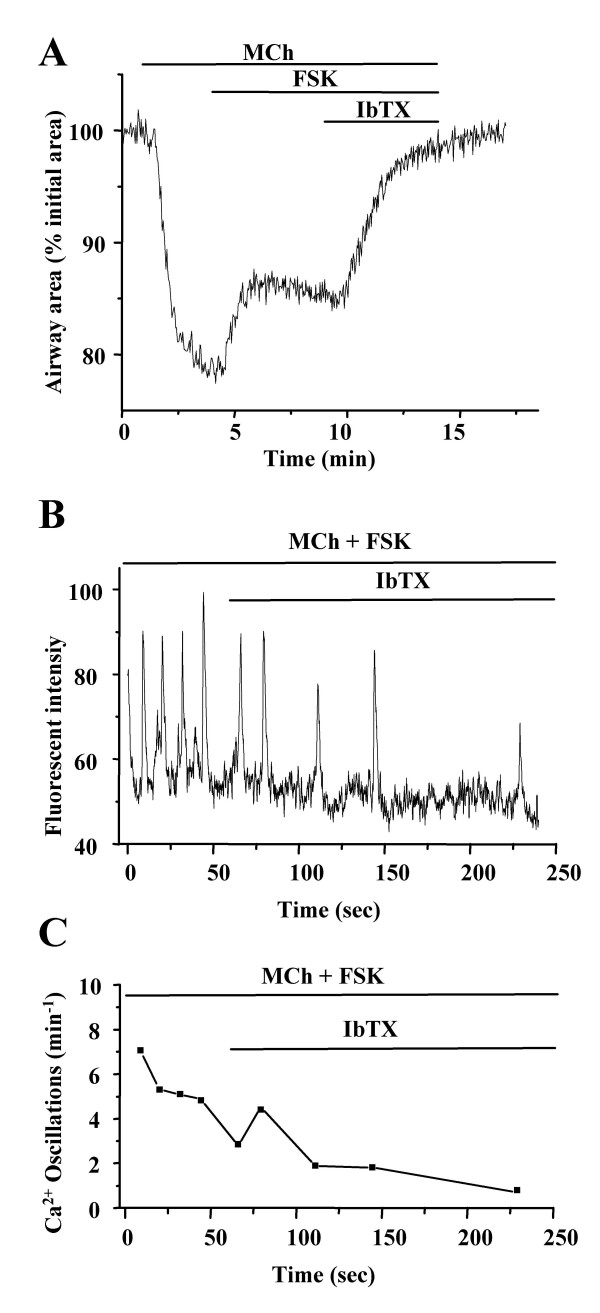
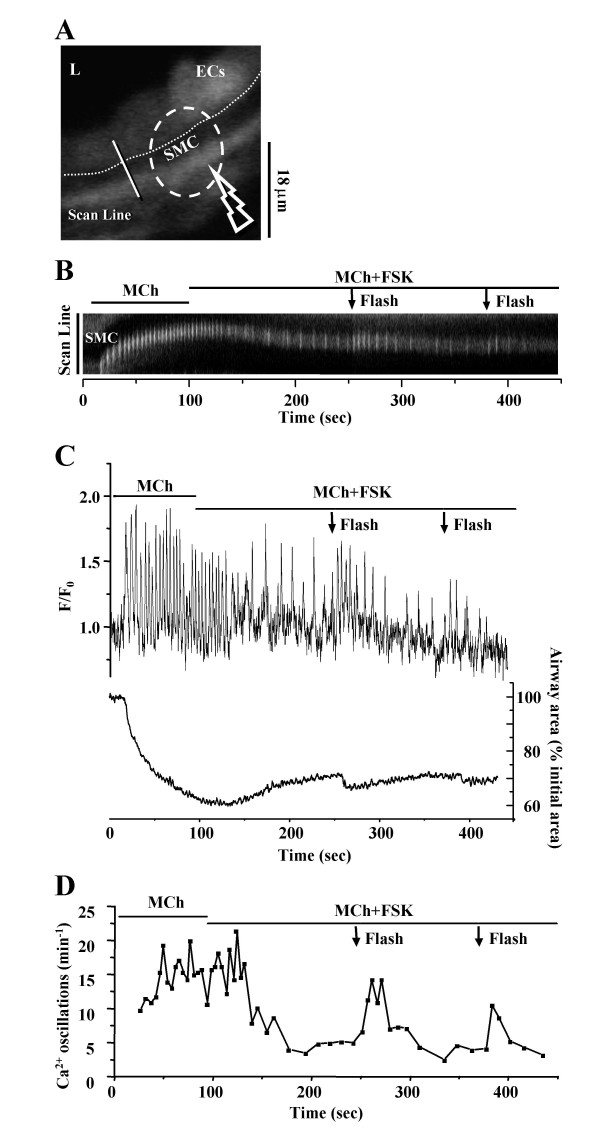
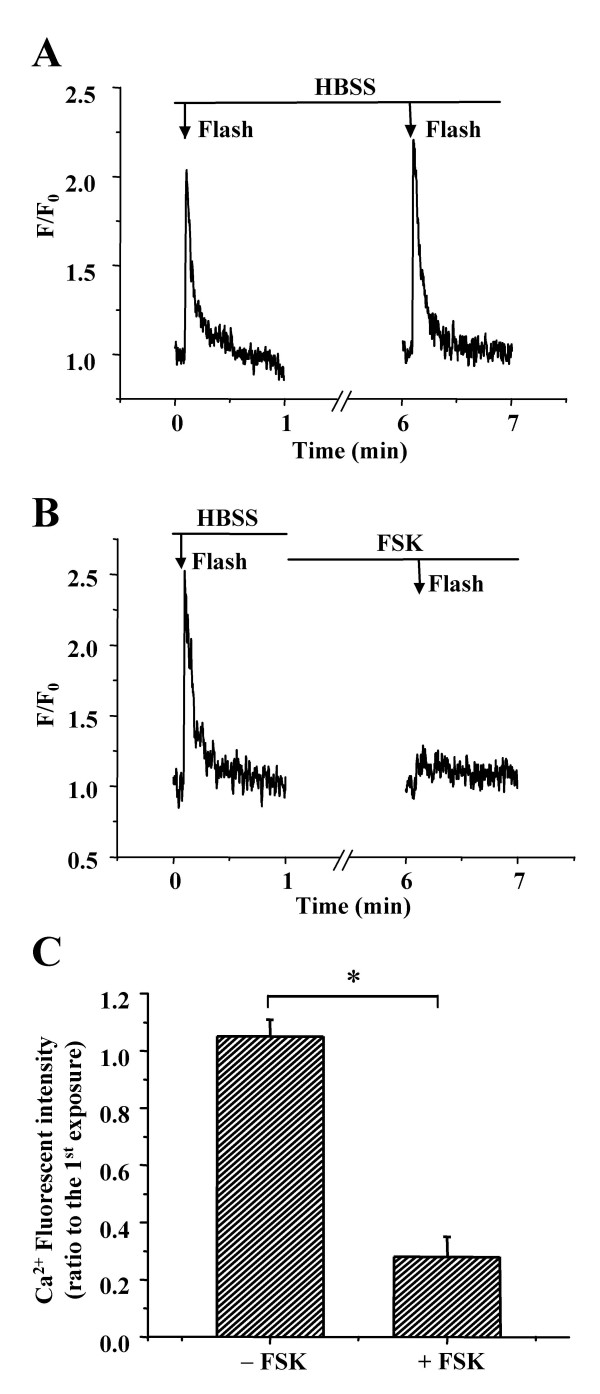
All three cAMP-elevating agents simultaneously induced a reduction in the frequency of Ca2+ oscillations within the SMCs and the relaxation of contracted airways. The decrease in the Ca2+ oscillation frequency correlated with the extent of airway relaxation and was concentration-dependent. The mechanism by which cAMP reduced the frequency of the Ca2+ oscillations was investigated. Elevated cAMP did not affect the re-filling rate of the internal Ca2+ stores after emptying by repetitive exposure to 20 mM caffeine. Neither did elevated cAMP limit the Ca2+ available to stimulate contraction because an elevation of intracellular Ca2+ concentration induced by exposure to a Ca2+ ionophore (ionomycin) or by photolysis of caged-Ca2+ did not reverse the effect of cAMP. Similar results were obtained with iberiotoxin, a blocker of Ca2+-activated K+ channels, which would be expected to increase Ca2+ influx and contraction. By contrast, the photolysis of caged-IP3 in the presence of agonist, to further elevate the intracellular IP3 concentration, reversed the slowing of the frequency of the Ca2+ oscillations and relaxation of the airway induced by FSK. This result implied that the sensitivity of the IP3R to IP3 was reduced by FSK and this was supported by the reduced ability of IP3 to release Ca2+ in SMCs in the presence of FSK.
These results indicate that the relaxant effect of cAMP-elevating agents on airway SMCs is achieved by decreasing the Ca2+ oscillation frequency by reducing internal Ca2+ release through IP3 receptors.
研究表明,气道平滑肌细胞(SMC)对激动剂的收缩状态由细胞内发生的Ca2+振荡频率决定。因此,我们推测,增加cAMP的药物诱导气道SMC舒张是由于Ca2+振荡频率下调或减慢。
采用相差显微镜和激光扫描显微镜,在小鼠肺切片中研究异丙肾上腺素(ISO)、福斯可林(FSK)和8-溴-cAMP对用乙酰甲胆碱(MCh)收缩的气道SMC舒张和Ca2+信号的影响。
所有三种升高cAMP的药物均同时诱导SMC内Ca2+振荡频率降低以及收缩气道舒张。Ca2+振荡频率的降低与气道舒张程度相关且呈浓度依赖性。研究了cAMP降低Ca2+振荡频率的机制。升高的cAMP不影响通过重复暴露于20 mM咖啡因排空后细胞内Ca2+储存的再填充率。升高的cAMP也不限制可用于刺激收缩的Ca2+,因为暴露于Ca2+离子载体(离子霉素)或通过笼状Ca2+的光解诱导的细胞内Ca2+浓度升高并未逆转cAMP的作用。用iberiotoxin(一种Ca2+激活的K+通道阻滞剂)也得到了类似结果,预期iberiotoxin会增加Ca2+内流和收缩。相比之下,在激动剂存在下笼状IP3的光解以进一步升高细胞内IP3浓度,逆转了FSK诱导的Ca2+振荡频率减慢和气道舒张。该结果表明FSK降低了IP3R对IP3的敏感性,这得到了在FSK存在下IP3在SMC中释放Ca2+能力降低的支持。
这些结果表明,升高cAMP的药物对气道SMC的舒张作用是通过降低IP3受体介导的细胞内Ca2+释放从而降低Ca2+振荡频率来实现的。