Schleiss Mark R, Anderson Jodi L, McGregor Alistair
Division of Infectious Diseases, University of Minnesota Department of Pediatrics, Center for Infectious Diseases and Microbiology Translational Research, McGuire Translational Research Facility, Minneapolis, Minnesota 55455, USA.
Virol J. 2006 Mar 1;3:9. doi: 10.1186/1743-422X-3-9.
Congenital cytomegalovirus (CMV) infection is a major public health problem. Antiviral therapies administered during pregnancy might prevent vertical CMV transmission and disease in newborns, but these agents have not been evaluated in clinical trials. The guinea pig model of congenital CMV infection was therefore used to test the hypothesis that antiviral therapy, using the agent agent cyclic cidofovir (cHPMPC), could prevent congenital CMV infection.
Pregnant outbred Hartley guinea pigs were challenged in the early-third trimester with guinea pig CMV (GPCMV) and treated with placebo, or the antiviral agent, cyclic cidofovir. To optimize detection of vertical infection, an enhanced green fluorescent protein (eGFP)-tagged virus was employed. Compared to placebo, cyclic cidofovir-treated dams and pups had reduced mortality following GPCMV challenge. The magnitude of GPCMV-induced maternal and fetal mortality in this study was reduced from 5/25 animals in the placebo group to 0/21 animals in the treatment group (p = 0.05, Fisher's exact test). By viral culture assay, antiviral therapy was found to completely prevent GPCMV transmission to the fetus. In control pups, 5/19 (26%) were culture-positive for GPCMV, compared to 0/16 of pups in the cyclic cidofovir treatment group (p < 0.05, Fisher's exact test).
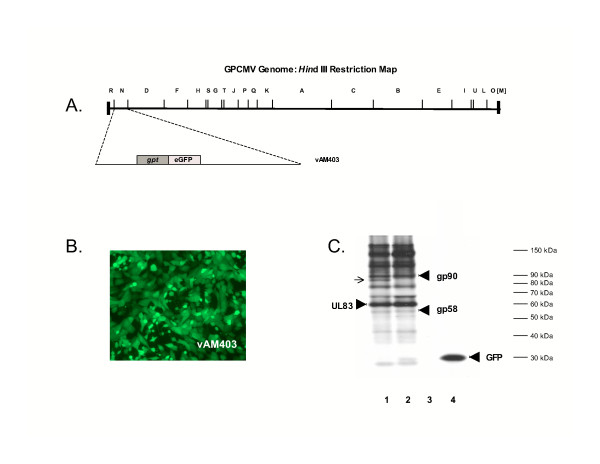
Antiviral therapy with cyclic cidofovir improves pregnancy outcomes in guinea pigs, and eliminates congenital CMV infection, following viral challenge in the third trimester. This study also demonstrated that an eGFP-tagged recombinant virus, with the reporter gene inserted into a dispensable region of the viral genome, retained virulence, including the potential for congenital transmission, facilitating tissue culture-based detection of congenital infection. These observations provide support for clinical trials of antivirals for reduction of congenital CMV infection.
先天性巨细胞病毒(CMV)感染是一个重大的公共卫生问题。孕期给予抗病毒治疗可能会预防新生儿垂直传播CMV及相关疾病,但这些药物尚未在临床试验中进行评估。因此,利用先天性CMV感染的豚鼠模型来检验使用环状西多福韦(cHPMPC)进行抗病毒治疗可预防先天性CMV感染这一假设。
妊娠中期的远交系Hartley豚鼠用豚鼠CMV(GPCMV)进行攻击,并给予安慰剂或抗病毒药物环状西多福韦治疗。为优化垂直感染的检测,采用了增强型绿色荧光蛋白(eGFP)标记的病毒。与安慰剂组相比,环状西多福韦治疗的母鼠和幼崽在受到GPCMV攻击后的死亡率降低。本研究中GPCMV诱导的母胎死亡率从安慰剂组的5/25只动物降至治疗组的0/21只动物(p = 0.05,Fisher精确检验)。通过病毒培养检测发现,抗病毒治疗可完全预防GPCMV传播给胎儿。在对照幼崽中,5/19(26%)GPCMV培养呈阳性,而环状西多福韦治疗组的幼崽为0/16(p < 0.05,Fisher精确检验)。
妊娠晚期病毒攻击后,环状西多福韦抗病毒治疗可改善豚鼠的妊娠结局,并消除先天性CMV感染。本研究还表明,将报告基因插入病毒基因组非必需区域的eGFP标记重组病毒保留了毒力,包括先天性传播的潜力,便于基于组织培养检测先天性感染。这些观察结果为开展抗病毒药物减少先天性CMV感染的临床试验提供了支持。