Kruse Elisabeth, Uehlein Norbert, Kaldenhoff Ralf
Institute of Botany, Department of Applied Plant Sciences, Darmstadt University of Technology, Germany.
Genome Biol. 2006;7(2):206. doi: 10.1186/gb-2006-7-2-206. Epub 2006 Feb 28.
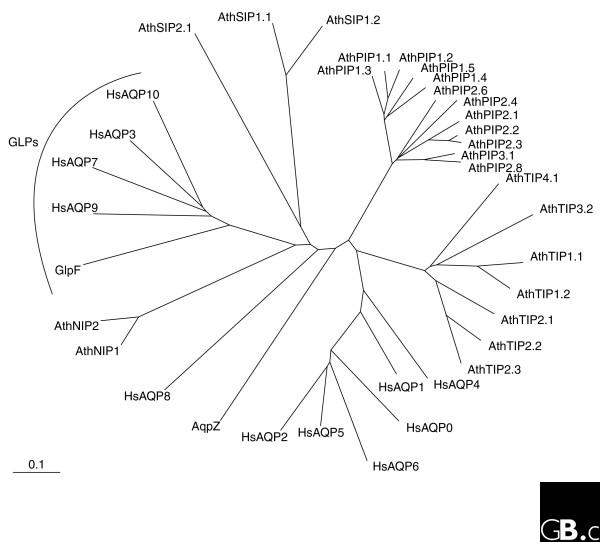
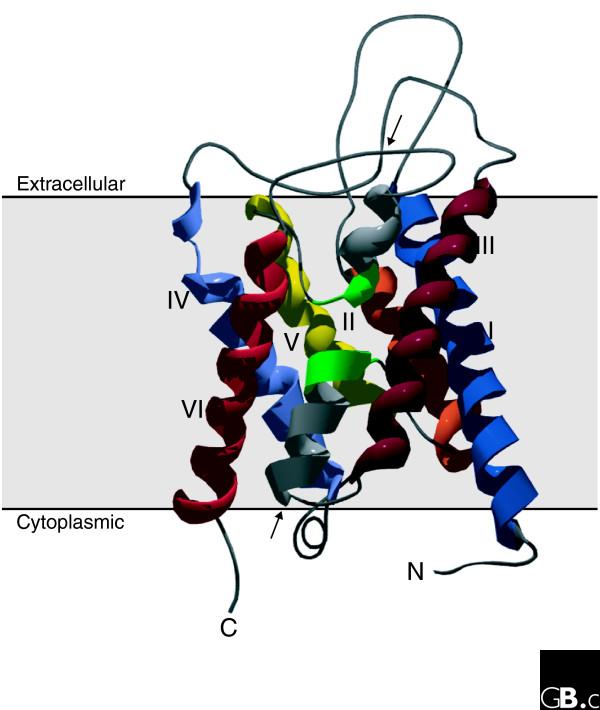
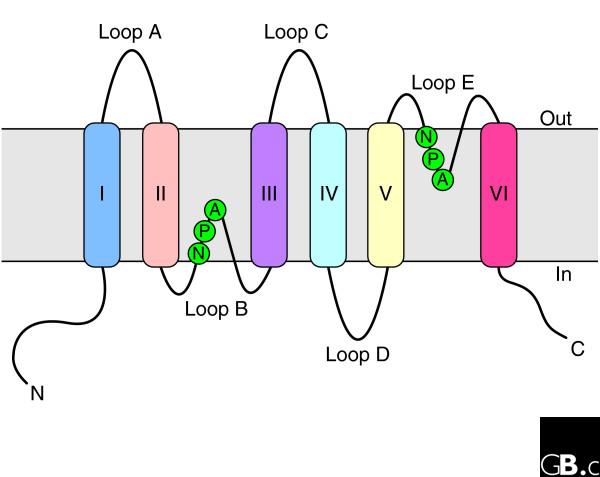
Water is the major component of all living cells, and efficient regulation of water homeostasis is essential for many biological processes. The mechanism by which water passes through biological membranes was a matter of debate until the discovery of the aquaporin water channels. Aquaporins are intrinsic membrane proteins characterized by six transmembrane helices that selectively allow water or other small uncharged molecules to pass along the osmotic gradient. In addition, recent observations show that some aquaporins also facilitate the transport of volatile substances, such as carbon dioxide (CO2) and ammonia (NH3), across membranes. Aquaporins usually form tetramers, with each monomer defining a single pore. Aquaporin-related proteins are found in all organisms, from archaea to mammals. In both uni- and multicellular organisms, numerous isoforms have been identified that are differentially expressed and modified by post-translational processes, thus allowing fine-tuned tissue-specific osmoregulation. In mammals, aquaporins are involved in multiple physiological processes, including kidney and salivary gland function. They are associated with several clinical disorders, such as kidney dysfunction, loss of vision and brain edema.
水是所有活细胞的主要成分,有效调节水平衡对于许多生物过程至关重要。在水通道蛋白水通道被发现之前,水通过生物膜的机制一直存在争议。水通道蛋白是内在膜蛋白,其特征是有六个跨膜螺旋,能选择性地让水或其他不带电的小分子沿渗透梯度通过。此外,最近的观察表明,一些水通道蛋白还促进挥发性物质,如二氧化碳(CO₂)和氨(NH₃)跨膜运输。水通道蛋白通常形成四聚体,每个单体形成一个单一的孔道。从古细菌到哺乳动物的所有生物体中都能找到与水通道蛋白相关的蛋白质。在单细胞和多细胞生物中,已鉴定出许多亚型,它们通过翻译后过程进行差异表达和修饰,从而实现组织特异性渗透调节的精细调控。在哺乳动物中,水通道蛋白参与多种生理过程,包括肾脏和唾液腺功能。它们与多种临床疾病相关,如肾功能障碍、视力丧失和脑水肿。