Yuan Weihong, Szaflarski Jerzy P, Schmithorst Vincent J, Schapiro Mark, Byars Anna W, Strawsburg Richard H, Holland Scott K
Cincinnati Children's Hospital Medical Center, Imaging Research Center, Cincinnati, Ohio 45229, USA. weihong.yuan@cchme
Epilepsia. 2006 Mar;47(3):593-600. doi: 10.1111/j.1528-1167.2006.00474.x.
The goal of this study was to compare language lateralization between pediatric epilepsy patients and healthy children.
Two groups of subjects were evaluated with functional magnetic resonance imaging (fMRI) by using a silent verb-generation task. The first group included 18 pediatric epilepsy patients, whereas the control group consisted of 18 age/gender/handedness-matched healthy subjects.
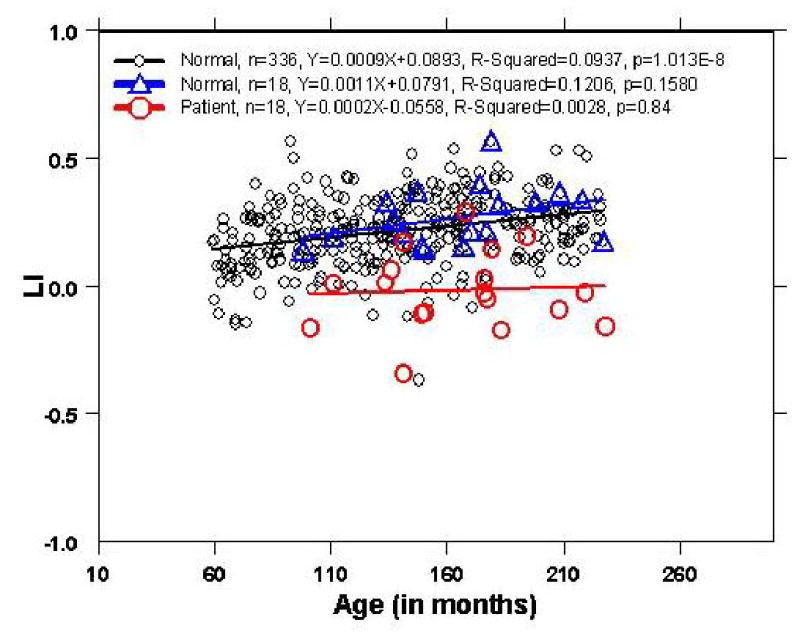
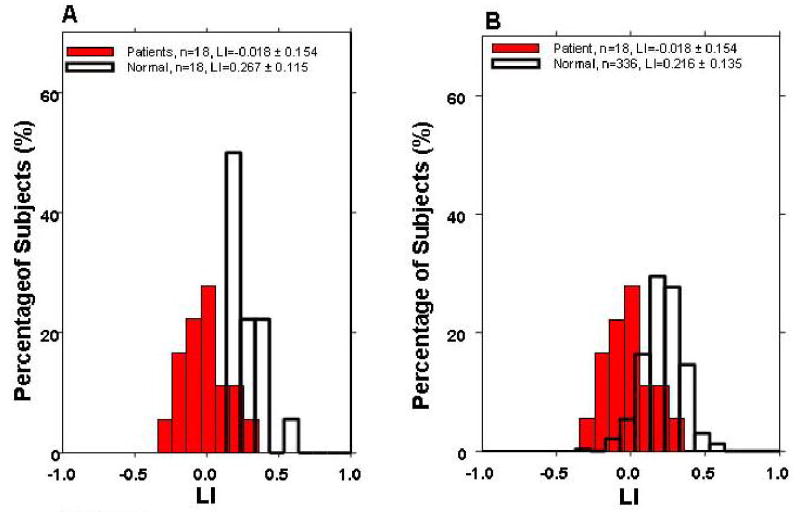
A significant difference in hemispheric lateralization index (LI) was found between children with epilepsy (mean LI =-0.038) and the age/gender/handedness-matched healthy control subjects (mean LI=0.257; t=6.490, p<0.0001). A dramatic difference also was observed in the percentage of children with epilepsy (77.78%) who had atypical LI (right-hemispheric or bilateral, LI<0.1) when compared with the age/gender/handedness-matched group (11.11%; chi(2)=16.02, p<0.001). A linear regression analysis showed a trend toward increasing language lateralization with age in healthy controls (R(2)=0.152; p=0.108). This association was not observed in pediatric epilepsy subjects (R(2)=0.004, p=0.80). A significant association between language LI and epilepsy duration also was found (R(2)=0.234, p<0.05).
This study shows that epilepsy during childhood is associated with neuroplasticity and reorganization of language function.
本研究的目的是比较小儿癫痫患者与健康儿童之间的语言功能侧化情况。
两组受试者通过使用无声动词生成任务进行功能磁共振成像(fMRI)评估。第一组包括18名小儿癫痫患者,而对照组由18名年龄/性别/利手匹配的健康受试者组成。
癫痫患儿(平均LI = -0.038)与年龄/性别/利手匹配的健康对照受试者(平均LI = 0.257;t = 6.490,p < 0.0001)之间在半球侧化指数(LI)上存在显著差异。与年龄/性别/利手匹配组(11.11%;χ² = 16.02,p < 0.001)相比,癫痫患儿中具有非典型LI(右半球或双侧,LI < 0.1)的比例(77.78%)也观察到显著差异。线性回归分析显示,健康对照组中语言侧化随年龄增加有趋势(R² = 0.152;p = 0.108)。在小儿癫痫受试者中未观察到这种关联(R² = 0.004,p = 0.8)。还发现语言LI与癫痫病程之间存在显著关联(R² = 0.234,p < 0.05)。
本研究表明儿童期癫痫与语言功能的神经可塑性和重组有关。