Merten Christoph A, Stitz Jörn, Braun Gundula, Medvedovska Julia, Cichutek Klaus, Buchholz Christian J
Division of Medical Biotechnology, Paul-Ehrlich-Institut, 63225 Langen, Germany.
Nucleic Acids Res. 2006 Mar 15;34(5):e41. doi: 10.1093/nar/gkl053. Print 2006.
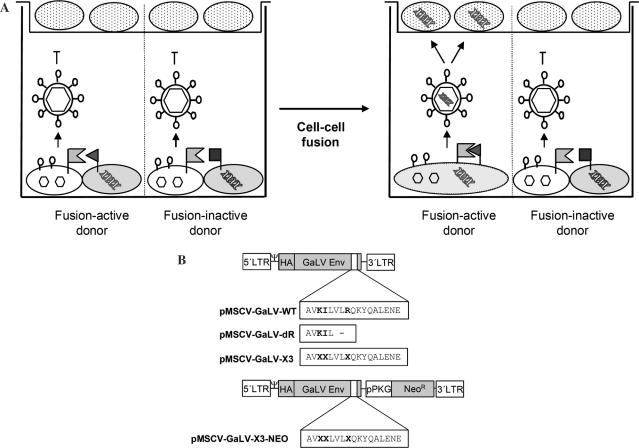
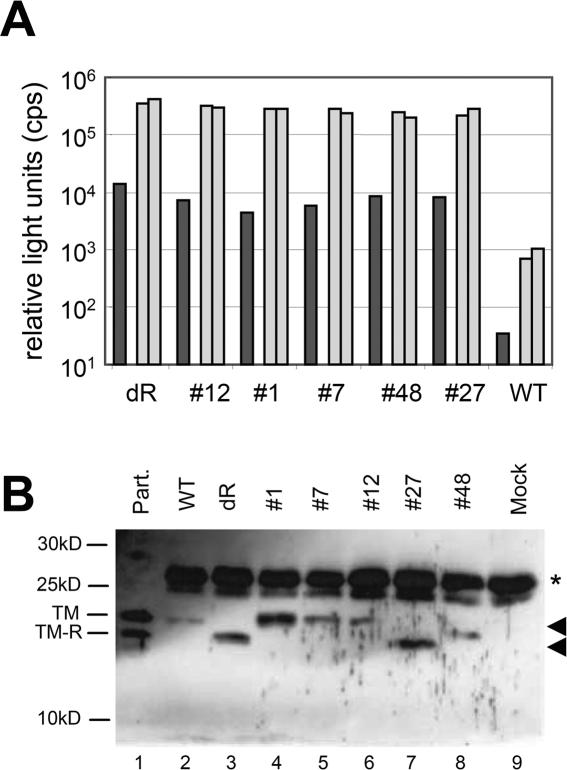
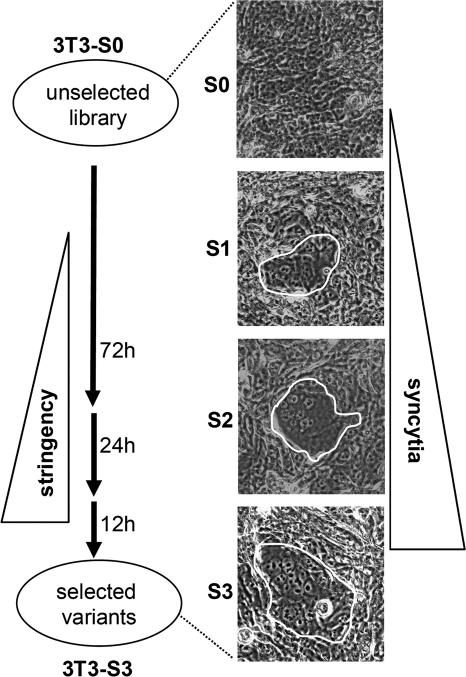
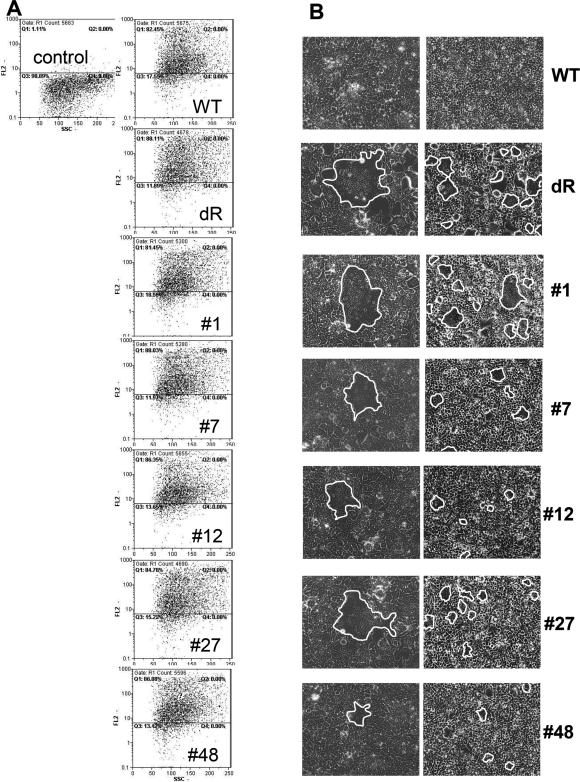
Membrane fusion plays a key role in many biological processes including vesicle trafficking, synaptic transmission, fertilization or cell entry of enveloped viruses. As a common feature the fusion process is mediated by distinct membrane proteins. We describe here 'Fusoselect', a universal procedure allowing the identification and engineering of molecular determinants for cell-cell fusion-activity by directed evolution. The system couples cell-cell fusion with the release of retroviral particles, but can principally be applied to membrane proteins of non-viral origin as well. As a model system, we chose a gamma-retroviral envelope protein, which naturally becomes fusion-active through proteolytic processing by the viral protease. The selection process evolved variants that, in contrast to the parental protein, mediated cell-cell fusion in absence of the viral protease. Detailed analysis of the variants revealed molecular determinants for fusion competence in the cytoplasmic tail (CT) of retroviral Env proteins and demonstrated the power of Fusoselect.
膜融合在许多生物过程中起着关键作用,包括囊泡运输、突触传递、受精或包膜病毒的细胞进入。作为一个共同特征,融合过程由不同的膜蛋白介导。我们在此描述“Fusoselect”,这是一种通用程序,通过定向进化允许鉴定和工程化细胞-细胞融合活性的分子决定因素。该系统将细胞-细胞融合与逆转录病毒颗粒的释放相结合,但原则上也可应用于非病毒来源的膜蛋白。作为一个模型系统,我们选择了一种γ-逆转录病毒包膜蛋白,它通过病毒蛋白酶的蛋白水解加工自然地变得具有融合活性。选择过程产生了变体,与亲本蛋白相比,这些变体在没有病毒蛋白酶的情况下介导细胞-细胞融合。对这些变体的详细分析揭示了逆转录病毒Env蛋白细胞质尾(CT)中融合能力的分子决定因素,并证明了Fusoselect的强大功能。