MacLeod Megan, Kwakkenbos Mark J, Crawford Alison, Brown Sheila, Stockinger Brigitta, Schepers Koen, Schumacher Ton, Gray David
Institute of Immunology and Infection Research, University of Edinburgh, Edinburgh EH9 3JT, UK.
J Exp Med. 2006 Apr 17;203(4):897-906. doi: 10.1084/jem.20050711. Epub 2006 Mar 20.
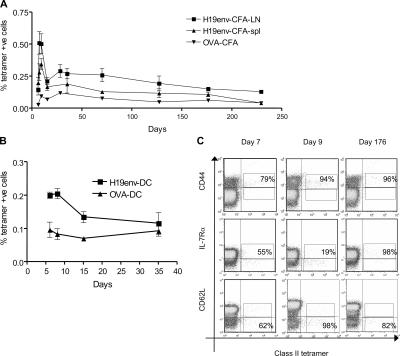
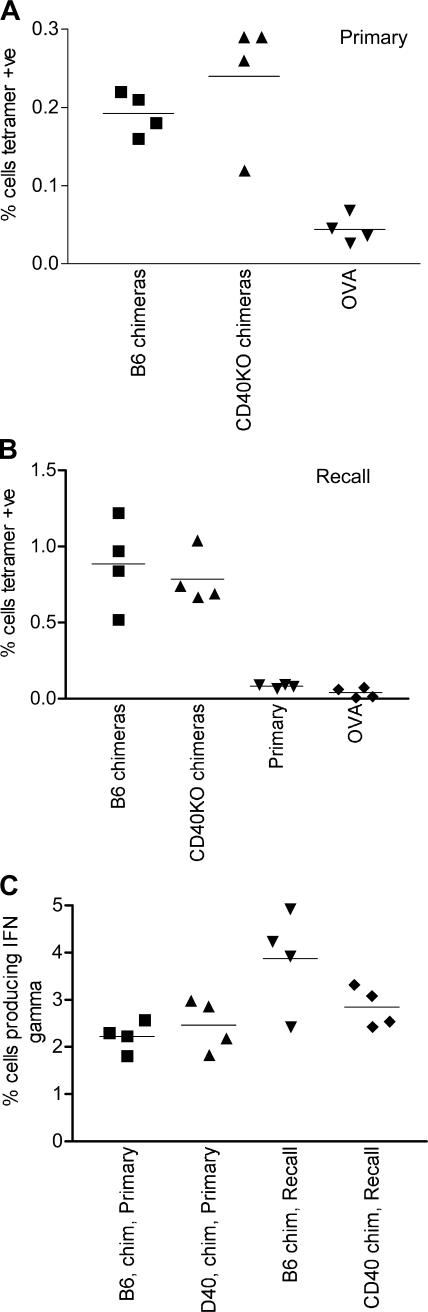
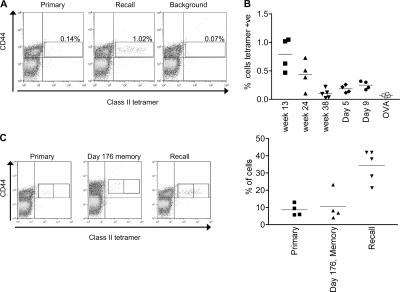
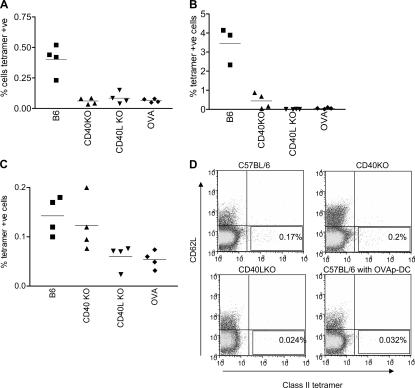
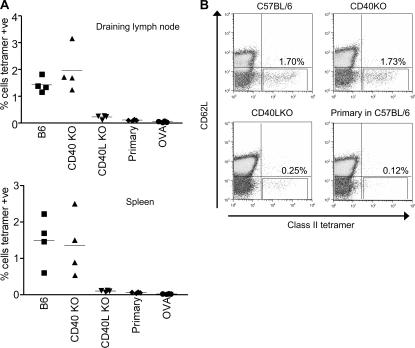
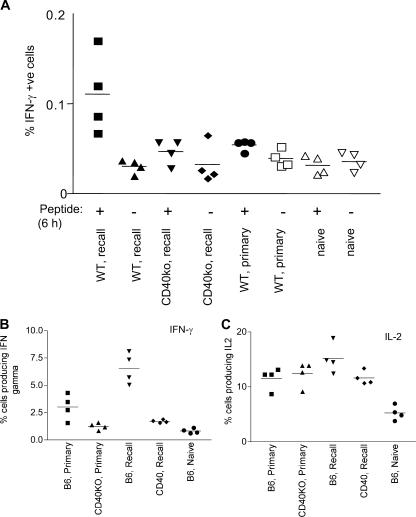
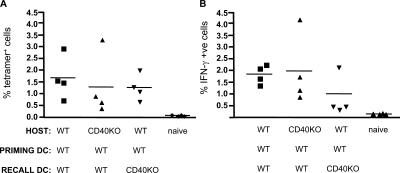
Secondary T cell responses are enhanced because of an expansion in numbers of antigen-specific (memory) cells. Using major histocompatibility complex class II tetramers we have tracked peptide-specific endogenous (non-T cell receptor transgenic) CD4 memory T cells in normal and in costimulation-deficient mice. CD4 memory T cells were detectable after immunization for more than 200 days, although decay was apparent. Memory cells generated in CD40 knockout mice by immunization with peptide-pulsed wild-type dendritic cells survived in the absence of CD40 and proliferated when boosted with peptide (plus adjuvant) in a CD40-independent fashion. However, differentiation of the memory cells into cytokine-producing effector cells did not occur in the absence of CD40. The data indicate that memory cells can be generated without passing through the effector cell stage.
由于抗原特异性(记忆)细胞数量的增加,继发性T细胞反应得到增强。我们使用主要组织相容性复合体II类四聚体追踪了正常小鼠和共刺激缺陷小鼠中肽特异性内源性(非T细胞受体转基因)CD4记忆T细胞。免疫后200多天可检测到CD4记忆T细胞,尽管明显有衰退现象。通过用肽脉冲野生型树突状细胞免疫在CD40基因敲除小鼠中产生的记忆细胞在没有CD40的情况下存活,并在再次用肽(加佐剂)刺激时以不依赖CD40的方式增殖。然而,在没有CD40的情况下,记忆细胞不会分化为产生细胞因子的效应细胞。数据表明,记忆细胞可以在不经过效应细胞阶段的情况下产生。