Belancio Victoria P, Hedges Dale J, Deininger Prescott
Tulane Cancer Center, SL66 and Department of Epidemiology, Tulane University Health Sciences Center, 1430 Tulane Ave., New Orleans, LA 70112, USA.
Nucleic Acids Res. 2006 Mar 22;34(5):1512-21. doi: 10.1093/nar/gkl027. Print 2006.
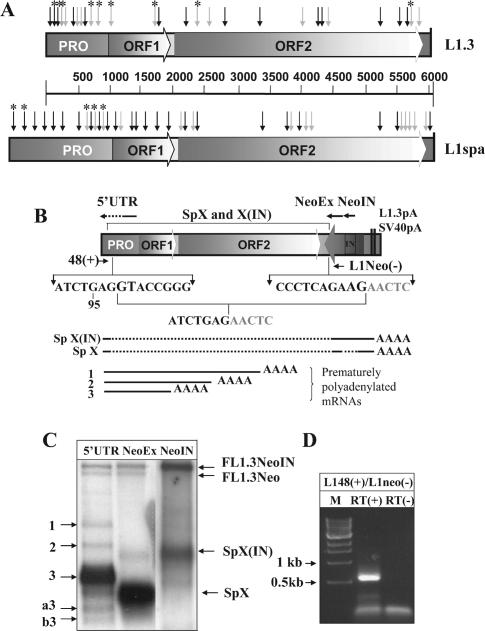
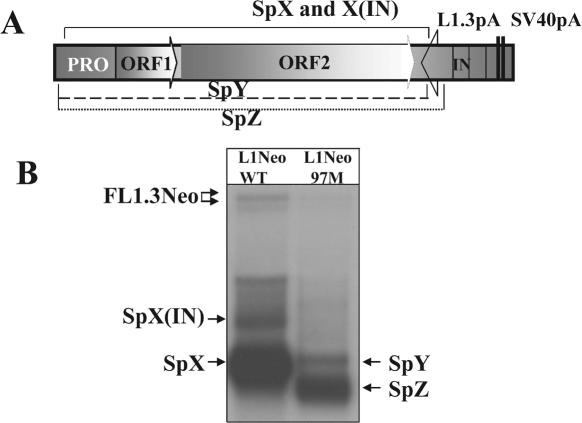
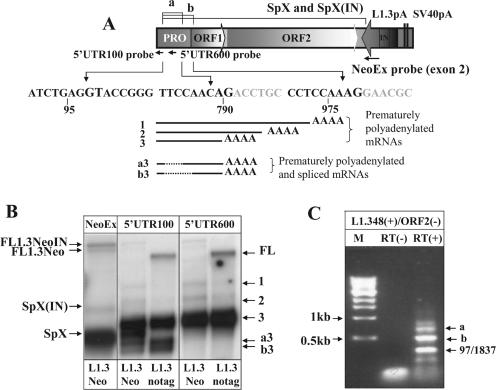
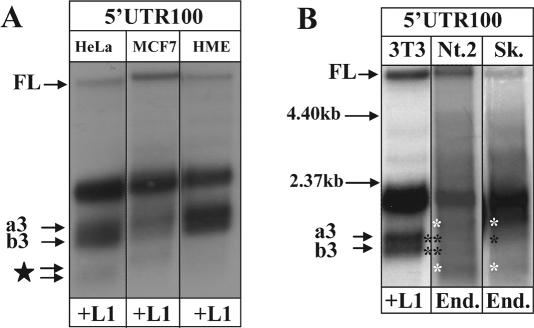
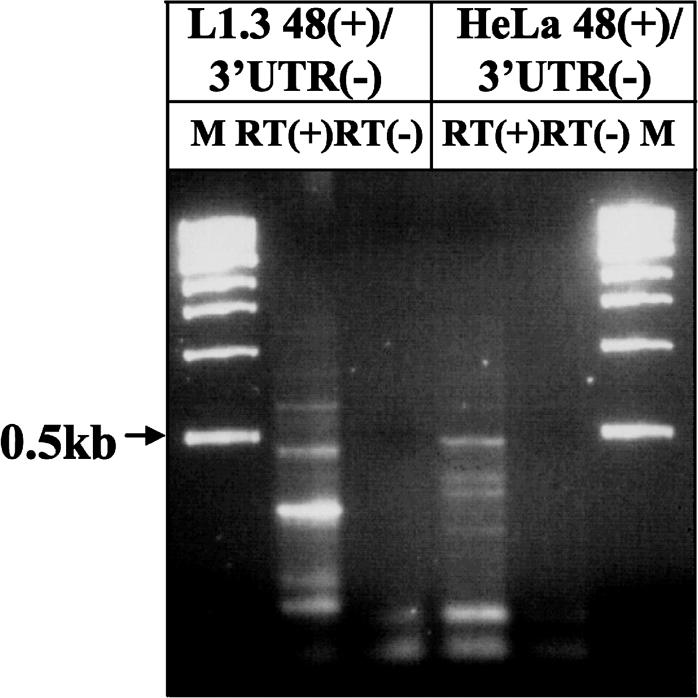
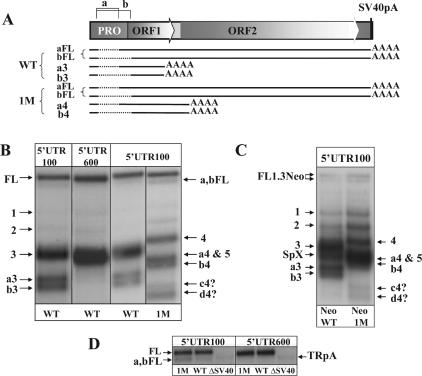
Long interspersed element-1 elements compose on average one-fifth of mammalian genomes. The expression and retrotransposition of L1 is restricted by a number of cellular mechanisms in order to limit their damage in both germ-line and somatic cells. L1 transcription is largely suppressed in most tissues, but L1 mRNA and/or proteins are still detectable in testes, a number of specific somatic cell types, and malignancies. Down-regulation of L1 expression via premature polyadenylation has been found to be a secondary mechanism of limiting L1 expression. We demonstrate that mammalian L1 elements contain numerous functional splice donor and acceptor sites. Efficient usage of some of these sites results in extensive and complex splicing of L1. Several splice variants of both the human and mouse L1 elements undergo retrotransposition. Some of the spliced L1 mRNAs can potentially contribute to expression of open reading frame 2-related products and therefore have implications for the mobility of SINEs even if they are incompetent for L1 retrotransposition. Analysis of the human EST database revealed that L1 elements also participate in splicing events with other genes. Such contribution of functional splice sites by L1 may result in disruption of normal gene expression or formation of alternative mRNA transcripts.
长散在重复序列1元件平均占哺乳动物基因组的五分之一。L1的表达和逆转录转座受到多种细胞机制的限制,以减少其对生殖细胞和体细胞的损害。L1转录在大多数组织中受到很大程度的抑制,但在睾丸、一些特定的体细胞类型和恶性肿瘤中仍可检测到L1 mRNA和/或蛋白质。通过过早聚腺苷酸化下调L1表达已被发现是限制L1表达的一种次要机制。我们证明哺乳动物L1元件包含大量功能性剪接供体和受体位点。有效利用其中一些位点会导致L1的广泛而复杂的剪接。人类和小鼠L1元件的几种剪接变体都能进行逆转录转座。一些剪接后的L1 mRNA可能潜在地促进开放阅读框2相关产物的表达,因此即使它们不能进行L1逆转录转座,也对短散在核元件的移动性有影响。对人类EST数据库的分析表明,L1元件也参与与其他基因的剪接事件。L1功能性剪接位点的这种作用可能导致正常基因表达的破坏或形成替代性mRNA转录本。