Pao Sheng-Ying, Lin Win-Li, Hwang Ming-Jing
Institute of Biomedical Sciences, Academia Sinica, Taipei, Taiwan.
BMC Genomics. 2006 Apr 21;7:86. doi: 10.1186/1471-2164-7-86.
Screening for differentially expressed genes on the genomic scale and comparative analysis of the expression profiles of orthologous genes between species to study gene function and regulation are becoming increasingly feasible. Expressed sequence tags (ESTs) are an excellent source of data for such studies using bioinformatic approaches because of the rich libraries and tremendous amount of data now available in the public domain. However, any large-scale EST-based bioinformatics analysis must deal with the heterogeneous, and often ambiguous, tissue and organ terms used to describe EST libraries.
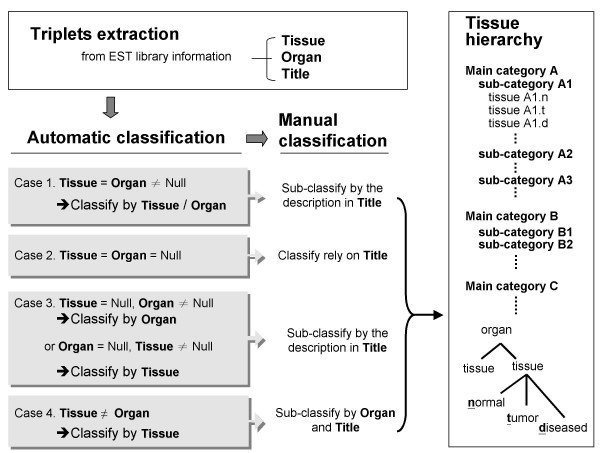
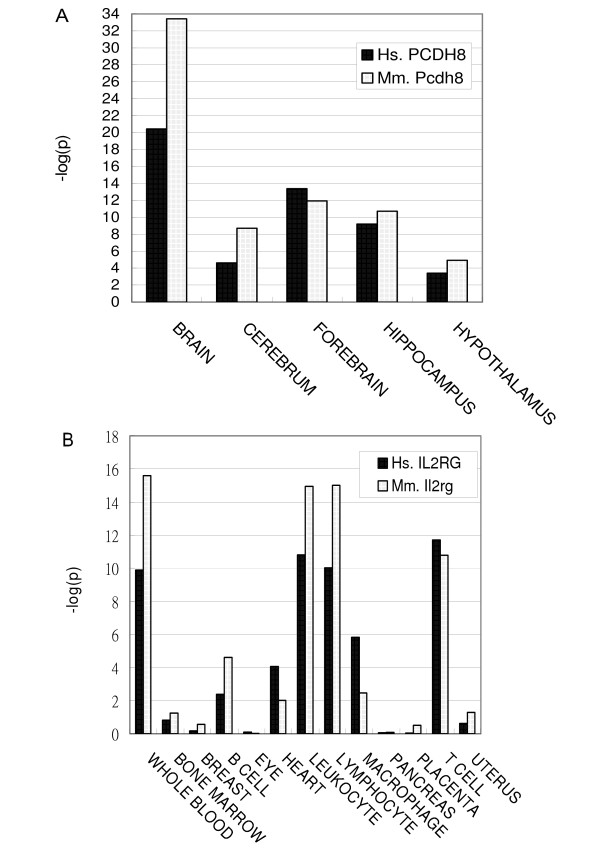
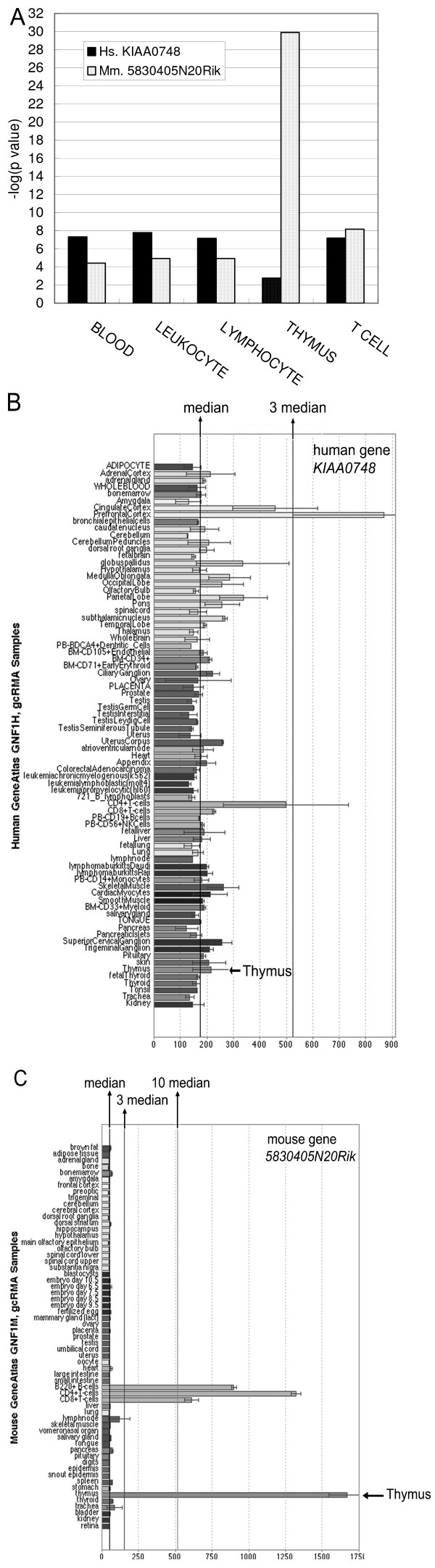
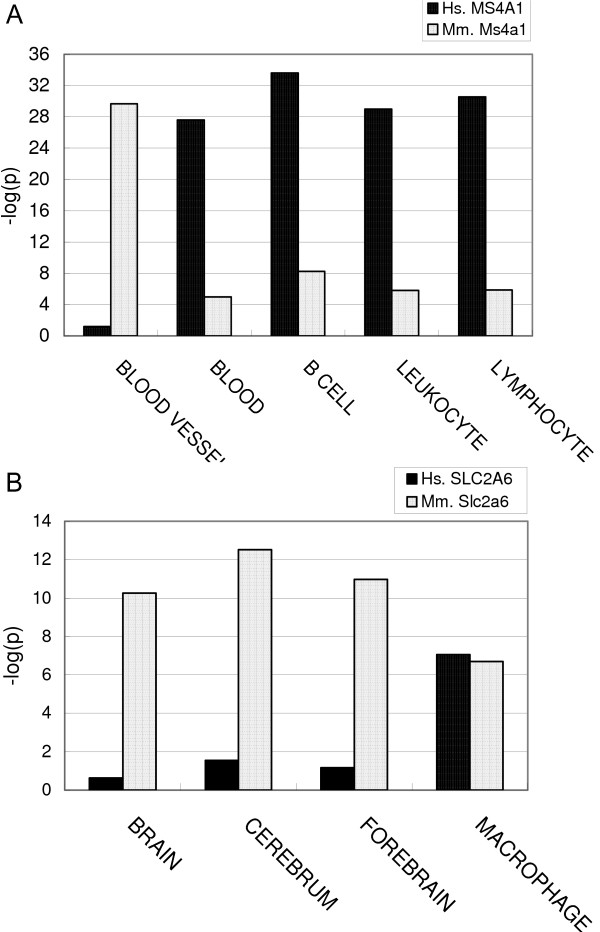
To deal with the issue of tissue source, in this work, we carefully screened and organized more than 8 million human and mouse ESTs into 157 human and 108 mouse tissue/organ categories, to which we applied an established statistic test using different thresholds of the p value to identify genes differentially expressed in different tissues. Further analysis of the tissue distribution and level of expression of human and mouse orthologous genes showed that tissue-specific orthologs tended to have more similar expression patterns than those lacking significant tissue specificity. On the other hand, a number of orthologs were found to have significant disparity in their expression profiles, hinting at novel functions, divergent regulation, or new ortholog relationships.
Comprehensive statistics on the tissue-specific expression of human and mouse genes were obtained in this very large-scale, EST-based analysis. These statistical results have been organized into a database, freely accessible at our website http://gln.ibms.sinica.edu.tw/product/HMDEG/EST/index.php, for easy searching of human and mouse tissue-specific genes and for investigating gene expression profiles in the context of comparative genomics. Comparative analysis showed that, although highly tissue-specific genes tend to exhibit similar expression profiles in human and mouse, there are significant exceptions, indicating that orthologous genes, while sharing basic genomic properties, could result in distinct phenotypes.
在基因组规模上筛选差异表达基因,并对物种间直系同源基因的表达谱进行比较分析以研究基因功能和调控,正变得越来越可行。由于公共领域现有的丰富文库和海量数据,表达序列标签(EST)是使用生物信息学方法进行此类研究的绝佳数据来源。然而,任何基于大规模EST的生物信息学分析都必须处理用于描述EST文库的异质性且通常模糊的组织和器官术语。
为了解决组织来源问题,在本研究中,我们仔细筛选并将超过800万个人类和小鼠EST组织成157个人类和108个小鼠组织/器官类别,并对其应用既定的统计测试,使用不同的p值阈值来鉴定在不同组织中差异表达的基因。对人类和小鼠直系同源基因的组织分布和表达水平的进一步分析表明,组织特异性直系同源基因往往比那些缺乏显著组织特异性的基因具有更相似的表达模式。另一方面,发现许多直系同源基因在其表达谱上存在显著差异,这暗示着新功能、不同的调控或新的直系同源关系。
在这项基于大规模EST的分析中获得了人类和小鼠基因组织特异性表达的综合统计数据。这些统计结果已被整理成一个数据库,可在我们的网站http://gln.ibms.sinica.edu.tw/product/HMDEG/EST/index.php上免费访问,以便轻松搜索人类和小鼠组织特异性基因,并在比较基因组学的背景下研究基因表达谱。比较分析表明,尽管高度组织特异性的基因在人类和小鼠中往往表现出相似的表达谱,但也有显著的例外情况,这表明直系同源基因虽然共享基本的基因组特性,但可能导致不同的表型。