Tarran Robert, Trout Laura, Donaldson Scott H, Boucher Richard C
Cystic Fibrosis/Pulmonary Research and Treatment Center, The University of North Carolina, Chapel Hill 27599, USA.
J Gen Physiol. 2006 May;127(5):591-604. doi: 10.1085/jgp.200509468.
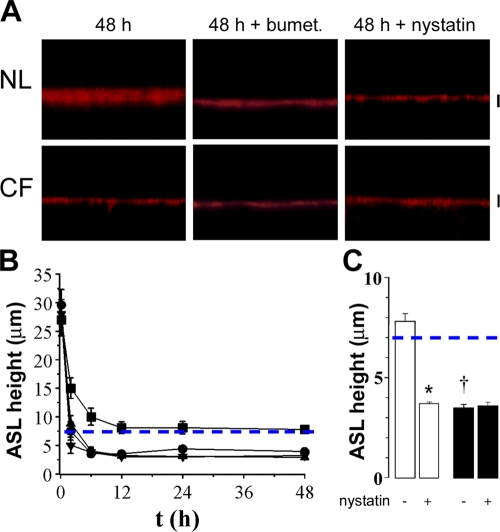
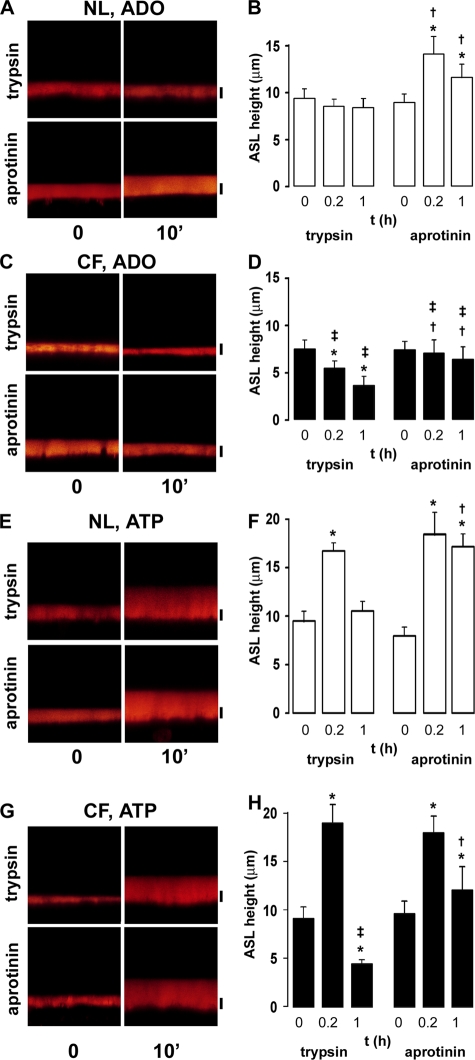
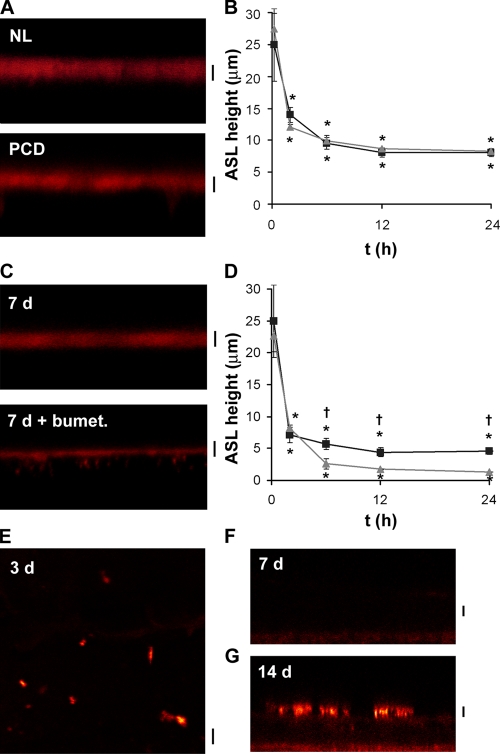
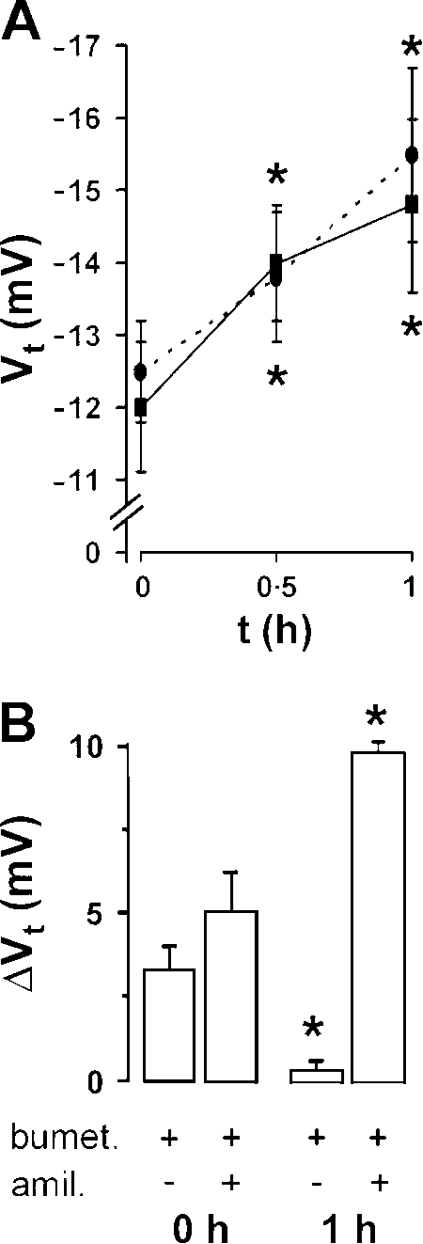
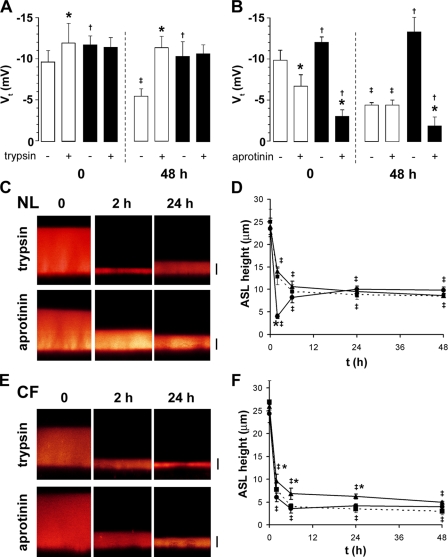
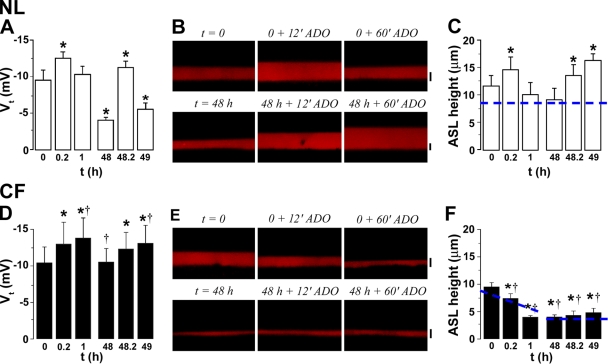
A key aspect of the lung's innate defense system is the ability of the superficial epithelium to regulate airway surface liquid (ASL) volume to maintain a 7-mum periciliary liquid layer (PCL), which is required for cilia to beat and produce mucus flow. The mechanisms whereby airway epithelia regulate ASL height to >or=7 microm are poorly understood. Using bumetanide as an inhibitor of Cl- secretion, and nystatin as an activator of Na+ absorption, we found that a coordinated "blending" of both Cl- secretion and Na+ absorption must occur to effect ASL volume homeostasis. We then investigated how ASL volume status is regulated by the underlying epithelia. Cilia were not critical to this process as (a) ASL volume was normal in cultures from patients with primary ciliary dyskinesia with immotile cilia, and (b) in normal cultures that had not yet undergone ciliogenesis. However, we found that maneuvers that mimic deposition of excess ASL onto the proximal airways, which occurs during mucociliary clearance and after glandular secretion, acutely stimulated Na+ absorption, suggesting that volume regulation was sensitive to changes in concentrations of soluble mediators in the ASL rather than alterations in ciliary beating. To investigate this hypothesis further, we added potential "soluble mediators" to the ASL. ASL volume regulation was sensitive to a channel-activating protein (CAP; trypsin) and a CAP inhibitor (aprotinin), which regulated Na+ absorption via changes in epithelial Na+ channel (ENaC) activity in both normal and cystic fibrosis cultures. ATP was also found to acutely regulate ASL volume by inducing secretion in normal and cystic fibrosis (CF) cultures, while its metabolite adenosine (ADO) evoked secretion in normal cultures but stimulated absorption in CF cultures. Interestingly, the amount of ASL/Cl- secretion elicited by ATP/ADO was influenced by the level of CAP-induced Na+ absorption, suggesting that there are important interactions between the soluble regulators which finely tune ASL volume.
肺固有防御系统的一个关键方面是表层上皮调节气道表面液体(ASL)量以维持7微米厚的纤毛周围液体层(PCL)的能力,而纤毛摆动和产生黏液流动需要该液体层。气道上皮调节ASL高度至≥7微米的机制尚不清楚。我们使用布美他尼作为氯离子分泌抑制剂,制霉菌素作为钠离子吸收激活剂,发现氯离子分泌和钠离子吸收的协同“混合”必须发生才能实现ASL量的稳态。然后我们研究了基础上皮如何调节ASL量状态。纤毛对该过程并不关键,因为(a)原发性纤毛运动障碍患者纤毛不动的培养物中ASL量正常,以及(b)尚未发生纤毛发生的正常培养物中也是如此。然而,我们发现模拟在黏液纤毛清除期间和腺体分泌后近端气道上多余ASL沉积的操作会急性刺激钠离子吸收,这表明容量调节对ASL中可溶性介质浓度的变化敏感,而不是对纤毛摆动的改变敏感。为了进一步研究该假设,我们向ASL中添加了潜在的“可溶性介质”。ASL量调节对通道激活蛋白(CAP;胰蛋白酶)和CAP抑制剂(抑肽酶)敏感,它们通过改变正常和囊性纤维化培养物中的上皮钠离子通道(ENaC)活性来调节钠离子吸收。还发现ATP通过在正常和囊性纤维化(CF)培养物中诱导分泌来急性调节ASL量,而其代谢产物腺苷(ADO)在正常培养物中引起分泌,但在CF培养物中刺激吸收。有趣的是,ATP/ADO引起的ASL/氯离子分泌量受CAP诱导的钠离子吸收水平影响,这表明可溶性调节剂之间存在重要相互作用,可精细调节ASL量。