Zhu C-Q, Cutz J-C, Liu N, Lau D, Shepherd F A, Squire J A, Tsao M-S
Division of Applied Molecular Oncology, Ontario Cancer Institute, Ontario, Toronto, Canada.
Br J Cancer. 2006 May 22;94(10):1452-9. doi: 10.1038/sj.bjc.6603110.
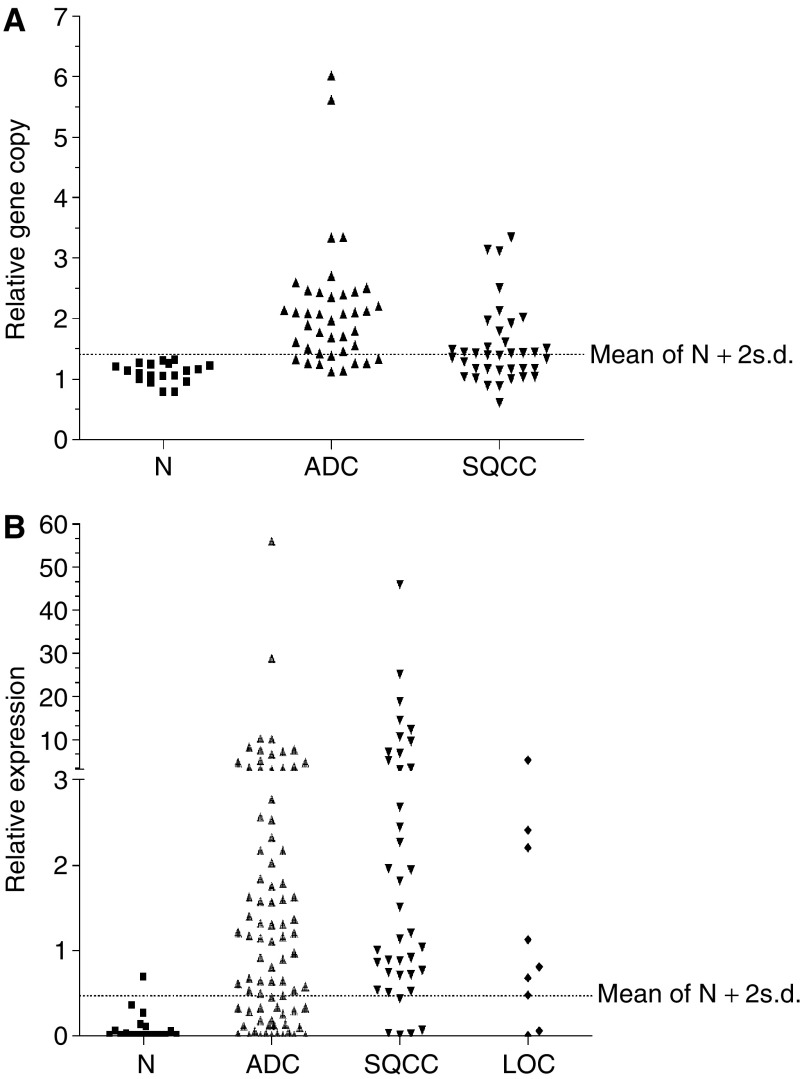
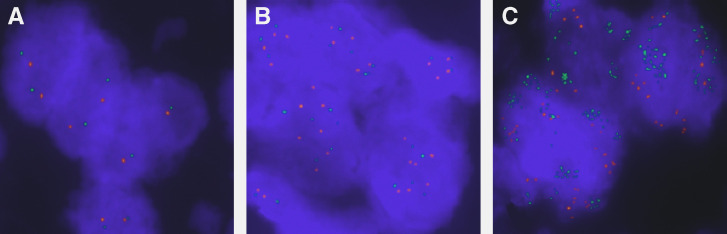
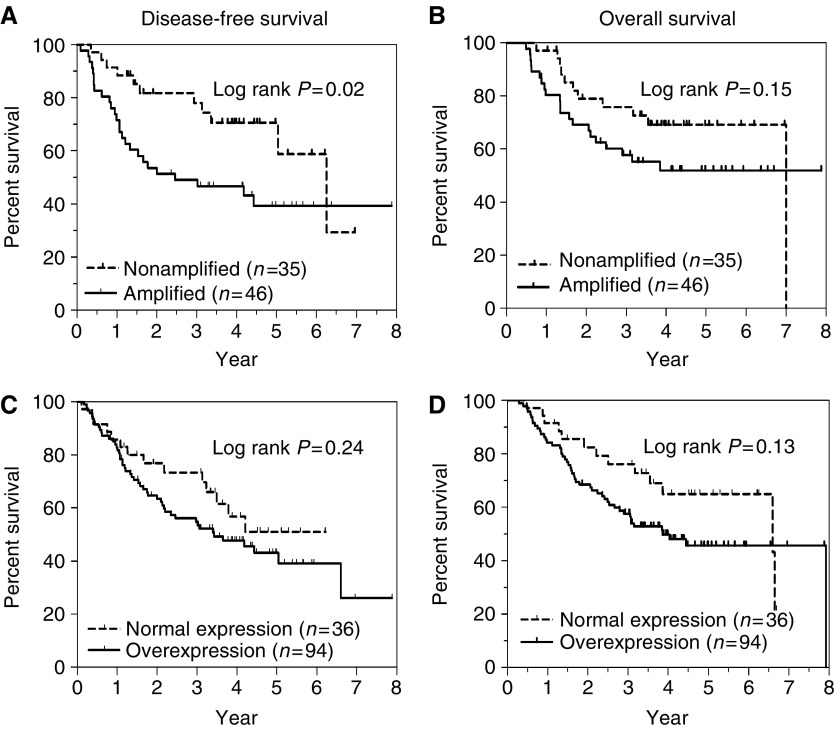
Telomerase reactivation is a hallmark of human carcinogenesis. Increased telomerase activity may result from gene amplification and/or overexpression. This study evaluates the prognostic value of hTERT gene amplification and mRNA overexpression in 144 resectable non-small-cell lung cancer (NSCLC) specimens. The hTERT gene copy number was assessed by quantitative polymerase chain reaction (qPCR) on laser-capture microdissected tumour cells of 81 tumours, and by fluorescence in situ hybridisation (FISH) on a subset of 59 tumours. hTERT mRNA level was determined by reverse transcription (RT)-qPCR in 130 tumours. In total, 57% of (46 out of 81) primary NSCLC specimens demonstrated hTERT amplification, which was significantly more common (P<0.001) in adenocarcinoma (30 out of 40) than in squamous cell carcinoma (13 out of 37). The hTERT mRNA overexpression was noted in 74% (94 out of 130) of tumours; it was more frequent in squamous cell than in adenocarcinoma (87 vs 68%, P=0.03). Overexpression was significantly associated with amplification (P=0.03), especially in adenocarcinoma. The hTERT gene amplification was prognostic for shorter recurrence-free survival (hazard ratio=2.16, P=0.03). These data indicate that gene amplification is an important mechanism for hTERT overexpression in lung adenocarcinoma and is an independent poor prognostic marker for disease-free survival in NSCLC.
端粒酶重新激活是人类致癌作用的一个标志。端粒酶活性增加可能源于基因扩增和/或过表达。本研究评估了hTERT基因扩增和mRNA过表达在144例可切除的非小细胞肺癌(NSCLC)标本中的预后价值。通过对81个肿瘤的激光捕获显微切割肿瘤细胞进行定量聚合酶链反应(qPCR),以及对59个肿瘤的一个子集进行荧光原位杂交(FISH)来评估hTERT基因拷贝数。通过逆转录(RT)-qPCR测定130个肿瘤中的hTERT mRNA水平。总共,57%(81例中的46例)原发性NSCLC标本显示hTERT扩增,其在腺癌(40例中的30例)中比在鳞状细胞癌(37例中的13例)中显著更常见(P<0.001)。74%(130例中的94例)的肿瘤中观察到hTERT mRNA过表达;其在鳞状细胞癌中比在腺癌中更频繁(87%对68%,P=0.03)。过表达与扩增显著相关(P=0.03),尤其是在腺癌中。hTERT基因扩增对无复发生存期较短具有预后意义(风险比=2.16,P=0.03)。这些数据表明基因扩增是肺腺癌中hTERT过表达的一个重要机制,并且是NSCLC无病生存的一个独立不良预后标志物。