Department of Botany, Ohio University, Athens, Ohio 45701.
Plant Physiol. 1972 Jan;49(1):72-81. doi: 10.1104/pp.49.1.72.
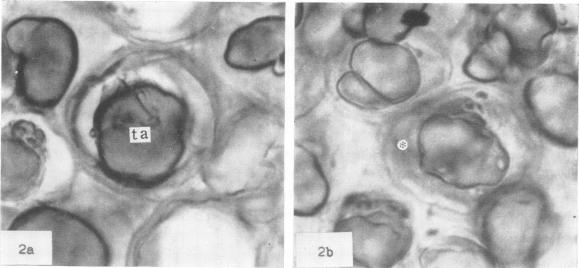
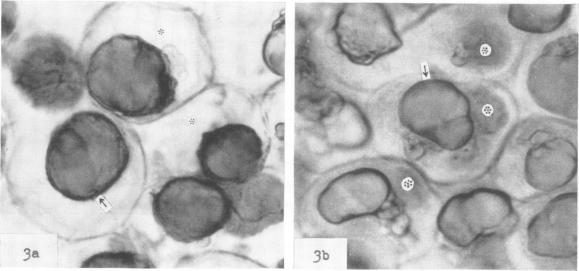
Volume and conformational changes of the contractile tannin vacuoles of the abaxial motor cells of the primary pulvinus of Mimosa pudica L. parallel the seismonastic leaf movement. Since such changes in cells and organelles of animal systems are often regulated by calcium, we studied Ca(2+) movement in the motor cells and tissue. By fixation with Lillie's neutral buffered formalin, followed by staining with alizarin red sulfate (ARS), calcium was localized in the tannin vacuoles of the motor cells of the primary pulvinus. After treatment with ethylenediaminetetraacetate, 8-hydroxyquinoline, and several other calcium-complexing or extracting agents, the color reaction due to alizarin red sulfonate was no longer present. By using an analytical method, it was shown that the effluent from stimulated pulvini has significantly more Ca(2+) than that from unstimulated controls. Ten millimolar LaCl(3) inhibits recovery of the tannin vacuole in vivo in 10 mm CaCl(2) or in distilled water. Quantitative data obtained by microspectrophotometry demonstrated calcium migration during the bending movement of the primary pulvinus. In the adaxial motor cells a small amount of calcium migrates from the tannin vacuole, and calcium on the cell wall moves to the central vacuole. In the abaxial half, a large amount of calcium from the tannin vacuole moves to the central vacuole of the motor cell. It is probable that the calcium binds to the microfibrillar contents of the central vacuole. These observations support the contention that Ca(2+) migrates between the surface of the tannin vacuole and the inside of the central vacuole. The recovery and maintenance of the tannin vacuole in the spherical form may play a role in maintaining turgor in the motor cells of the abaxial half of the primary pulvinus of Mimosa.
含羞草复叶叶柄下的运动细胞中的收缩型单宁液泡的体积和构象变化与感震性叶运动平行。由于动物系统中的细胞和细胞器的此类变化通常受钙调节,因此我们研究了运动细胞和组织中的钙运动。通过用 Lillie 的中性缓冲福尔马林固定,然后用茜素红硫酸盐(ARS)染色,钙被定位在初级叶枕运动细胞的单宁液泡中。用乙二胺四乙酸、8-羟基喹啉和其他几种钙络合或提取剂处理后,由于茜素红磺酸盐的显色反应不再存在。通过使用分析方法,表明受刺激的叶枕的流出物中 Ca(2+) 的含量明显高于未受刺激的对照物。10mM LaCl(3) 抑制了在 10mM CaCl(2) 或蒸馏水中体内单宁液泡的恢复。通过微量分光光度法获得的定量数据表明,在初级叶枕的弯曲运动过程中钙发生了迁移。在腹侧运动细胞中,少量钙从单宁液泡中迁移出来,细胞壁上的钙移动到中央液泡。在背面的一半,大量来自单宁液泡的钙移动到运动细胞的中央液泡。很可能钙与中央液泡的微纤维内容物结合。这些观察结果支持 Ca(2+) 在单宁液泡表面和中央液泡内部之间迁移的论点。单宁液泡恢复并保持球形可能在维持含羞草初级叶枕背面运动细胞的膨压中起作用。