Department of Agricultural Biochemistry, University of Nebraska-Lincoln, East Campus, Lincoln, Nebraska 68583-0718.
Plant Physiol. 1986 Dec;82(4):1107-14. doi: 10.1104/pp.82.4.1107.
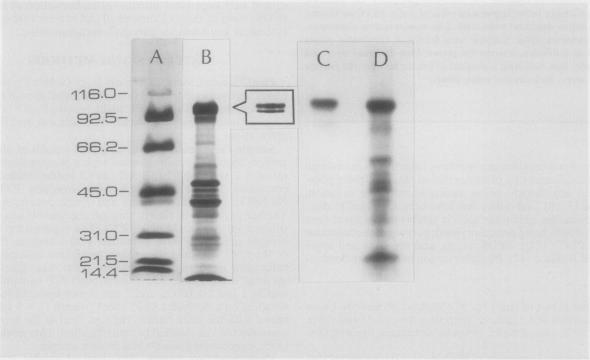
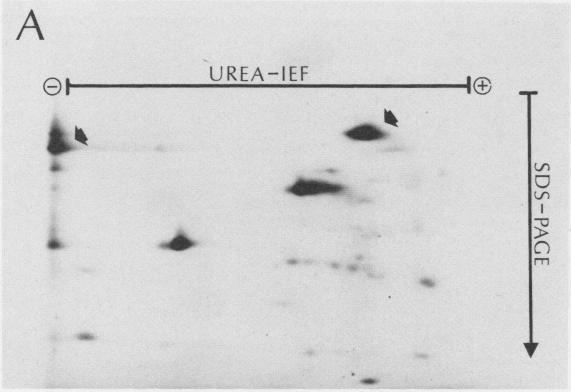
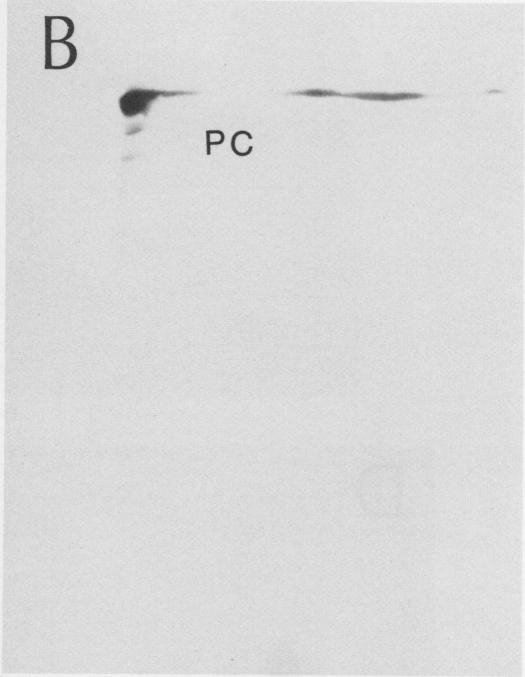
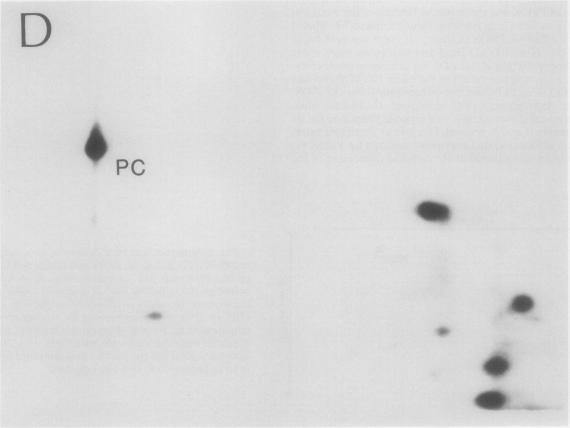
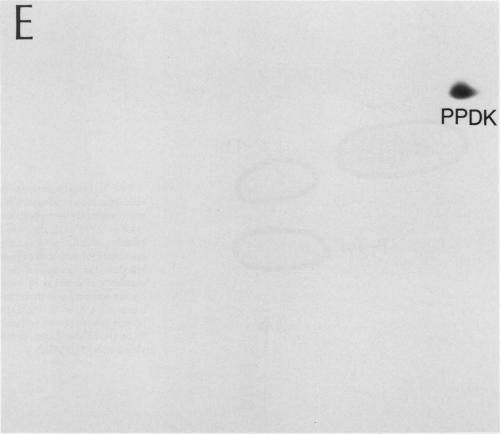
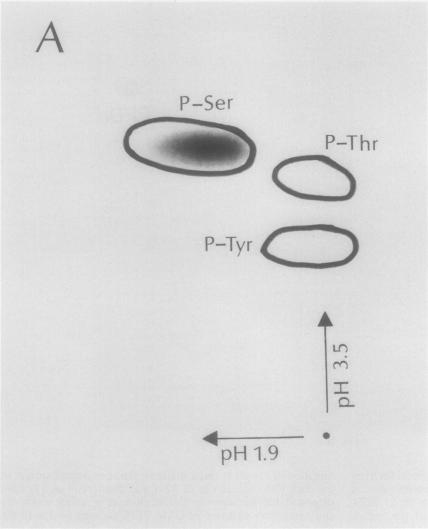
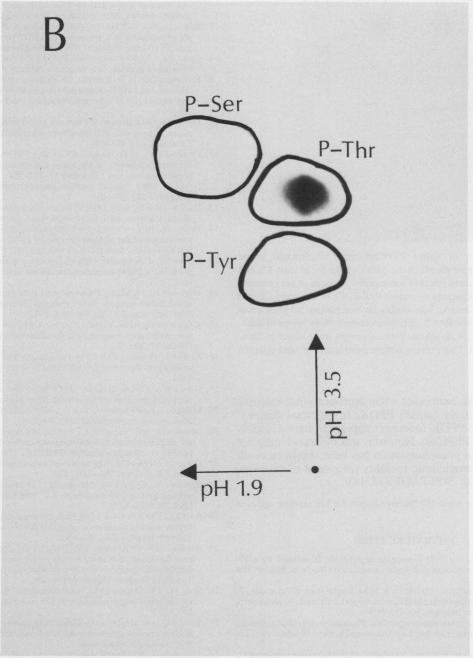
Autoradiography of total soluble maize (Zea mays) leaf proteins incubated with (32)P-labeled adenylates and separated by denaturing electrophoresis revealed that many polypeptides were phosphorylated in vitro by endogenous protein kinase(s). The most intense band was at 94 to 100 kilodaltons and was observed when using either [gamma-(32)P]ATP or [beta-(32)P]ADP as the phosphate donor. This band was comprised of the subunits of both pyruvate, Pi dikinase (PPDK) and phosphoenolpyruvate carboxylase (PEPCase). PPDK activity was previously shown to be dark/light-regulated via a novel ADP-dependent phosphorylation/Pi-dependent dephosphorylation of a threonyl residue. The identity of the acid-stable 94 to 100 kilodalton band phosphorylated by ATP was established unequivocally as PEPCase by two-dimensional gel electrophoresis and immunoblotting. The phosphorylated amino acid was a serine residue, as determined by two-dimensional thin-layer electrophoresis. While the in vitro phosphorylation of PEPCase from illuminated maize leaves by an endogenous protein kinase resulted in a partial inactivation ( approximately 25%) of the enzyme when assayed at pH 7 and subsaturating levels of PEP, effector modulation by l-malate and glucose-6-phosphate was relatively unaffected. Changes in the aggregation state of maize PEPCase (homotetrameric native structure) were studied by nondenaturing electrophoresis and immunoblotting. Enzyme from leaves of illuminated plants dissociated upon dilution, whereas the protein from darkened tissue did not dissociate, thus indicating a physical difference between the enzyme from light- versus dark-adapted maize plants.
用放射性同位素 32P 标记的腺嘌呤核苷酸孵育并经变性电泳分离的总可溶性玉米(Zea mays)叶蛋白的放射自显影表明,许多多肽在体内蛋白激酶的作用下发生了磷酸化。最强烈的带位于 94 到 100 千道尔顿之间,使用[γ-(32)P]ATP 或[β-(32)P]ADP 作为磷酸供体时均可观察到该条带。该条带由丙酮酸,Pi 二激酶(PPDK)和磷酸烯醇丙酮酸羧化酶(PEPCase)的亚基组成。先前的研究表明,PPDK 活性通过一种新型的 ADP 依赖性磷酸化/ Pi 依赖性去磷酸化调节黑暗/光照调节,该调节作用依赖于一个苏氨酸残基。通过二维凝胶电泳和免疫印迹,明确了用 ATP 磷酸化的酸性稳定的 94 到 100 千道尔顿带的身份为 PEPCase。通过二维薄层层析电泳确定,被磷酸化的氨基酸为丝氨酸残基。当在 pH7 和亚饱和 PEP 水平下测定时,来自照光玉米叶片的内源性蛋白激酶对 PEPCase 的体外磷酸化导致该酶的部分失活(约 25%),但效应物对 L-苹果酸和葡萄糖-6-磷酸的调节作用相对不受影响。通过非变性电泳和免疫印迹研究了玉米 PEPCase 的聚合状态(同源四聚体天然结构)的变化。来自照光植物叶片的酶在稀释时会解离,而来自黑暗组织的蛋白质则不会解离,这表明光适应和暗适应的玉米植物中的酶之间存在物理差异。