Pinson Jeni, Simpson T Ian, Mason John O, Price David J
Genes and Development Group, Centre for Integrative Physiology, University of Edinburgh, Hugh Robson Building, George Square, Edinburgh EH8 9XD, UK.
BMC Dev Biol. 2006 May 25;6:25. doi: 10.1186/1471-213X-6-25.
Pax6 is a transcription factor essential for normal development of the eyes and nervous system. It has two major isoforms, Pax6 and Pax6(5a), and the ratios between their expression levels vary within narrow limits. We tested the effects of overexpressing either one or other isoform on endogenous Pax6 expression levels in Neuro2A and NIH3T3 cells.
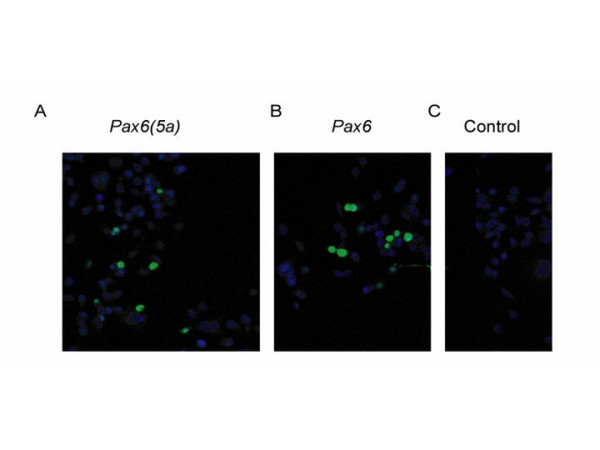
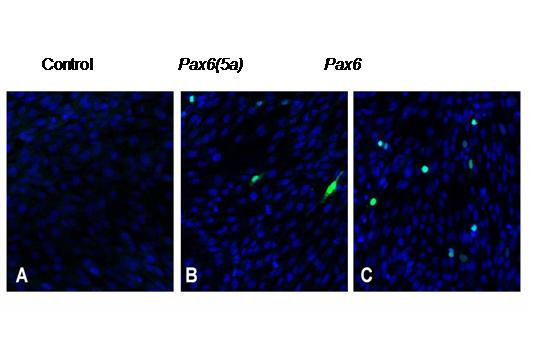
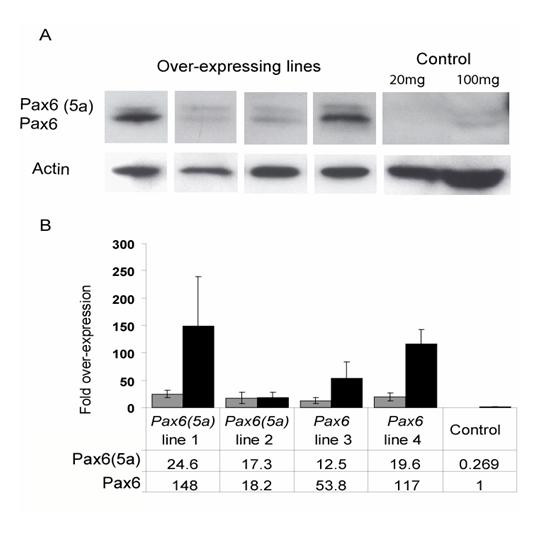
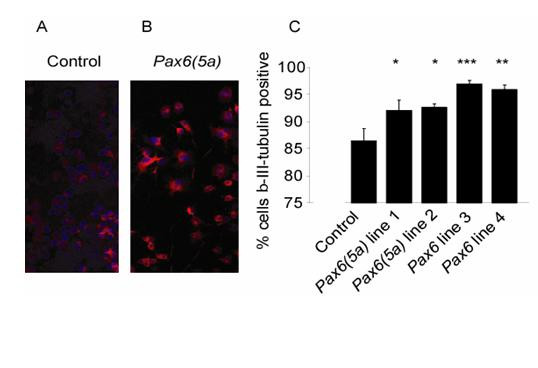
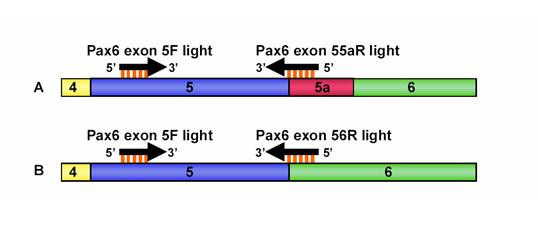
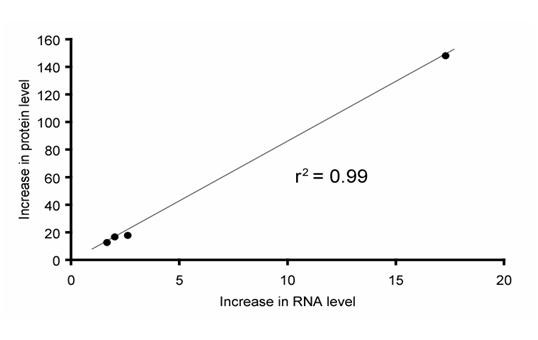
We found that both isoforms caused an up-regulation of endogenous Pax6 expression in cells with (Neuro2A) or without (NIH3T3) constitutive Pax6 expression. Western blots showed that cells stably transfected with constructs expressing either Pax6 or Pax6(5a) contained raised levels of both Pax6 and Pax6(5a). Quantitative RT-PCR confirmed an increase in levels of Pax6(5a) mRNA in cells containing Pax6-expressing constructs and an increase in levels of Pax6 mRNA in cells containing Pax6(5a)-expressing constructs. The fact that the introduction of constructs expressing only one isoform increased the cellular levels of not only that isoform but also the other indicates that activation of the endogenous Pax6 locus occurred. The ratio between the levels of the two isoforms was maintained close to physiological values. The overexpression of either isoform in neuroblastoma (Neuro2A) cell lines also promoted morphological change and an increase in beta-III-tubulin expression, indicating an increase in neurogenesis.
Our results demonstrate that Pax6 can up-regulate production of Pax6 protein from an entire intact endogenous Pax6 locus in its genomic environment. This adds to previous studies showing that Pax6 can up-regulate reporter expression driven by isolated Pax6 regulatory elements. Furthermore, our results suggest that an important function of positive feedback might be to stabilise the relative levels of Pax6 and Pax6(5a).
Pax6是一种转录因子,对眼睛和神经系统的正常发育至关重要。它有两种主要的异构体,Pax6和Pax6(5a),它们的表达水平之比在狭窄范围内变化。我们测试了过表达其中一种异构体对Neuro2A和NIH3T3细胞内源性Pax6表达水平的影响。
我们发现,两种异构体均导致在组成型表达Pax6的细胞(Neuro2A)或不表达Pax6的细胞(NIH3T3)中内源性Pax6表达上调。蛋白质免疫印迹显示,稳定转染表达Pax6或Pax6(5a)构建体的细胞中,Pax6和Pax6(5a)的水平均升高。定量逆转录聚合酶链反应证实,含有表达Pax6构建体的细胞中Pax6(5a) mRNA水平增加,而含有表达Pax6(5a)构建体的细胞中Pax6 mRNA水平增加。仅表达一种异构体的构建体的引入不仅增加了该异构体的细胞水平,还增加了另一种异构体的细胞水平,这一事实表明内源性Pax6基因座被激活。两种异构体水平之间的比例维持在接近生理值的水平。在神经母细胞瘤(Neuro2A)细胞系中过表达任何一种异构体也促进了形态变化和β-III-微管蛋白表达增加,表明神经发生增加。
我们的结果表明,Pax6可以在其基因组环境中从完整的内源性Pax6基因座上调Pax6蛋白的产生。这补充了先前的研究,即Pax6可以上调由分离的Pax6调控元件驱动的报告基因表达。此外,我们的结果表明,正反馈的一个重要功能可能是稳定Pax6和Pax6(5a)的相对水平。