Raju Deepa, Waters Michael, Setlow Peter, Sarker Mahfuzur R
Department of Biomedical Sciences, College of Veterinary Medicine, Oregon State University, Corvallis, Oregon 97331, USA.
BMC Microbiol. 2006 Jun 8;6:50. doi: 10.1186/1471-2180-6-50.
Clostridium perfringens type A food poisoning is caused by enterotoxigenic C. perfringens type A isolates that typically possess high spore heat-resistance. The molecular basis for C. perfringens spore heat-resistance remains unknown. In the current study, we investigated the role of small, acid-soluble spore proteins (SASPs) in heat-resistance of spores produced by C. perfringens food poisoning isolates.
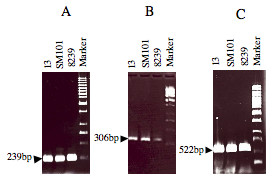
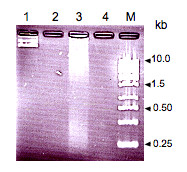
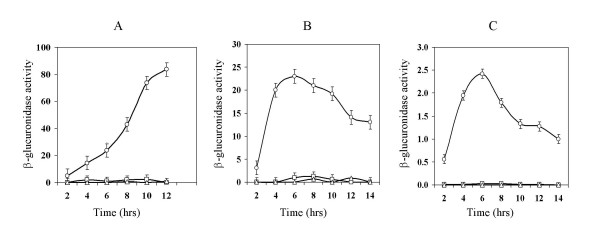
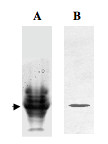
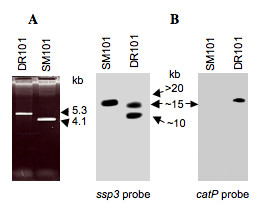
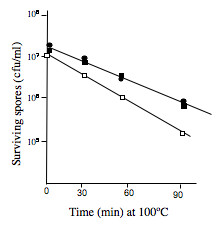
Our current study demonstrated the presence of all three SASP-encoding genes (ssp1, 2 and 3) in five surveyed C. perfringens clinical food poisoning isolates. beta-Glucuronidase assay showed that these ssp genes are expressed specifically during sporulation. Consistent with these expression results, our study also demonstrated the production of SASPs by C. perfringens food poisoning isolates. When the heat sensitivities of spores produced by a ssp3 knock-out mutant of a C. perfringens food poisoning isolate was compared with that of spores of the wild-type strain, spores of the ssp3 mutant were found to exhibit a lower decimal reduction value (D value) at 100 degrees C than exhibited by the spores of wild-type strain. This effect was restored by complementing the ssp3 mutant with a recombinant plasmid carrying wild-type ssp3, suggesting that the observed differences in D values between spores of wild-type versus ssp3 mutant was due to the specific inactivation of ssp3. Furthermore, our DNA protection assay demonstrated that C. perfringens SASPs can protect DNA from DNase I digestion.
The results from our current study provide evidences that SASPs produced by C. perfringens food poisoning isolates play a role in protecting their spores from heat-damage, which is highly significant and relevant from a food safety perspective. Further detailed studies on mechanism of action of SASPs from C. perfringens should help in understanding the mechanism of protection of C. perfringens spores from heat-damage.
A型产气荚膜梭菌食物中毒是由产肠毒素的A型产气荚膜梭菌分离株引起的,这些分离株通常具有高耐热性孢子。产气荚膜梭菌孢子耐热性的分子基础尚不清楚。在本研究中,我们调查了小的、酸溶性孢子蛋白(SASP)在产气荚膜梭菌食物中毒分离株产生的孢子耐热性中的作用。
我们目前的研究表明,在5株被调查的产气荚膜梭菌临床食物中毒分离株中均存在所有3个SASP编码基因(ssp1、2和3)。β-葡萄糖醛酸酶检测表明,这些ssp基因在孢子形成过程中特异性表达。与这些表达结果一致,我们的研究还证明了产气荚膜梭菌食物中毒分离株能产生SASP。当将产气荚膜梭菌食物中毒分离株的ssp3基因敲除突变体产生的孢子与野生型菌株的孢子的热敏感性进行比较时,发现ssp3突变体的孢子在100℃时的十进制减少值(D值)低于野生型菌株的孢子。用携带野生型ssp3的重组质粒对ssp3突变体进行互补后,这种效应得以恢复,这表明野生型与ssp3突变体孢子之间观察到的D值差异是由于ssp3的特异性失活所致。此外,我们的DNA保护试验表明,产气荚膜梭菌SASP可以保护DNA不被DNase I消化。
我们目前的研究结果提供了证据,表明产气荚膜梭菌食物中毒分离株产生的SASP在保护其孢子免受热损伤方面发挥作用,从食品安全角度来看,这具有高度的重要性和相关性。对产气荚膜梭菌SASP作用机制的进一步详细研究应有助于理解产气荚膜梭菌孢子免受热损伤的保护机制。