Nair S G, Gray S M, Ghitza U E
Behavioral Neuroscience Branch, IRP/NIDA/NIH/DHHS, National Institutes of Health, Baltimore, MD 21224, USA.
Physiol Behav. 2006 Jul 30;88(4-5):559-66. doi: 10.1016/j.physbeh.2006.05.014. Epub 2006 Jun 27.
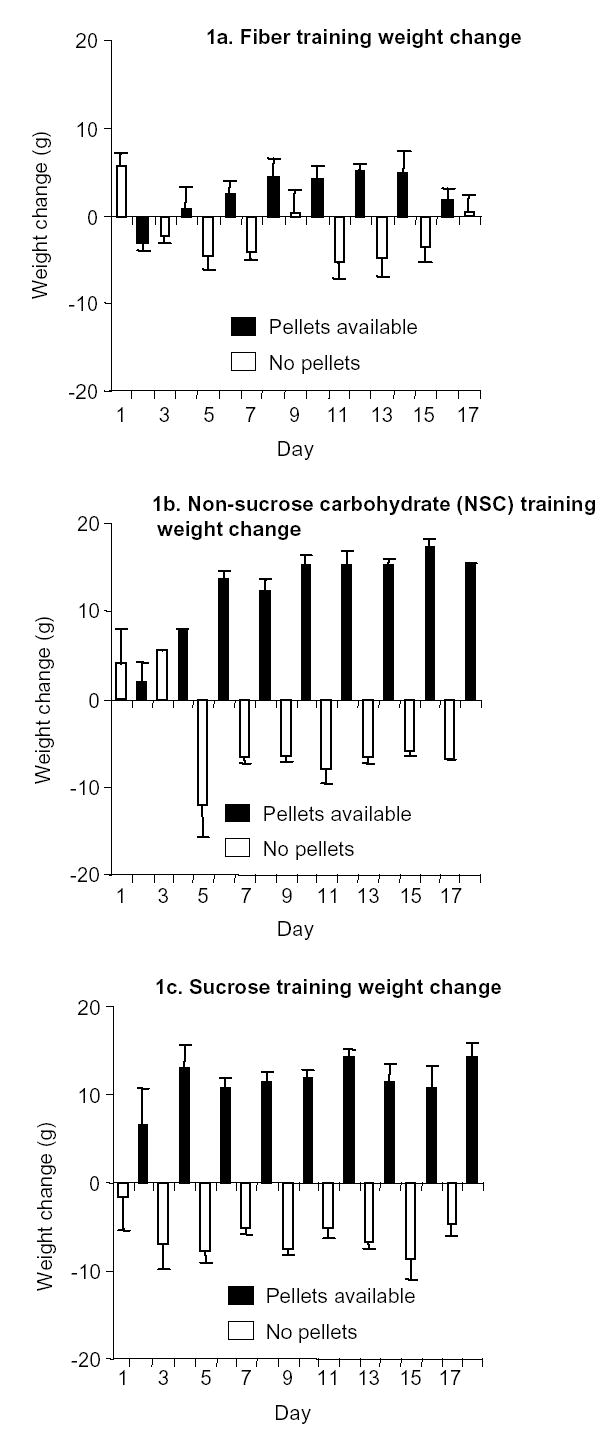
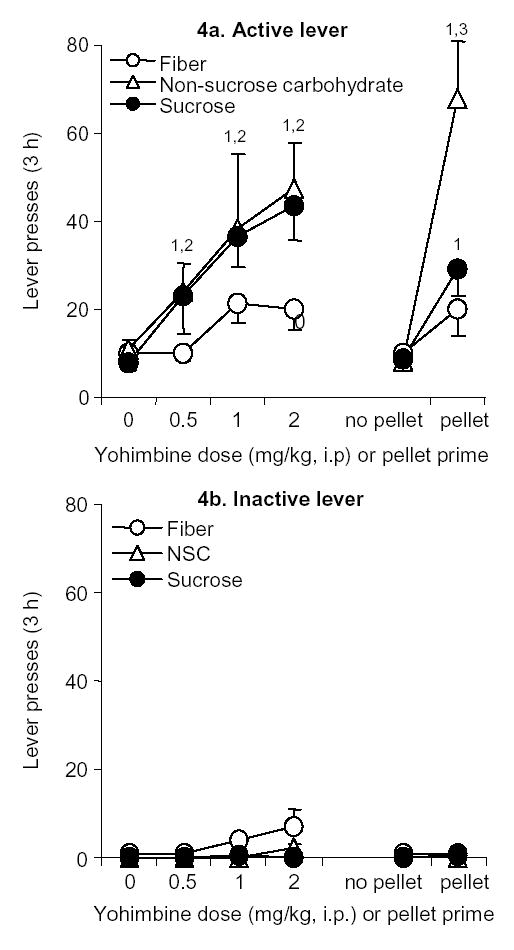
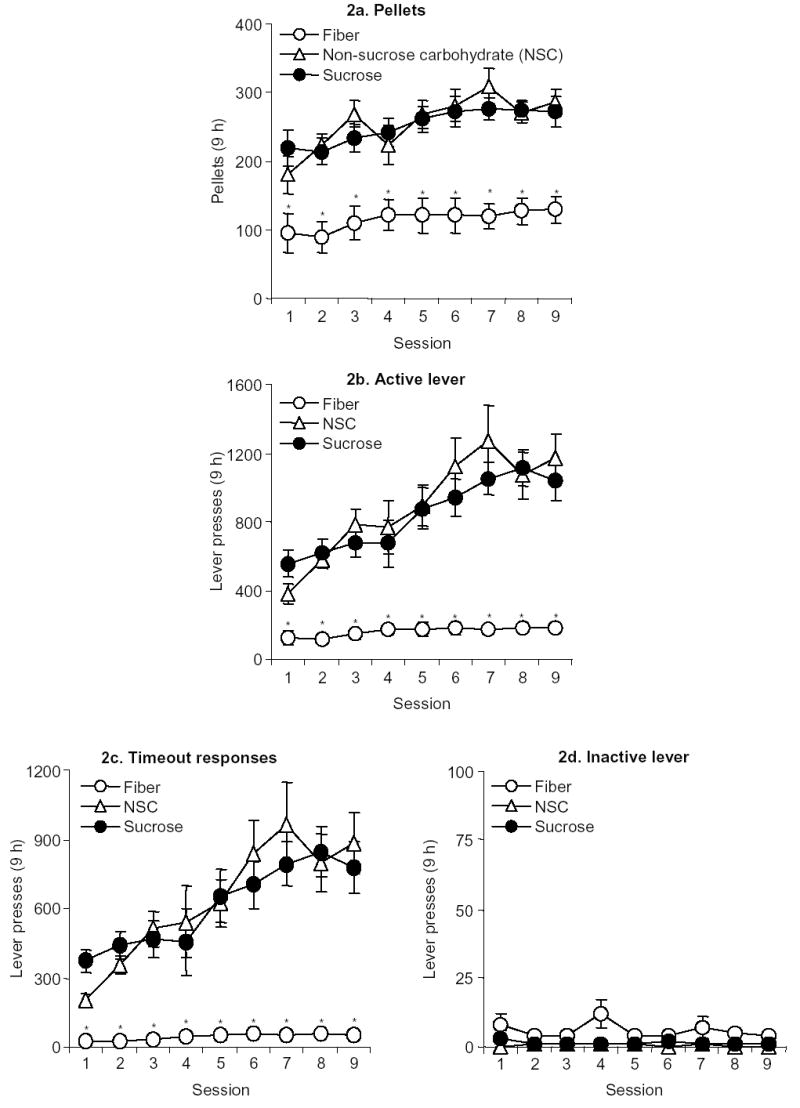
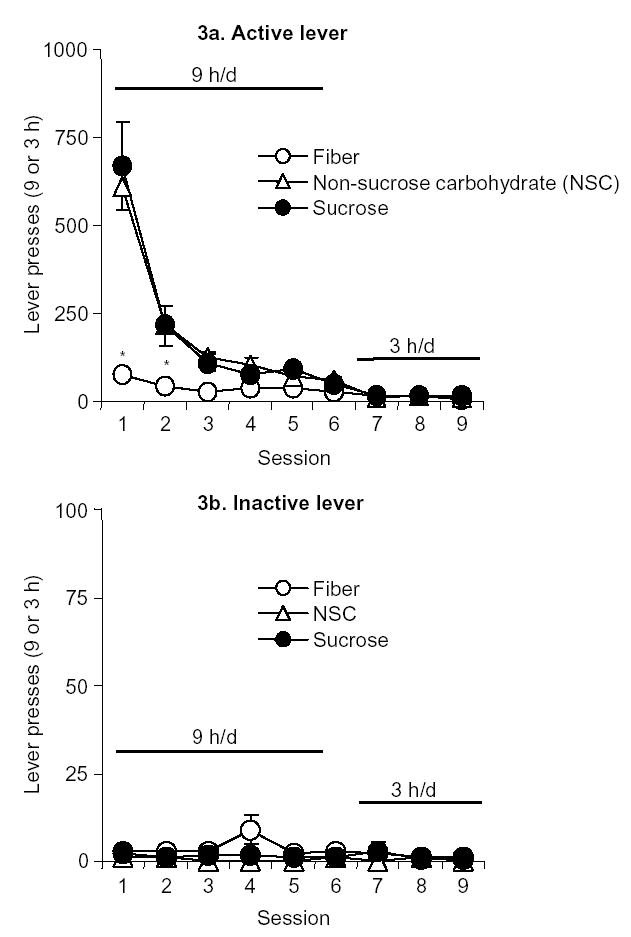
We have recently adapted a reinstatement model, commonly used to study relapse to drugs of abuse, to study the role of stress and anxiety in relapse to palatable food seeking [Ghitza UE, Gray SM, Epstein DH, Rice KC, Shaham Y. The anxiogenic drug yohimbine reinstates palatable food seeking in a rat relapse model: a role of CRF(1) receptors. Neuropsychopharmacology [in press]]. We found that the anxiogenic drug yohimbine, as well as pellet-priming, reinstate food seeking in food restricted rats previously trained to lever press for palatable food pellets (25% fat, 48% carbohydrate). Here, we studied the generality of the effect of yohimbine and pellet priming on reinstatement of food seeking by using three distinct pellet types: non-sucrose carbohydrate (NSC) (5.5% fat, 60% carbohydrate, 4.5% fiber), fiber (0% fat, 0% carbohydrate, 91% fiber) and sucrose (0% fat, 91% carbohydrate, 4% fiber). Rats were placed on a restricted diet (75-80% of daily standard food) and for 9-12 intermittent training days (9 h/day, every other day) lever-pressed for the food pellets under a fixed ratio-1 (20-s timeout) reinforcement schedule. Subsequently, the rats were given 9-10 daily extinction sessions during which lever-presses were not reinforced, and were then injected with yohimbine (0, 0.5, 1.0, 2.0 mg/kg, i.p.) or given a single food pellet to induce reinstatement of food seeking. Yohimbine reinstated food seeking previously reinforced by NSC and sucrose pellets, but had a minimal effect on food seeking in rats previously trained to lever press for fiber pellets. Pellet priming produced a greater degree of reinstatement of lever pressing in rats previously trained on NSC pellets than in rats trained on fiber or sucrose pellets. Results suggest that the magnitude of the effect of yohimbine and pellet priming on reinstatement of food seeking depends in part on the composition of the food pellets used during training.
我们最近采用了一种常用于研究药物滥用复发的复吸模型,来研究压力和焦虑在美味食物寻求复吸中的作用[吉察UE、格雷SM、爱泼斯坦DH、赖斯KC、沙哈姆Y。抗焦虑药物育亨宾在大鼠复吸模型中恢复美味食物寻求:促肾上腺皮质激素释放因子(1)受体的作用。《神经精神药理学》[即将出版]]。我们发现,抗焦虑药物育亨宾以及颗粒启动,能使先前经训练通过杠杆按压获取美味食物颗粒(25%脂肪、48%碳水化合物)的限食大鼠恢复食物寻求行为。在此,我们通过使用三种不同类型的颗粒来研究育亨宾和颗粒启动对食物寻求复吸作用的普遍性:非蔗糖碳水化合物(NSC)(5.5%脂肪、60%碳水化合物、4.5%纤维)、纤维(0%脂肪、0%碳水化合物、91%纤维)和蔗糖(0%脂肪、91%碳水化合物、4%纤维)。将大鼠置于限食状态(每日标准食物量的75 - 80%),并在9 - 12个间歇性训练日(每天9小时,隔天进行)按照固定比率1(20秒超时)强化程序通过杠杆按压获取食物颗粒。随后,大鼠每天接受9 - 10次消退训练,在此期间杠杆按压不给予强化,然后注射育亨宾(0、0.5、1.0、2.0毫克/千克,腹腔注射)或给予单个食物颗粒以诱导食物寻求行为的复吸。育亨宾能使先前由NSC和蔗糖颗粒强化的食物寻求行为恢复,但对先前经训练通过杠杆按压获取纤维颗粒的大鼠的食物寻求行为影响极小。颗粒启动在先前接受NSC颗粒训练的大鼠中比在接受纤维或蔗糖颗粒训练的大鼠中产生了更大程度的杠杆按压复吸。结果表明,育亨宾和颗粒启动对食物寻求复吸的作用程度部分取决于训练期间所用食物颗粒的成分。