Yang Jer-Yen, Xia Weiya, Hu Mickey C-T
Department of Molecular and Cellular Oncology, The University of Texas M.D. Anderson Cancer Center, Houston, 77030, USA.
Int J Oncol. 2006 Sep;29(3):643-8.
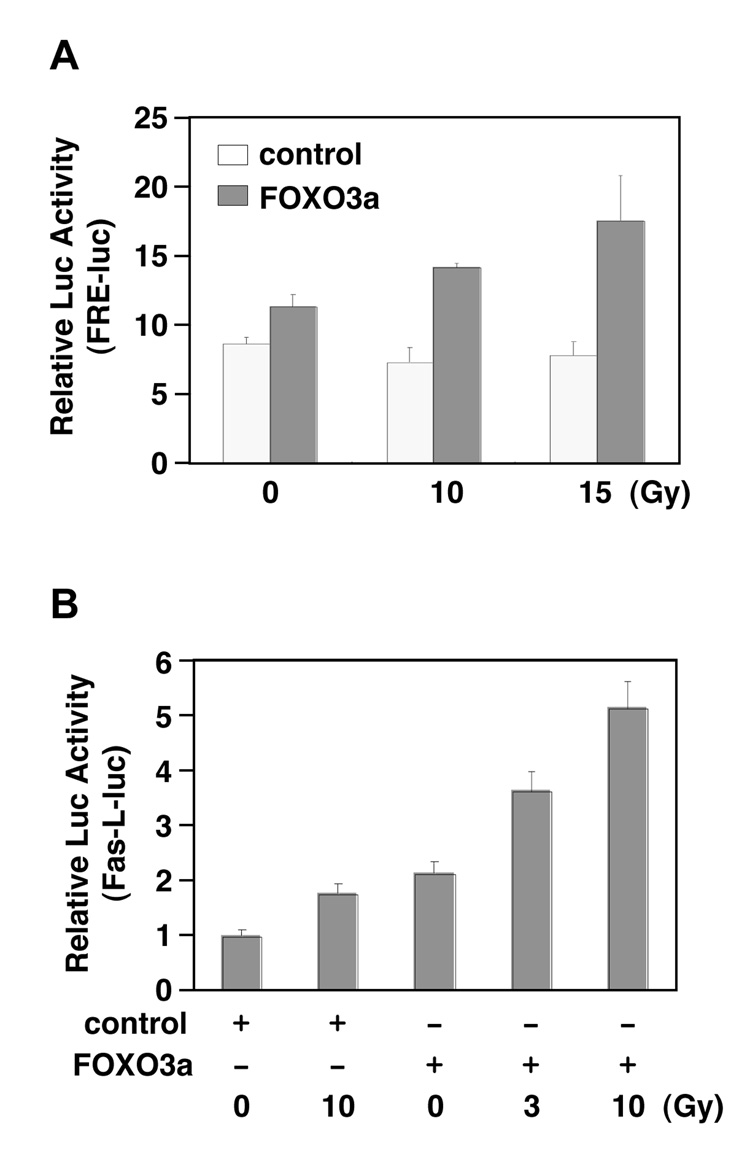
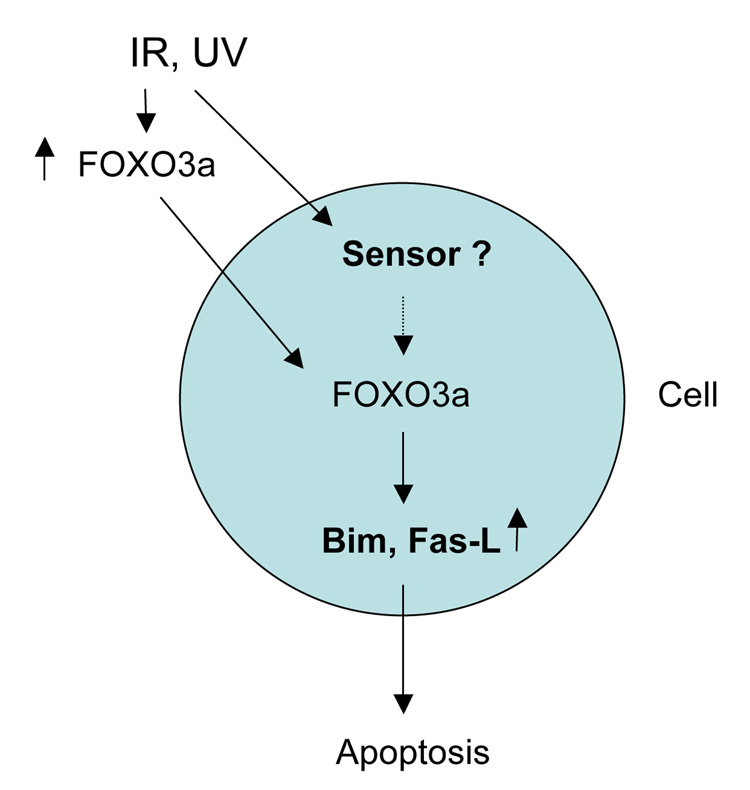
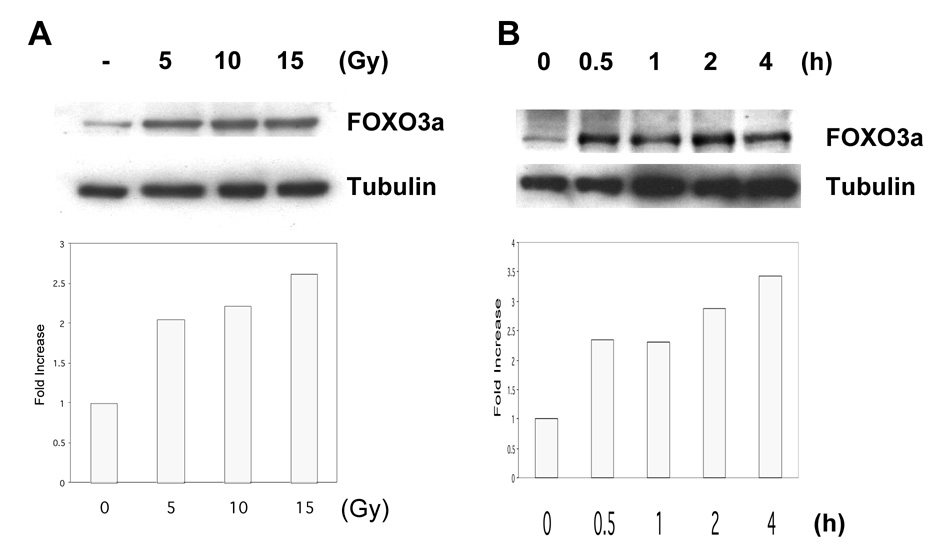
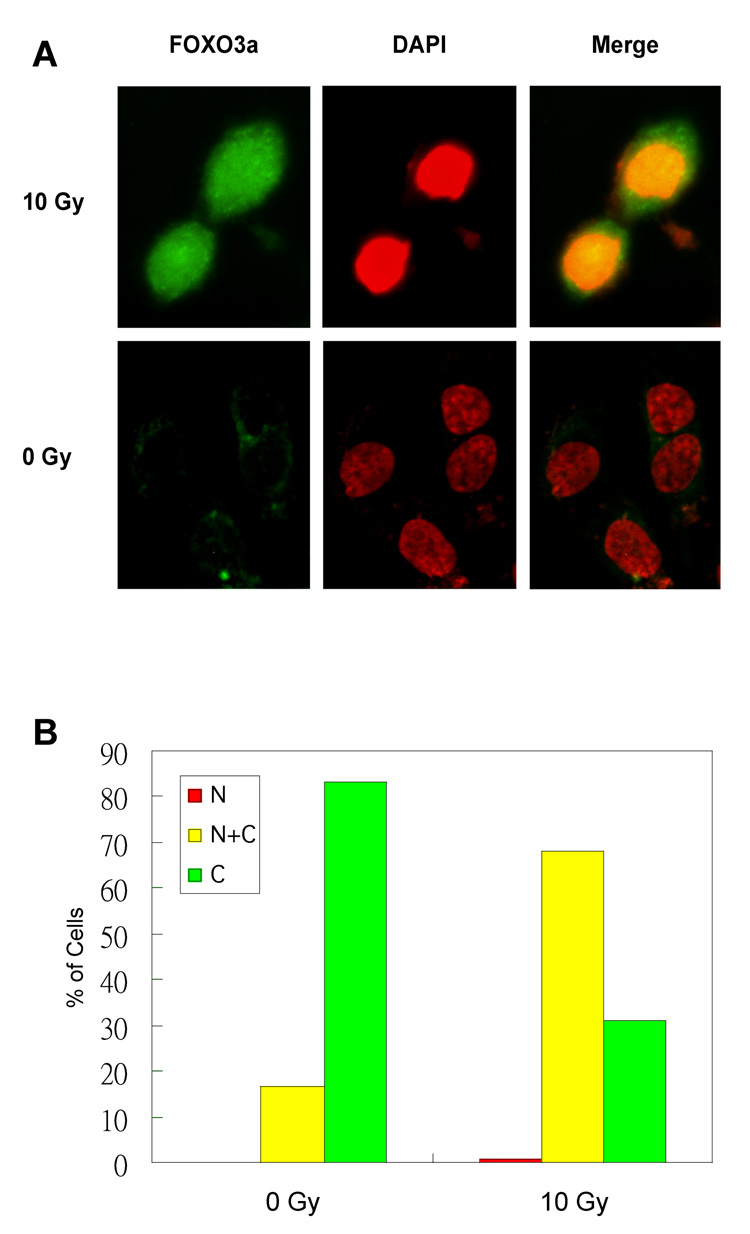
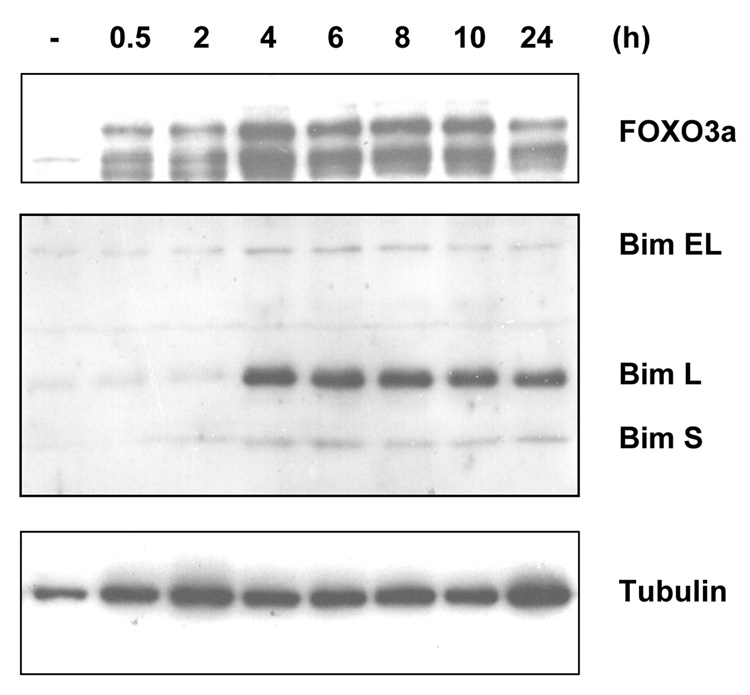
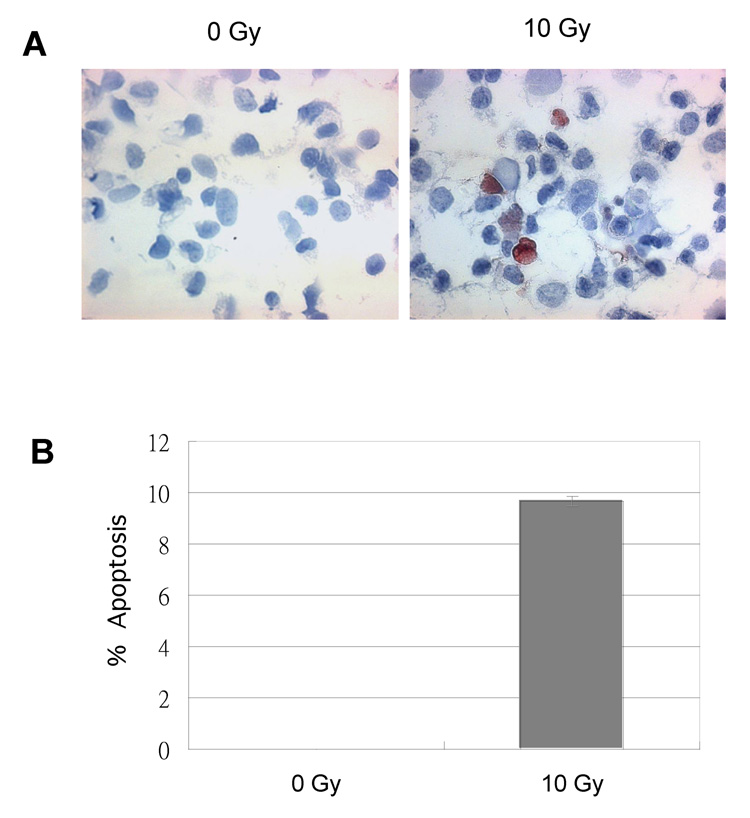
Genotoxic stress such as ionizing radiation can induce DNA damage and promote cell-cycle arrest or apoptosis through either a p53-dependent or -independent pathway. Recently, members of the FOXO Forkhead transcription factor family have been implicated in playing a role in both DNA repair and apoptosis in mammalian cells that promoted us to examine the role of FOXO transcription factors in ionizing radiation-induced apoptosis. Here, we show that ionizing radiation can promote FOXO3a (FKHRL1) transcriptional activity and protein expression level, and induce nuclear translocation of FOXO3a in Saos2, a p53-null osteosarcoma cell line. Ionizing radiation stimulates expression of apoptosis-inducing proteins such as Fas ligand and the Bcl-2 interacting mediator of cell death (Bim) leading to cellular apoptosis. The observed upregulation of proapoptotic genes and apoptosis in cells without p53 in response to ionizing radiation suggests a novel p53-independent mechanism underlying ionizing radiation-induced apoptosis in cancer cells.
诸如电离辐射之类的基因毒性应激可诱导DNA损伤,并通过p53依赖性或非依赖性途径促进细胞周期停滞或凋亡。最近,FOXO叉头转录因子家族成员已被证明在哺乳动物细胞的DNA修复和凋亡中发挥作用,这促使我们研究FOXO转录因子在电离辐射诱导的凋亡中的作用。在此,我们表明电离辐射可促进FOXO3a(FKHRL1)的转录活性和蛋白质表达水平,并诱导FOXO3a在p53缺失的骨肉瘤细胞系Saos2中发生核转位。电离辐射刺激凋亡诱导蛋白如Fas配体和细胞死亡的Bcl-2相互作用介质(Bim)的表达,导致细胞凋亡。在没有p53的细胞中观察到的促凋亡基因上调和凋亡对电离辐射的反应表明,癌细胞中电离辐射诱导凋亡存在一种新的p53非依赖性机制。