Kubota Hiroshi, Brinster Ralph L
Department of Animal Biology, School of Veterinary Medicine, University of Pennsylvania, Philadelphia 19104, USA.
Nat Clin Pract Endocrinol Metab. 2006 Feb;2(2):99-108. doi: 10.1038/ncpendmet0098.
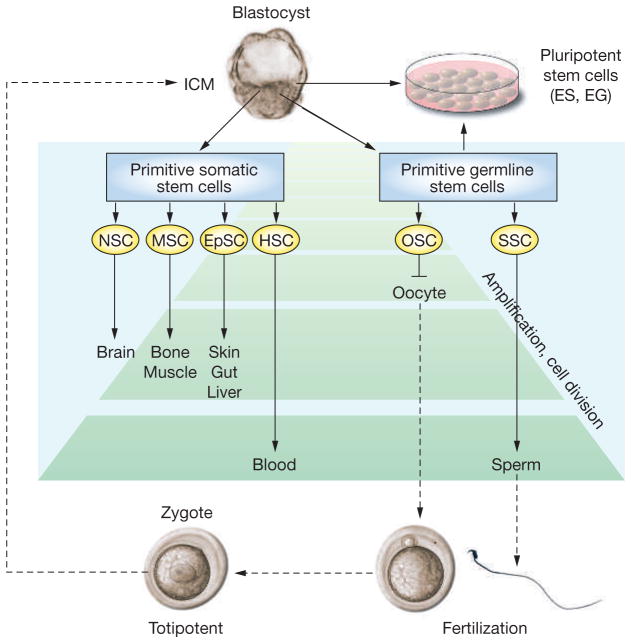
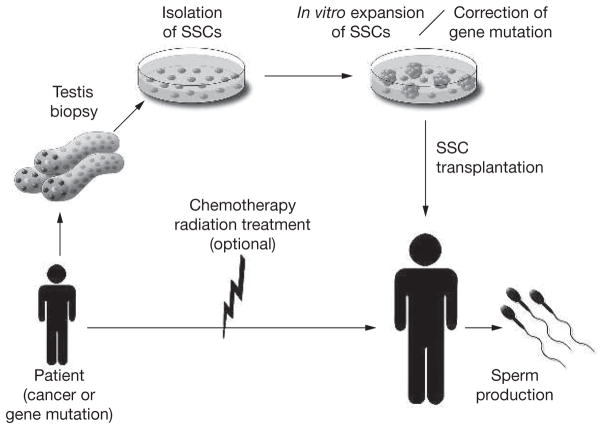
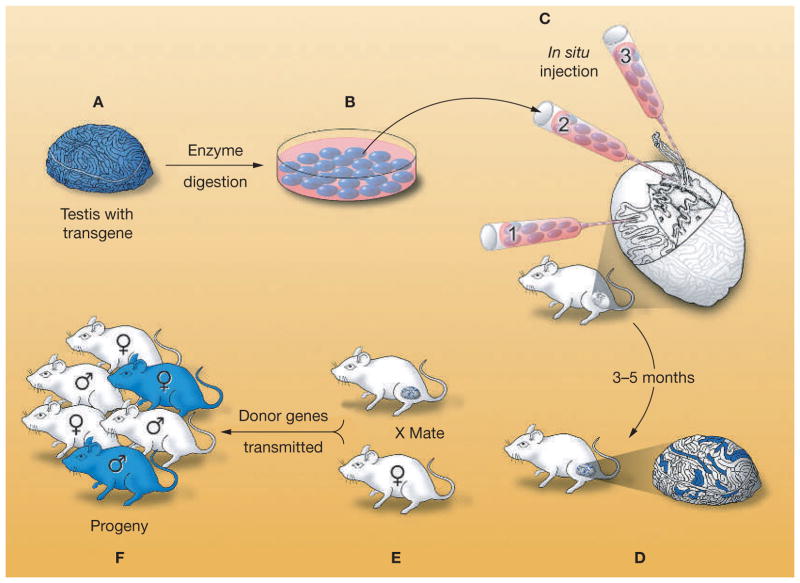
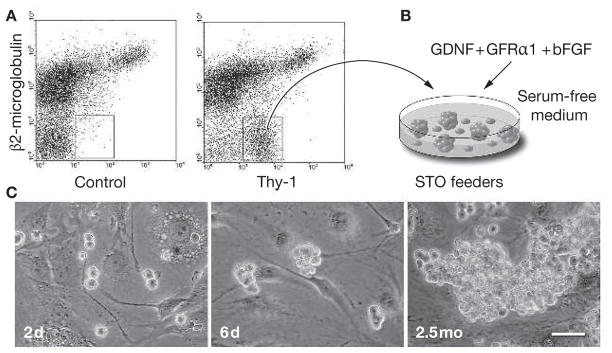
Male germline stem cells--spermatogonial stem cells (SSCs)--self-renew and produce large numbers of differentiating germ cells that become spermatozoa throughout postnatal life and transmit genetic information to the next generation. SSCs are the only germline stem cells in adults, because all female germline stem cells cease proliferation before birth. In this article, we first summarize development of SSCs, and then the relation of SSCs to somatic stem cells in tissues and pluripotent stem cells in vitro, such as embryonic stem cells. Next, we describe a transplantation technique in which donor testis cells from a fertile male can be transplanted to the testes of an infertile male where they re-establish spermatogenesis and restore fertility. The transplantation technique has been used to study the biology of SSCs, which made possible the identification of external factors that support in vitro self-renewal and proliferation of mouse and rat SSCs. Since SSCs of all mammalian species examined, including human, can replicate in mouse seminiferous tubules following transplantation, the growth factors required for SSC self-renewal are probably conserved among mammalian species. Culture techniques should therefore soon be available for human SSCs. In the final section, we discuss current and potential approaches for using the transplantation technique and in vitro culture of SSCs in human medicine. Because assisted reproductive techniques to fertilize oocytes with round or elongated spermatids are available, clinical use of cultured human SSCs will be greatly facilitated by development of techniques for in vitro differentiation of SSCs to mature germ cells.
雄性生殖系干细胞——精原干细胞(SSCs)——能够自我更新并产生大量分化中的生殖细胞,这些生殖细胞在出生后的整个生命过程中发育为精子,并将遗传信息传递给下一代。SSCs是成年个体中唯一的生殖系干细胞,因为所有雌性生殖系干细胞在出生前就停止增殖。在本文中,我们首先总结了SSCs的发育过程,然后阐述了SSCs与组织中的体细胞干细胞以及体外多能干细胞(如胚胎干细胞)之间的关系。接下来,我们描述了一种移植技术,即可以将来自可育雄性的供体睾丸细胞移植到不育雄性的睾丸中,在那里它们能够重建精子发生并恢复生育能力。该移植技术已被用于研究SSCs的生物学特性,这使得识别支持小鼠和大鼠SSCs体外自我更新和增殖的外部因素成为可能。由于包括人类在内的所有已检测哺乳动物物种的SSCs在移植后都能在小鼠生精小管中复制,因此SSCs自我更新所需的生长因子在哺乳动物物种中可能是保守的。因此,人类SSCs的培养技术应该很快就会出现。在最后一部分,我们讨论了在人类医学中使用SSCs移植技术和体外培养的当前及潜在方法。由于已经有了用圆形或延长型精子使卵母细胞受精的辅助生殖技术,SSCs体外分化为成熟生殖细胞技术的发展将极大地促进培养的人类SSCs的临床应用。