Gosselin Marc, Bouquegneau Jean-Marie, Lefèbvre Frédéric, Lepoint Gilles, Pergent Gerard, Pergent-Martini Christine, Gobert Sylvie
Mare center, Oceanology, University of Liège, Sart-Tilman, B6, 4000 Liège, Belgium.
BMC Ecol. 2006 Sep 11;6:12. doi: 10.1186/1472-6785-6-12.
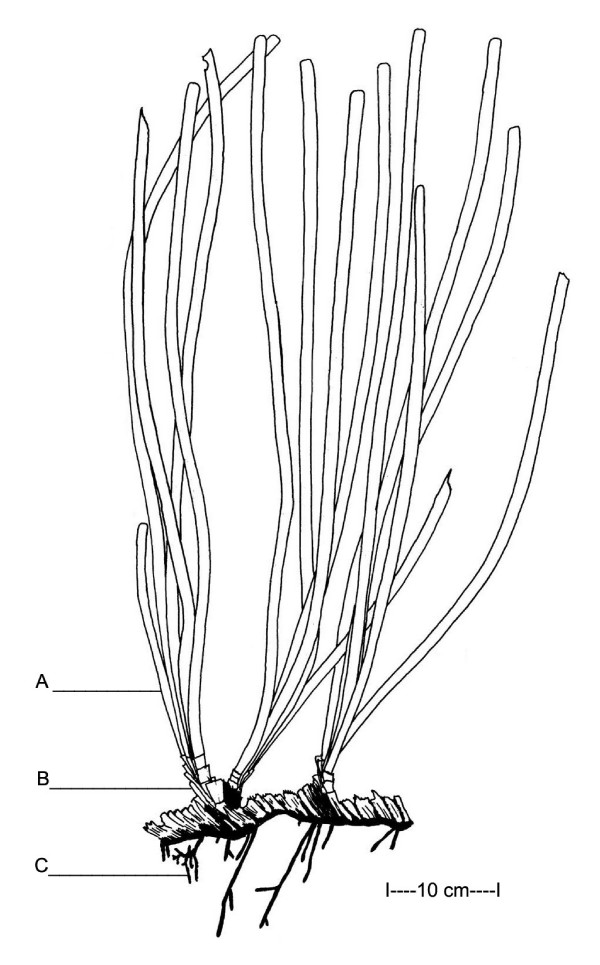
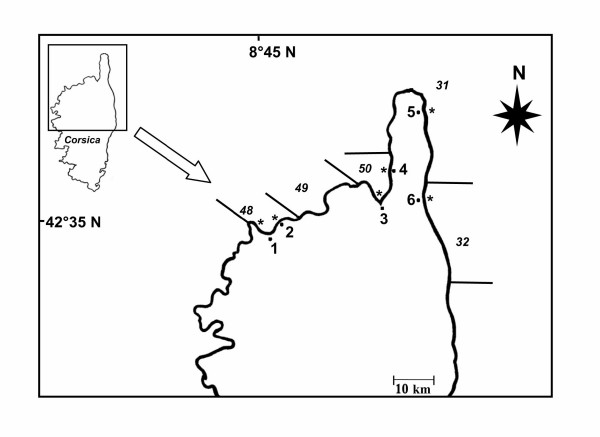
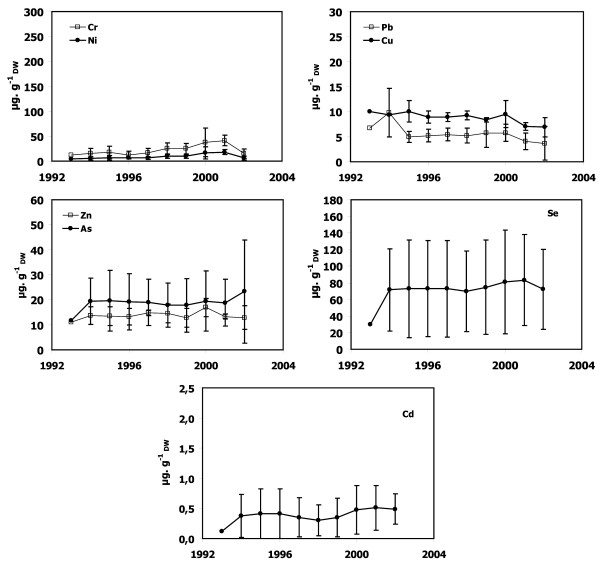
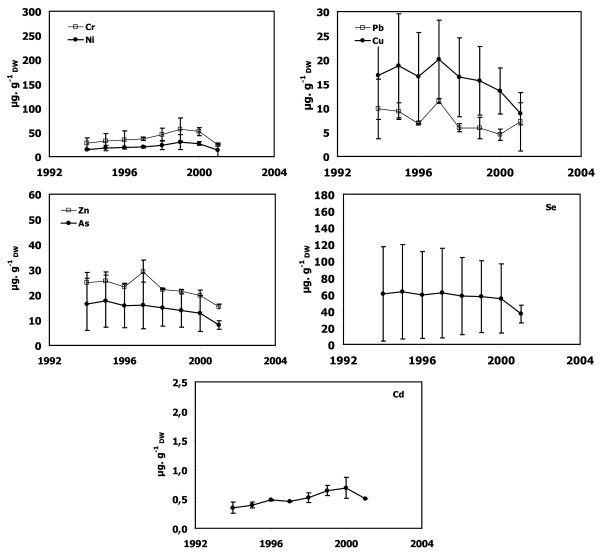
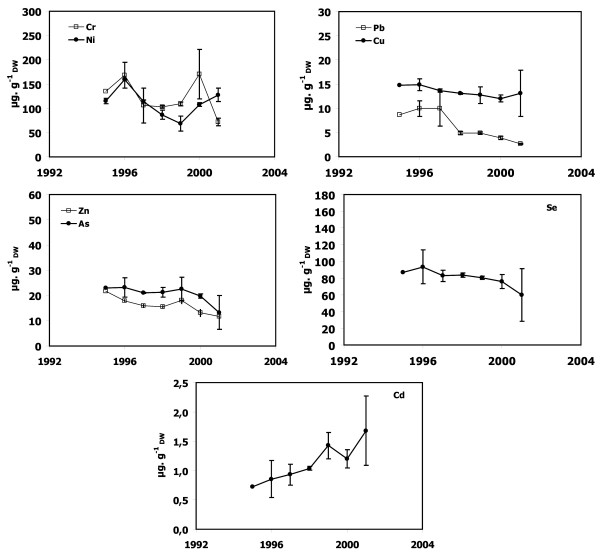
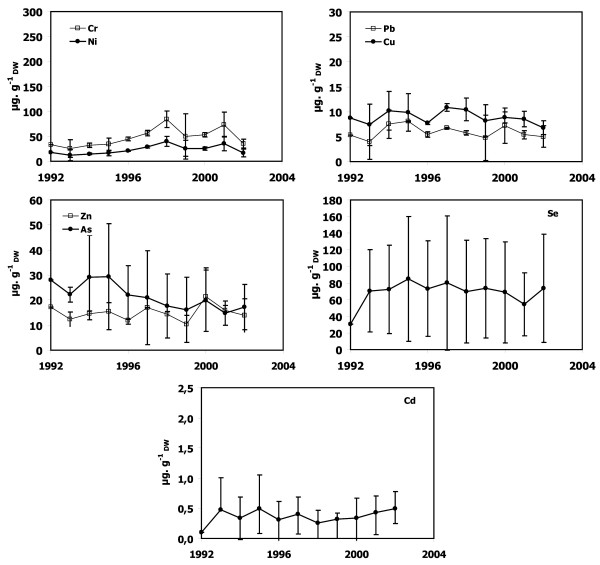
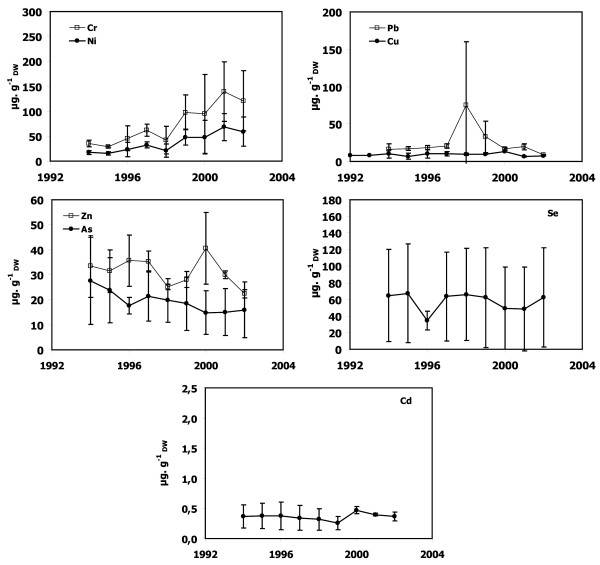
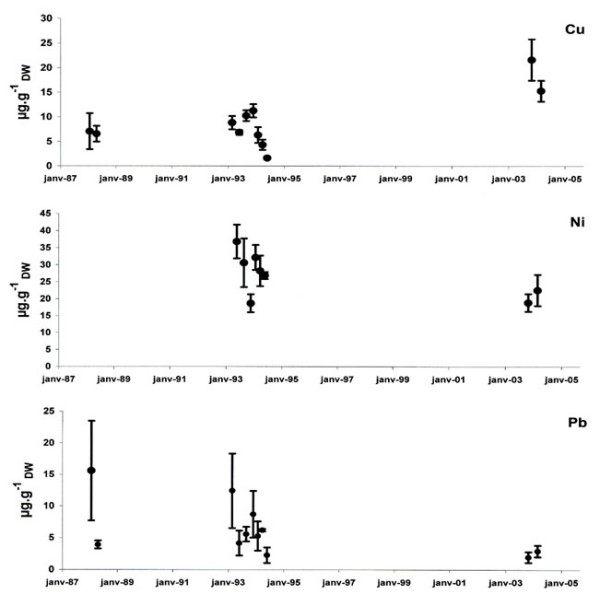
Within semi-closed areas like the Mediterranean Sea, anthropic wastes tend to concentrate in the environment. Metals, in particular, are known to persist in the environment and can affect human health due to accumulation in the food chain. The seagrass Posidonia oceanica, widely found in Mediterranean coastal waters, has been chosen as a "sentinel" to quantify the distribution of such pollutants within the marine environment. Using a technique similar to dendrochronology in trees, it can act as an indicator of pollutant levels over a timeframe of several months to years. In the present study, we measured and compared the levels of eight trace metals (Cr, Ni, Cu, Zn, As, Se, Cd, and Pb) in sheaths dated by lepidochronology and in leaves of shoots sampled from P. oceanica meadows collected from six offshore sites in northern Corsica between 1988 and 2004; in the aim to determine 1) the spatial and 2) temporal variations of these metals in these areas and 3) to compared these two types of tissues.
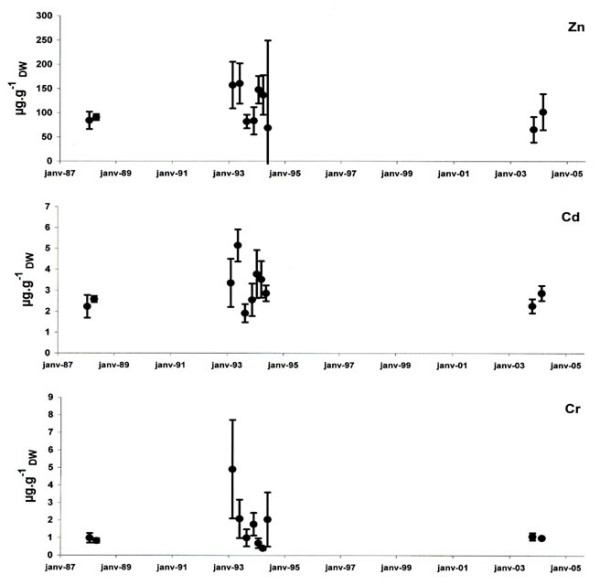
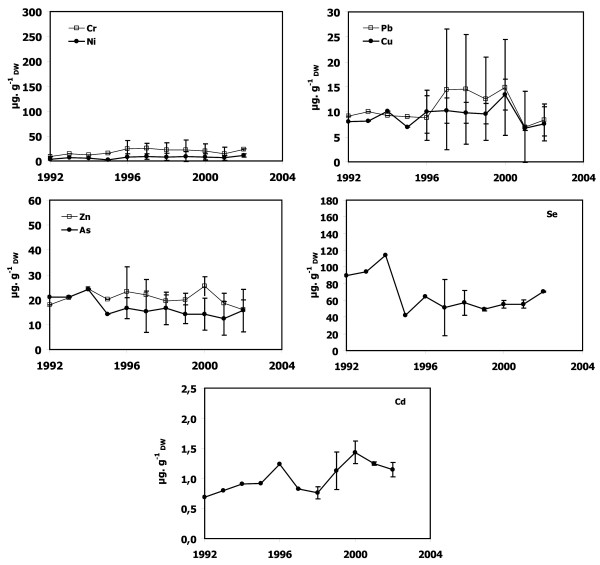
We found low trace metal concentrations with no increase over the last decade, confirming the potential use of Corsican seagrass beds as reference sites for the Mediterranean Sea. Temporal trends of trace metal concentrations in sheaths were not significant for Cr, Ni, Cu, As or Se, but Zn, Cd, and Pb levels decreased, probably due to the reduced anthropic use of these metals. Similar temporal trends between Cu levels in leaves (living tissue) and in sheaths (dead tissue) demonstrated that lepidochronology linked with Cu monitoring is effective for surveying the temporal variability of this metal.
Leaves of P. oceanica can give an indication of the metal concentration in the environment over a short time period (months) with good accuracy. On the contrary, sheaths, which gave an indication of changes over long time periods (decades), seem to be less sensitive to variations in the metal concentration in the environment. Changes in human consumption of metals (e.g., the reduction of Pb in fuel) are clearly reflected in both organs. These results confirm that P. oceanica is a good bioindicator of metals and a good biomonitor species for assessing Cu in the environment.
在地中海这样的半封闭区域内,人为废弃物往往会在环境中聚集。尤其是金属,已知其会在环境中持续存在,并可能因在食物链中的积累而影响人类健康。在地中海沿海水域广泛分布的海草波喜荡草,已被选作“哨兵”,用于量化此类污染物在海洋环境中的分布。运用一种类似于树木年轮学的技术,它能够作为几个月到数年时间范围内污染物水平的指标。在本研究中,我们测量并比较了通过鳞茎年代学确定年代的叶鞘以及从1988年至2004年期间从科西嘉岛北部六个近海地点采集的波喜荡草草甸的嫩枝叶片中八种痕量金属(铬、镍、铜、锌、砷、硒、镉和铅)的含量;目的是确定1)这些金属在这些区域的空间变化,2)时间变化,以及3)比较这两种组织类型。
我们发现痕量金属浓度较低,且在过去十年中没有增加,这证实了科西嘉海草床作为地中海参考地点的潜在用途。叶鞘中痕量金属浓度的时间趋势对于铬、镍、铜、砷或硒而言并不显著,但锌、镉和铅的含量下降了,这可能是由于这些金属的人为使用减少所致。叶片(活组织)和叶鞘(死组织)中铜含量之间类似的时间趋势表明,与铜监测相关的鳞茎年代学对于调查这种金属的时间变异性是有效的。
波喜荡草的叶片能够在短时间(数月)内较为准确地指示环境中的金属浓度。相反,叶鞘虽然能指示长时间(数十年)的变化,但似乎对环境中金属浓度的变化不太敏感。人类金属消费的变化(例如燃料中铅含量的减少)在这两种器官中都有明显体现。这些结果证实,波喜荡草是金属的良好生物指示物,也是评估环境中铜的良好生物监测物种。