Chickarmane Vijay, Troein Carl, Nuber Ulrike A, Sauro Herbert M, Peterson Carsten
Keck Graduate Institute, Claremont, California, United States of America.
PLoS Comput Biol. 2006 Sep 15;2(9):e123. doi: 10.1371/journal.pcbi.0020123. Epub 2006 Jul 31.
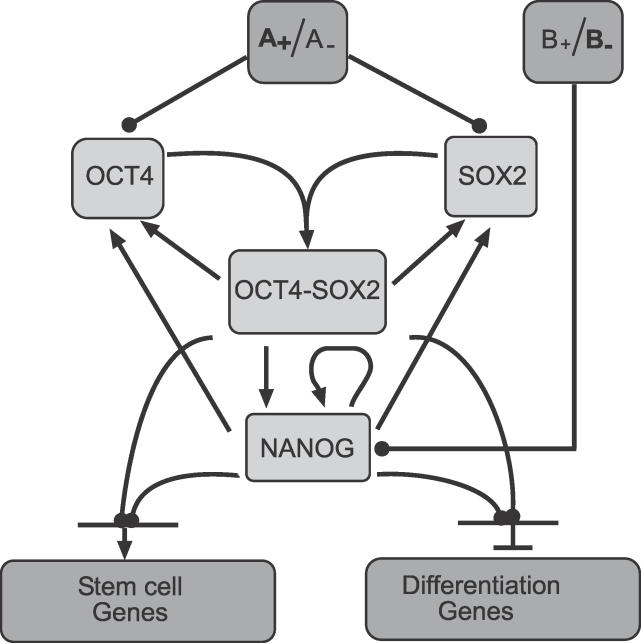
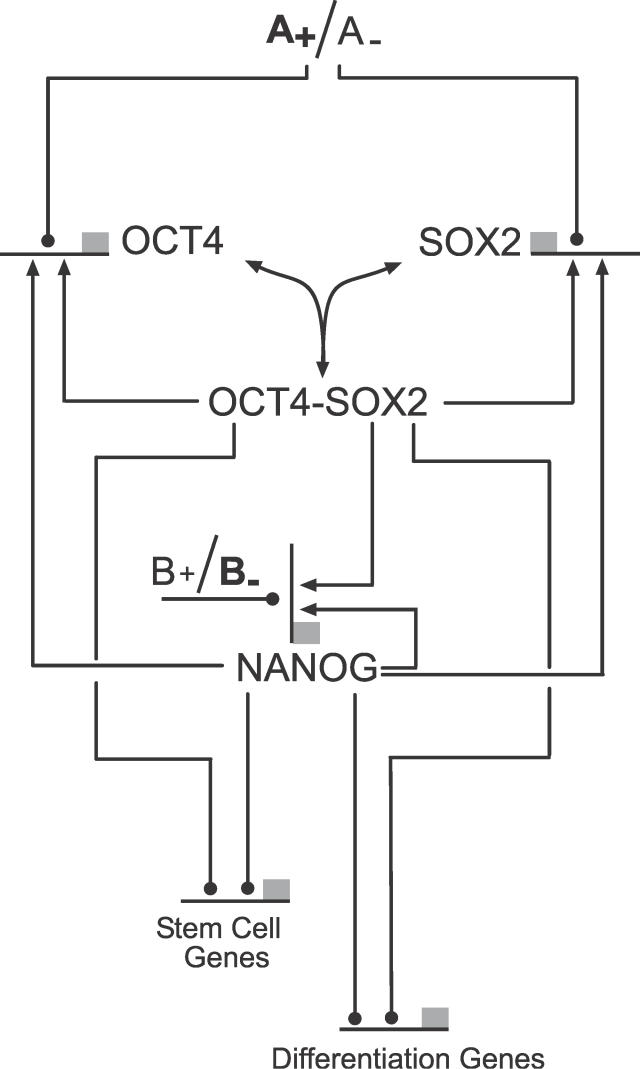
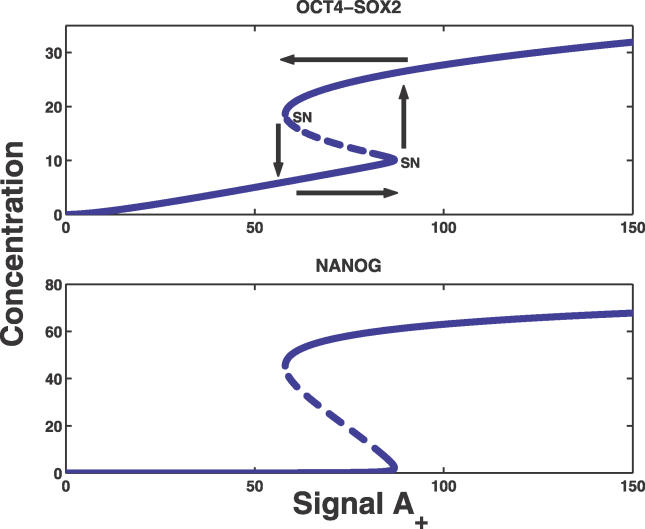
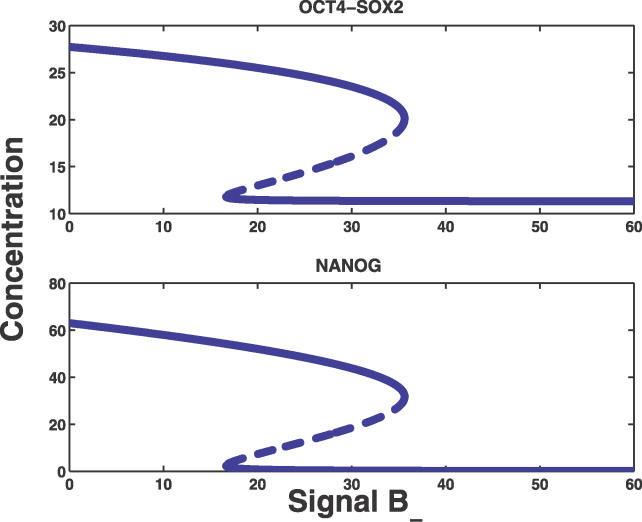
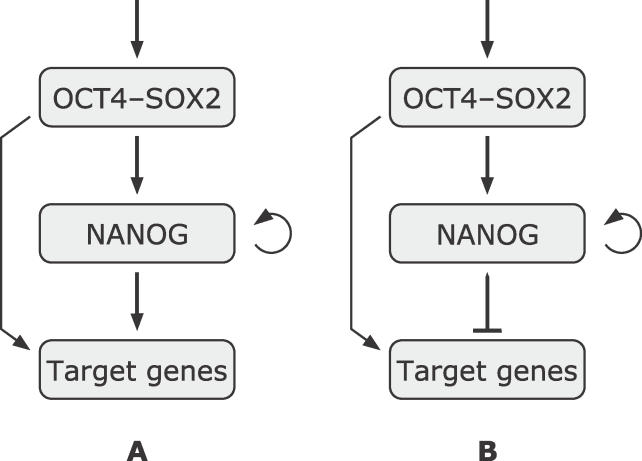
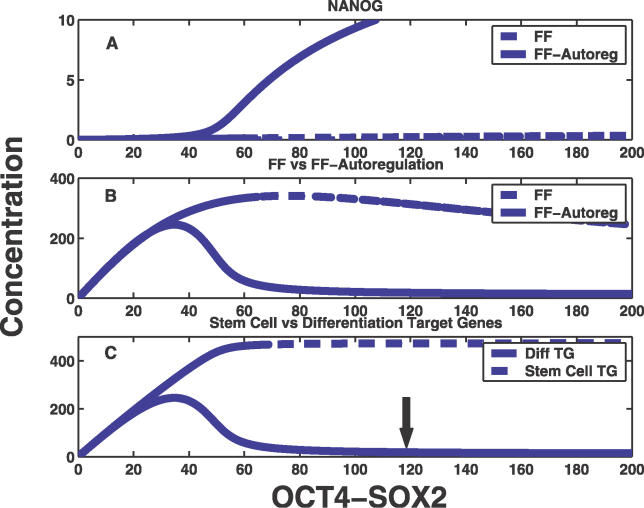
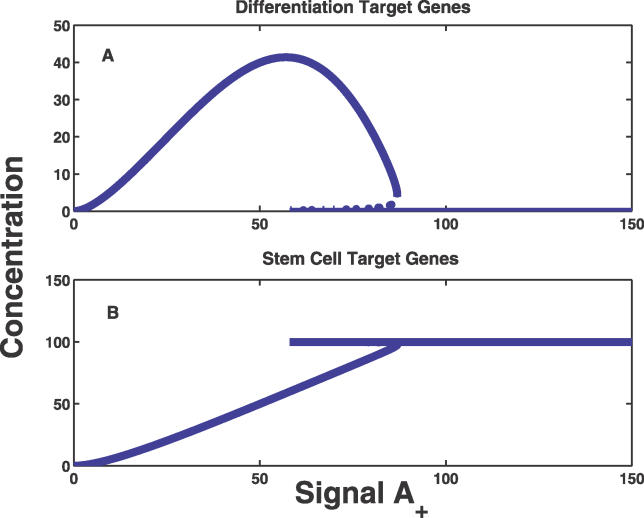
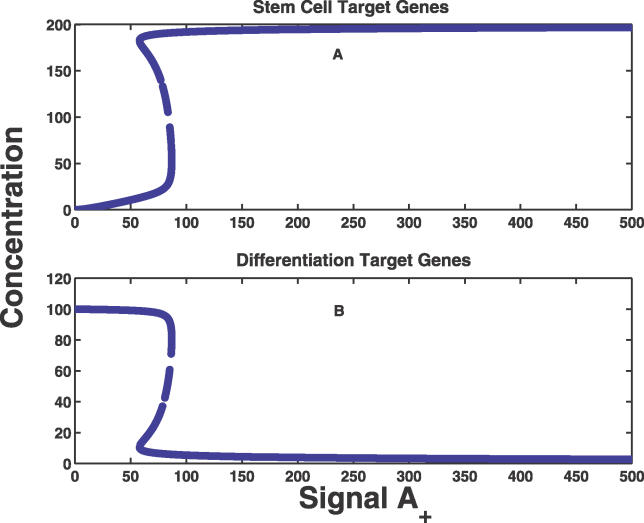
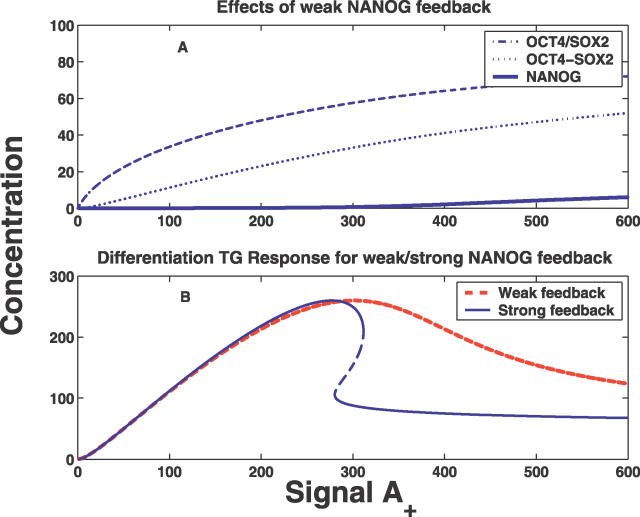
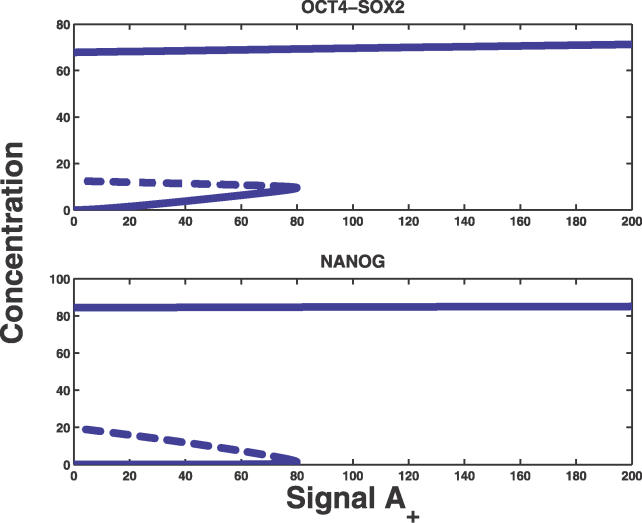
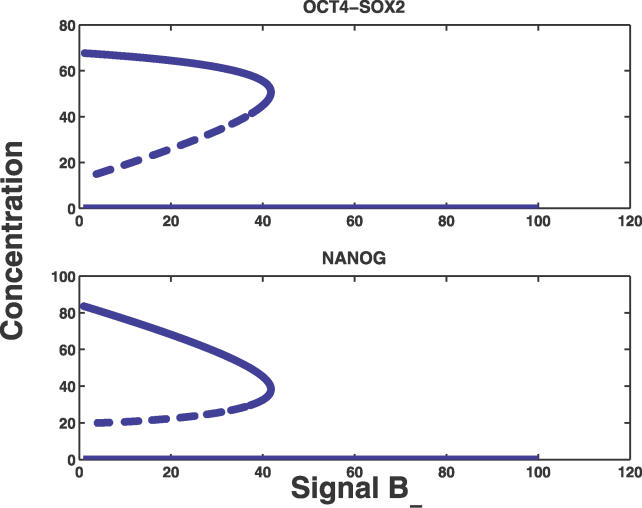
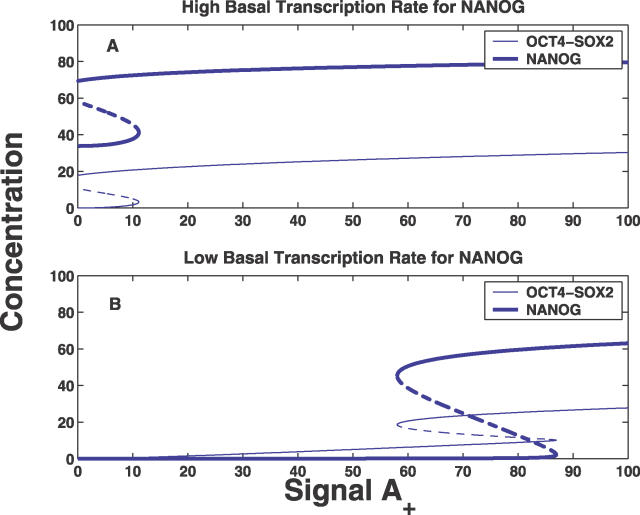
Recent ChIP experiments of human and mouse embryonic stem cells have elucidated the architecture of the transcriptional regulatory circuitry responsible for cell determination, which involves the transcription factors OCT4, SOX2, and NANOG. In addition to regulating each other through feedback loops, these genes also regulate downstream target genes involved in the maintenance and differentiation of embryonic stem cells. A search for the OCT4-SOX2-NANOG network motif in other species reveals that it is unique to mammals. With a kinetic modeling approach, we ascribe function to the observed OCT4-SOX2-NANOG network by making plausible assumptions about the interactions between the transcription factors at the gene promoter binding sites and RNA polymerase (RNAP), at each of the three genes as well as at the target genes. We identify a bistable switch in the network, which arises due to several positive feedback loops, and is switched on/off by input environmental signals. The switch stabilizes the expression levels of the three genes, and through their regulatory roles on the downstream target genes, leads to a binary decision: when OCT4, SOX2, and NANOG are expressed and the switch is on, the self-renewal genes are on and the differentiation genes are off. The opposite holds when the switch is off. The model is extremely robust to parameter changes. In addition to providing a self-consistent picture of the transcriptional circuit, the model generates several predictions. Increasing the binding strength of NANOG to OCT4 and SOX2, or increasing its basal transcriptional rate, leads to an irreversible bistable switch: the switch remains on even when the activating signal is removed. Hence, the stem cell can be manipulated to be self-renewing without the requirement of input signals. We also suggest tests that could discriminate between a variety of feedforward regulation architectures of the target genes by OCT4, SOX2, and NANOG.
近期对人类和小鼠胚胎干细胞进行的染色质免疫沉淀实验(ChIP)阐明了负责细胞决定的转录调控回路的结构,该回路涉及转录因子OCT4、SOX2和NANOG。这些基因除了通过反馈回路相互调节外,还调节参与胚胎干细胞维持和分化的下游靶基因。在其他物种中搜索OCT4 - SOX2 - NANOG网络基序发现,它是哺乳动物特有的。通过动力学建模方法,我们通过对三个基因以及靶基因的基因启动子结合位点处转录因子与RNA聚合酶(RNAP)之间的相互作用做出合理假设,赋予观察到的OCT4 - SOX2 - NANOG网络功能。我们在该网络中识别出一个双稳态开关,它由几个正反馈回路产生,并由输入的环境信号打开/关闭。该开关稳定了这三个基因的表达水平,并通过它们对下游靶基因的调控作用,导致一个二元决策:当OCT4、SOX2和NANOG表达且开关打开时,自我更新基因开启,分化基因关闭。当开关关闭时情况相反。该模型对参数变化具有极强的鲁棒性。除了提供转录回路的自洽图景外,该模型还产生了几个预测。增加NANOG与OCT4和SOX2的结合强度,或提高其基础转录速率,会导致一个不可逆的双稳态开关:即使去除激活信号,开关仍保持打开状态。因此,可以操纵干细胞进行自我更新而无需输入信号。我们还提出了一些测试方法,这些方法可以区分OCT4、SOX2和NANOG对各种靶基因的前馈调控结构。