Räsänen Pirjo, Krootila Kari, Sintonen Harri, Leivo Tiina, Koivisto Anna-Maija, Ryynänen Olli-Pekka, Blom Marja, Roine Risto P
Helsinki and Uusimaa Hospital Group, Group Administration, P,O,Box 440, 00029 HUS, Helsinki, Finland.
Health Qual Life Outcomes. 2006 Sep 29;4:74. doi: 10.1186/1477-7525-4-74.
If decisions on health care spending are to be as rational and objective as possible, knowledge on cost-effectiveness of routine care is essential. Our aim, therefore, was to evaluate the cost-utility of routine cataract surgery in a real-world setting.
Prospective assessment of health-related quality of life (HRQoL) of patients undergoing cataract surgery. 219 patients (mean (SD) age 71 (11) years) entering cataract surgery (in 87 only first eye operated, in 73 both eyes operated, in 59 first eye had been operated earlier) filled in the 15D HRQoL questionnaire before and six months after operation. Direct hospital costs were obtained from a clinical patient administration database and cost-utility analysis performed from the perspective of the secondary care provider extrapolating benefits of surgery to the remaining statistical life-expectancy of the patients.
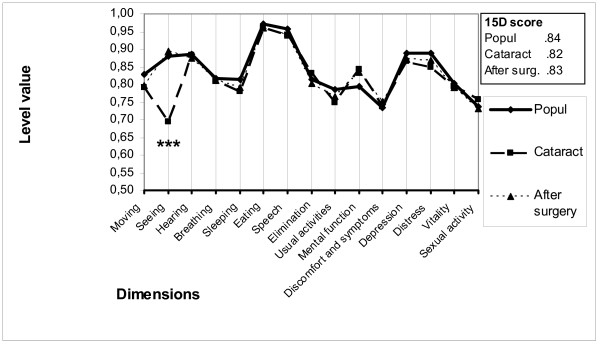
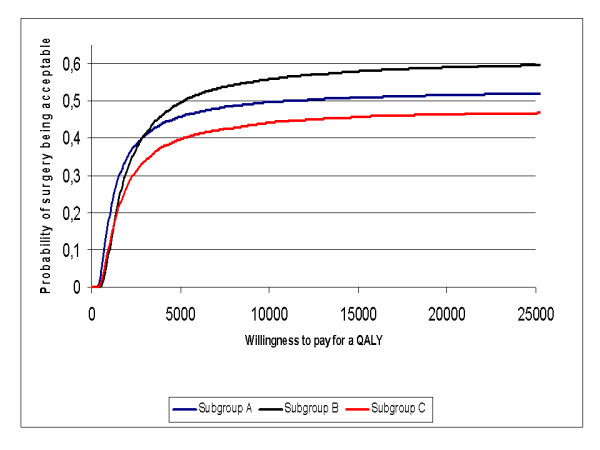
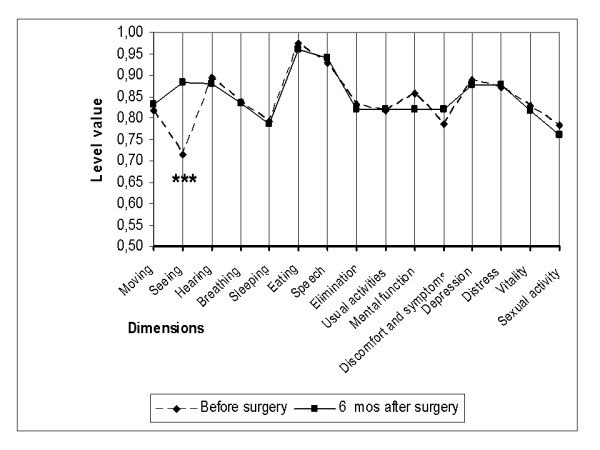
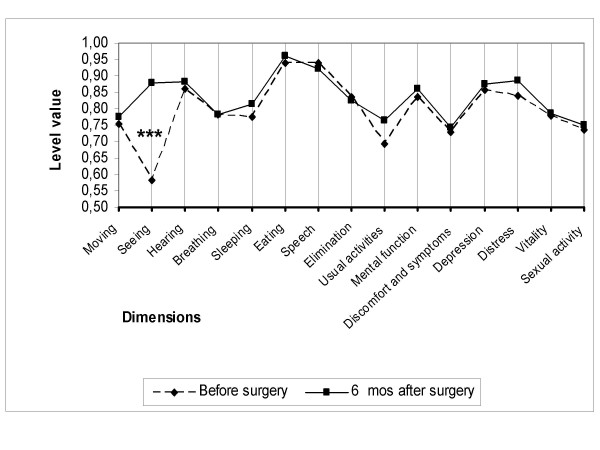
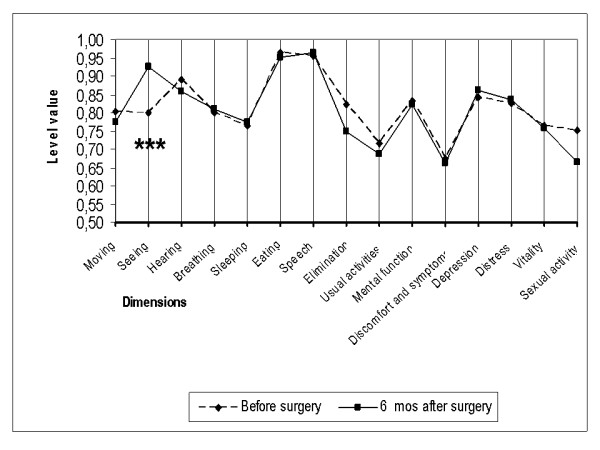
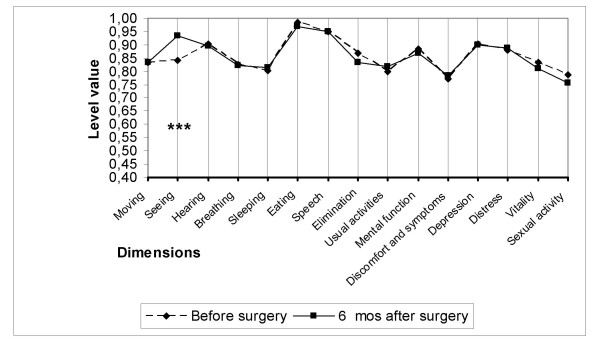
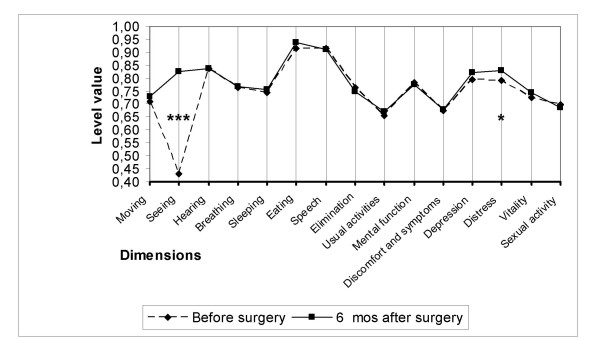
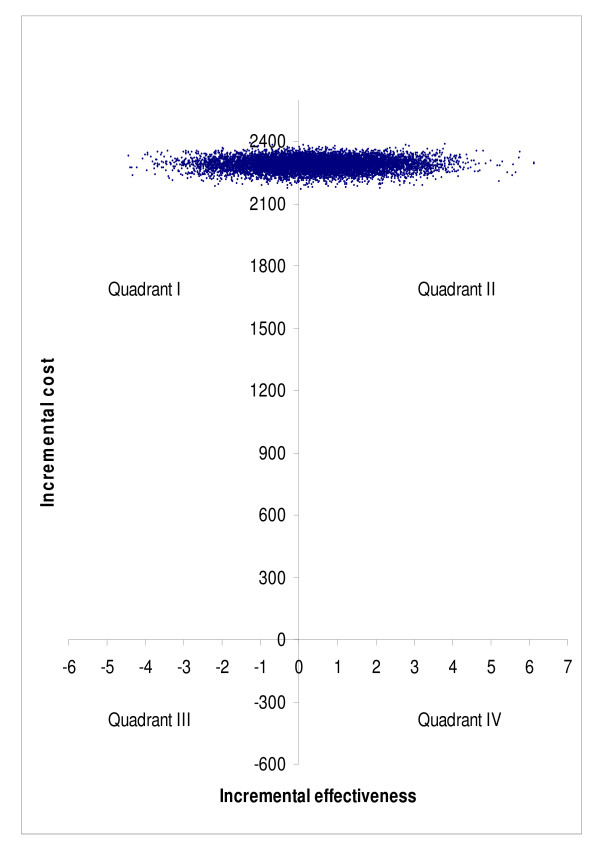
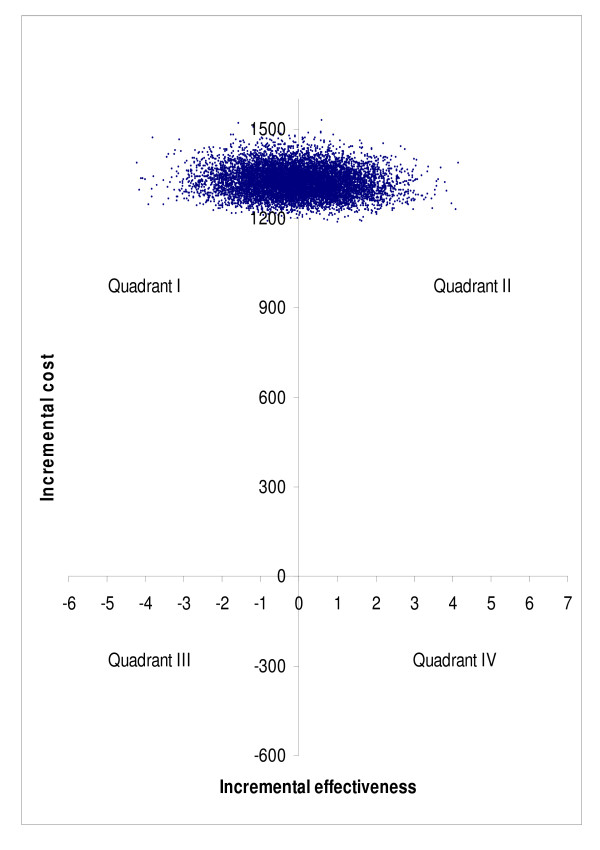
Mean (SD) utility score (on a 0-1 scale) increased statistically insignificantly from 0.82 (0.13) to 0.83 (0.14). Of the 15 dimensions of the HRQoL instrument, only seeing improved significantly after operation. Mean utility score improved statistically significantly only in patients reporting significant or major preoperative seeing problems. Of the subgroups, only those whose both eyes were operated during follow-up showed a statistically significant (p < 0.001) improvement. Cost per quality-adjusted life year (QALY) gained was euro5128 for patients whose both eyes were operated and euro8212 for patients with only one eye operated during the 6-month follow-up. In patients whose first eye had been operated earlier mean HRQoL deteriorated after surgery precluding the establishment of the cost per QALY.
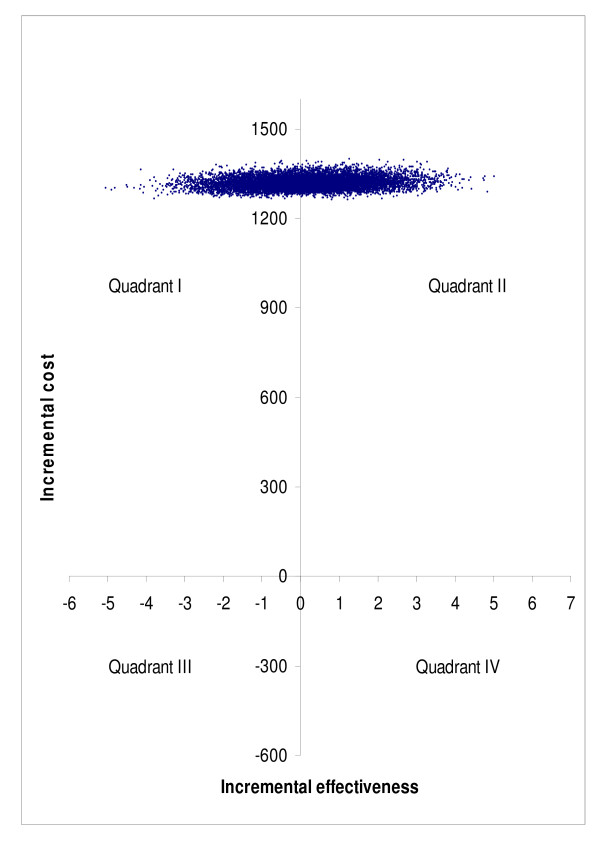
Mean utility gain after routine cataract surgery in a real-world setting was relatively small and confined mostly to patients whose both eyes were operated. The cost of cataract surgery per quality-adjusted life year gained was much higher than previously reported and associated with considerable uncertainty.
若要使医疗保健支出决策尽可能合理且客观,了解常规护理的成本效益至关重要。因此,我们的目的是在实际环境中评估常规白内障手术的成本效用。
对接受白内障手术患者的健康相关生活质量(HRQoL)进行前瞻性评估。219例患者(平均(标准差)年龄71(11)岁)接受白内障手术(87例仅一只眼手术,73例双眼手术,59例第一眼先前已手术),在手术前和术后6个月填写15D HRQoL问卷。直接医院成本从临床患者管理数据库中获取,并从二级护理提供者的角度进行成本效用分析,将手术益处外推至患者的剩余统计预期寿命。
平均(标准差)效用评分(0 - 1量表)从0.82(0.13)增至0.83(0.14),统计学上无显著增加。在HRQoL工具的15个维度中,术后仅视力显著改善。仅术前报告有显著或严重视力问题的患者,其平均效用评分有统计学显著改善。在各亚组中,仅随访期间双眼手术的患者显示有统计学显著(p < 0.001)改善。在6个月随访期间,双眼手术患者每获得一个质量调整生命年(QALY)的成本为5128欧元,单眼手术患者为8212欧元。第一眼先前已手术的患者,术后平均HRQoL恶化,无法确定每QALY的成本。
在实际环境中,常规白内障手术后的平均效用增益相对较小,且主要局限于双眼手术的患者。每获得一个质量调整生命年的白内障手术成本远高于先前报告,且存在相当大的不确定性。