Panchabhai Tanmay S, Noronha Shaun F, Davis Sanish, Shinde Vishal M, Kshirsagar Nilima A, Gogtay Nithya J
Department of Clinical Pharmacology, Seth GS Medical College and KEM Hospital, Parel, Mumbai 400012, India.
BMC Clin Pharmacol. 2006 Oct 24;6:8. doi: 10.1186/1472-6904-6-8.
Inherited differences in the metabolism and disposition of drugs, and genetic polymorphisms in the targets of drug therapy (e.g., receptors), can greatly influence efficacy and toxicity of medications. Marked interethnic differences in CYP2C19 (a member of the cytochrome P-450 enzyme superfamily catalyzing phase I drug metabolism) which affects the metabolism of a number of clinically important drugs have been documented. The present study evaluated the activity of CYP2C19 in normal, healthy Gujrati and Marwadi subjects by phenotyping (a western Indian population).
All subjects received 20 mg of omeprazole, which was followed by blood collection at 3 hrs to estimate the metabolic ratio of omeprazole to 5-hydroxyomeprazole. The analysis was done by HPLC.
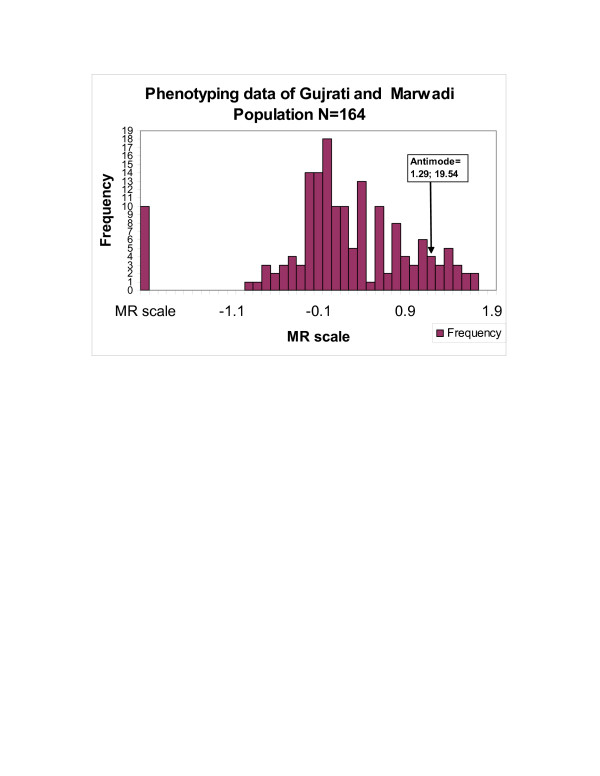
It was seen that 10.36% of this population were poor metabolizers(PM) whereas 89.63% were extensive metabolizers(EM).
A genotyping evaluation would better help in identifying population specific genotypes and thus help individualize drug therapy.
药物代谢和处置方面的遗传差异,以及药物治疗靶点(如受体)的基因多态性,可极大地影响药物的疗效和毒性。已有文献记载,细胞色素P - 450酶超家族成员CYP2C19(催化I相药物代谢)存在显著的种族间差异,该酶影响多种临床重要药物的代谢。本研究通过表型分析(针对印度西部古吉拉特族和马尔瓦迪族人群)评估了正常健康的古吉拉特族和马尔瓦迪族受试者中CYP2C19的活性。
所有受试者服用20毫克奥美拉唑,3小时后采血以估算奥美拉唑与5 - 羟基奥美拉唑的代谢比。分析采用高效液相色谱法。
结果显示,该人群中10.36%为慢代谢者(PM),而89.63%为快代谢者(EM)。
基因分型评估将更有助于识别特定人群的基因型,从而有助于实现药物治疗的个体化。