Huang Liwei, Pu Yongbing, Hepps David, Danielpour David, Prins Gail S
Department of Urology, University of Illinois at Chicago, 820 South Wood Street, Chicago, IL 60612, USA.
Endocrinology. 2007 Mar;148(3):1235-45. doi: 10.1210/en.2006-1250. Epub 2006 Nov 30.
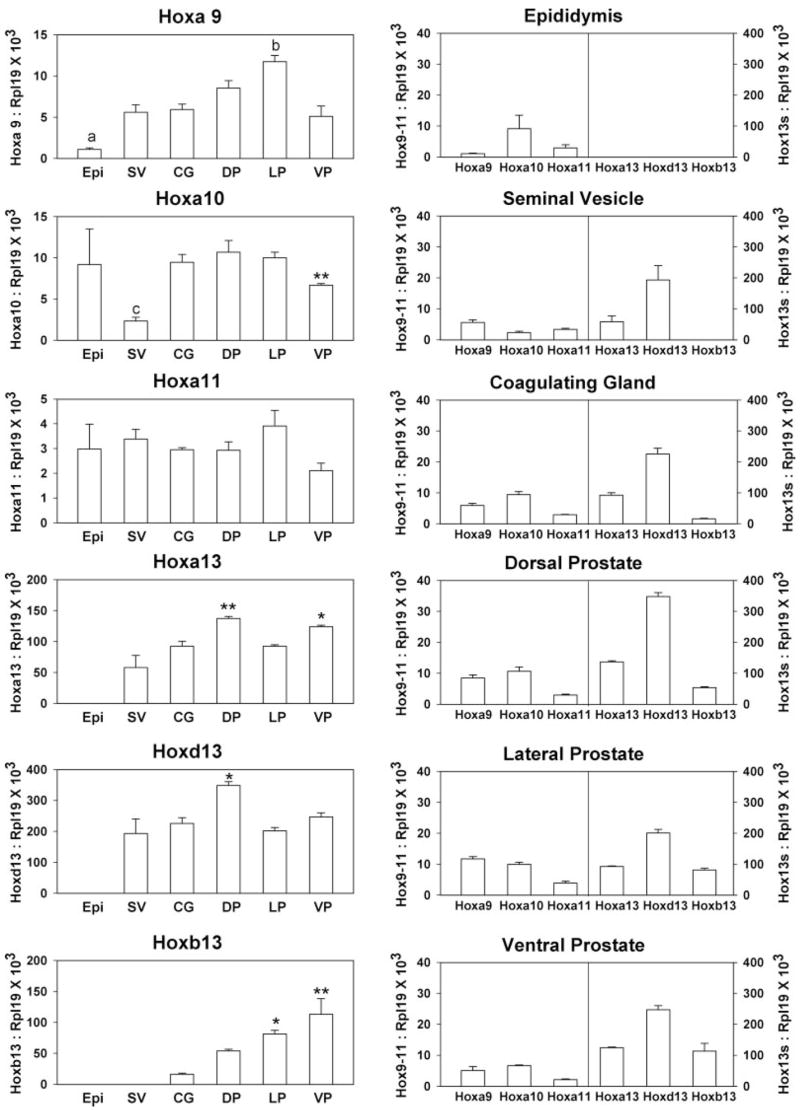
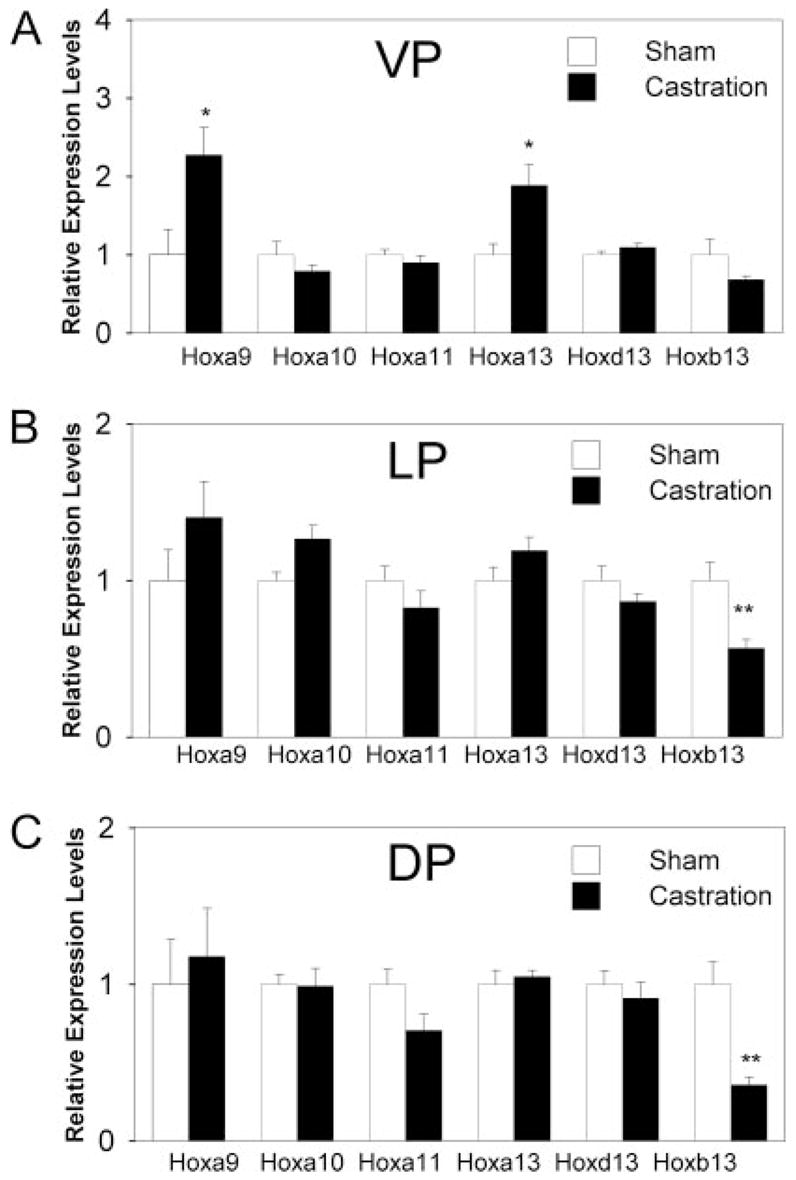
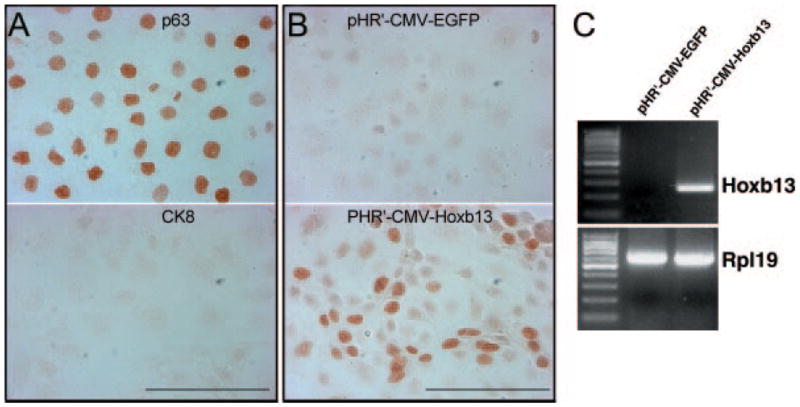
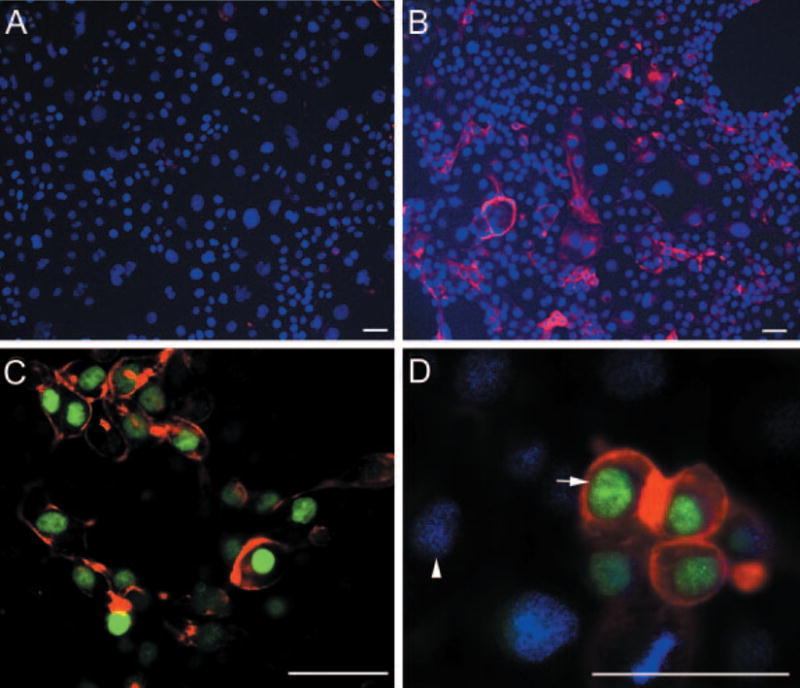
Axis positioning and tissue determination during development involve coordinated expression of Hox genes throughout the body. The most posterior Hox gene clusters are involved in prostate organogenesis. In the present study, we characterized and compared the expression profiles of posterior (5') Hox genes in the separate lobes of the adult rat prostate gland, the coagulating gland, seminal vesicles, and epididymis using quantitative real-time RT-PCR. These genes include Hoxa9-11, Hoxa13, Hoxd13, and Hoxb13. We identified a unique Hox code for each of these organs and propose that this contributes to the organ-specific and prostate lobe-specific identities in the adult rat. Using the ventral prostate (VP) as a model, we characterized the Hox genes expression patterns over time from birth through adulthood. Expression levels of the three Hox13 genes and Hoxa10 were significantly higher in the adult VP compared with the neonatal developing VP suggesting an important role during adult homeostasis. In contrast, Hoxa9 and Hoxa11 levels declined after morphogenesis suggesting a specific developmental role. Overall, the Hoxb13 gene exhibited the most striking temporal and organ-specific differences. Using in situ hybridization and immunohistochemistry, a distinct Hoxb13 anterior-to-posterior expression gradient was observed with the highest expression levels in the VP luminal epithelial cells, moderate levels in the lateral prostate, and low expression in the dorsal prostate. An expression gradient was also observed along the ductal length in all three prostate lobes with strongest expression at the distal tips and limited expression in the proximal ducts. After infection with a lentivirus expressing the Hoxb13 gene, NRP-152 cells cultured under nondifferentiating conditions exhibited robust cytokeratin 8 immunostain indicating that Hoxb13 expression drives luminal cell differentiation in the rat epithelium. Androgen regulation of prostatic Hox gene expression was examined during development in vitro and after castration in the adult rat. In the neonatal VP, all six Hox genes were significantly up-regulated by androgens, whereas none of the genes were affected by testosterone in the lateral prostate. In the adult rat, castration resulted in up-regulation of Hoxa9 and Hoxa13 in the VP and down-regulation of Hoxb13 in the dorsal prostate and lateral prostate. Taken together, we conclude that the prostatic Hox genes reach a destined expression level at specific developmental time points in the prostate gland and possess differential androgenic regulation in a temporal and lobe-specific manner. We suggest that this timely Hox code participates in determining lobe-specific prostatic identity and cellular differentiation.
发育过程中的轴定位和组织确定涉及全身Hox基因的协调表达。最靠后的Hox基因簇参与前列腺器官发生。在本研究中,我们使用定量实时RT-PCR对成年大鼠前列腺各叶、凝固腺、精囊和附睾中后部(5')Hox基因的表达谱进行了表征和比较。这些基因包括Hoxa9 - 11、Hoxa13、Hoxd13和Hoxb13。我们为这些器官中的每一个确定了独特的Hox编码,并提出这有助于成年大鼠的器官特异性和前列腺叶特异性特征。以腹侧前列腺(VP)为模型,我们表征了从出生到成年期间Hox基因随时间的表达模式。与新生发育中的VP相比,成年VP中三个Hox13基因和Hoxa10的表达水平显著更高,表明其在成年内环境稳态中起重要作用。相比之下,Hoxa9和Hoxa11水平在形态发生后下降,表明其具有特定的发育作用。总体而言,Hoxb13基因表现出最显著的时间和器官特异性差异。使用原位杂交和免疫组织化学,观察到Hoxb13从前往后的独特表达梯度,在VP腔上皮细胞中表达水平最高,在外侧前列腺中表达水平中等,在背侧前列腺中表达水平低。在所有三个前列腺叶的导管长度上也观察到表达梯度,在远端尖端表达最强,在近端导管中表达有限。在用表达Hoxb13基因的慢病毒感染后,在未分化条件下培养的NRP - 152细胞表现出强烈的细胞角蛋白8免疫染色,表明Hoxb13表达驱动大鼠上皮中的腔细胞分化。在体外发育过程中和成年大鼠去势后,研究了雄激素对前列腺Hox基因表达的调节。在新生VP中,所有六个Hox基因均被雄激素显著上调,而在外侧前列腺中没有一个基因受睾酮影响。在成年大鼠中,去势导致VP中Hoxa9和Hoxa13上调,背侧前列腺和外侧前列腺中Hoxb13下调。综上所述,我们得出结论,前列腺Hox基因在前列腺特定的发育时间点达到特定的表达水平,并在时间和叶特异性方面具有不同的雄激素调节。我们认为这种适时的Hox编码参与确定叶特异性前列腺特征和细胞分化。