Rydell-Törmänen Kristina, Uller Lena, Erjefält Jonas S
Div. Vascular and Airway Research, Dept. Experimental Medical Science, Lund University, Lund, Sweden.
Respir Res. 2006 Dec 14;7(1):143. doi: 10.1186/1465-9921-7-143.
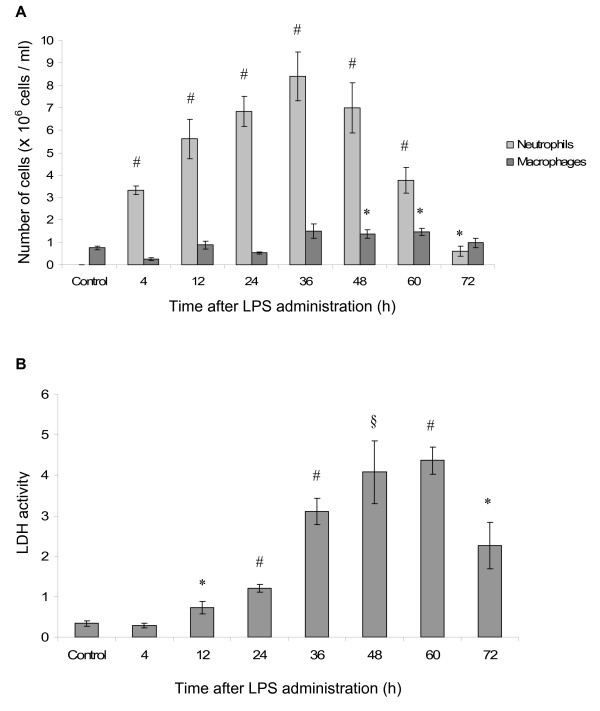
During a lipopolysaccharide-induced lung inflammation, a massive accumulation of neutrophils occurs, which is normally cleared by macrophage phagocytosis following neutrophil apoptosis. However, in cases of extensive apoptosis the normal clearance system may fail, resulting in extensive neutrophil secondary necrosis. The aim of this study was to explore the hypothesis that neutrophils, in areas of the lung with extensive cellular infiltration, contribute to clearance by phagocytosing apoptotic cells and/or cell debris derived from secondary necrosis.
Intranasal lipopolysaccharide administration was used to induce lung inflammation in mice. The animals were sacrificed at seven time points following administration, bronchoalveolar lavage was performed and tissue samples obtained. Electron microscopy and histochemistry was used to assess neutrophil phagocytosis.
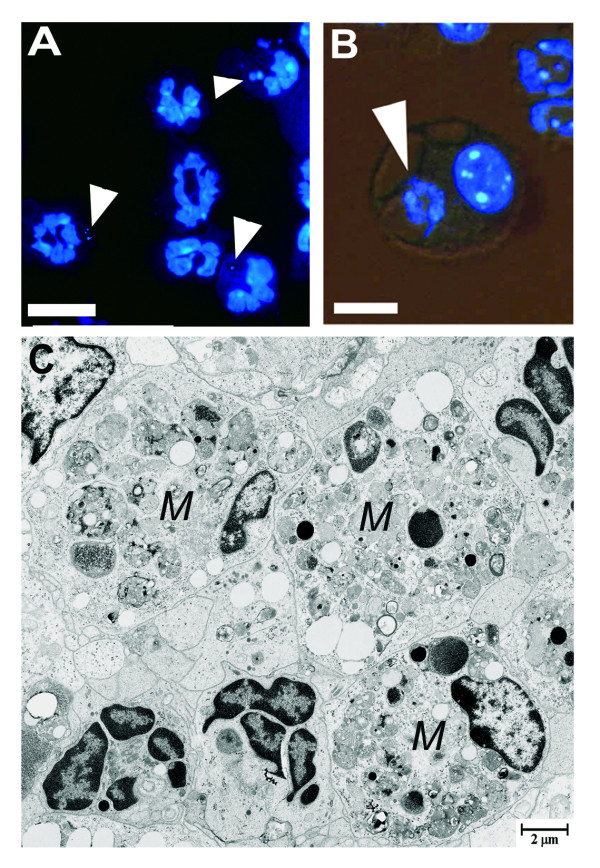
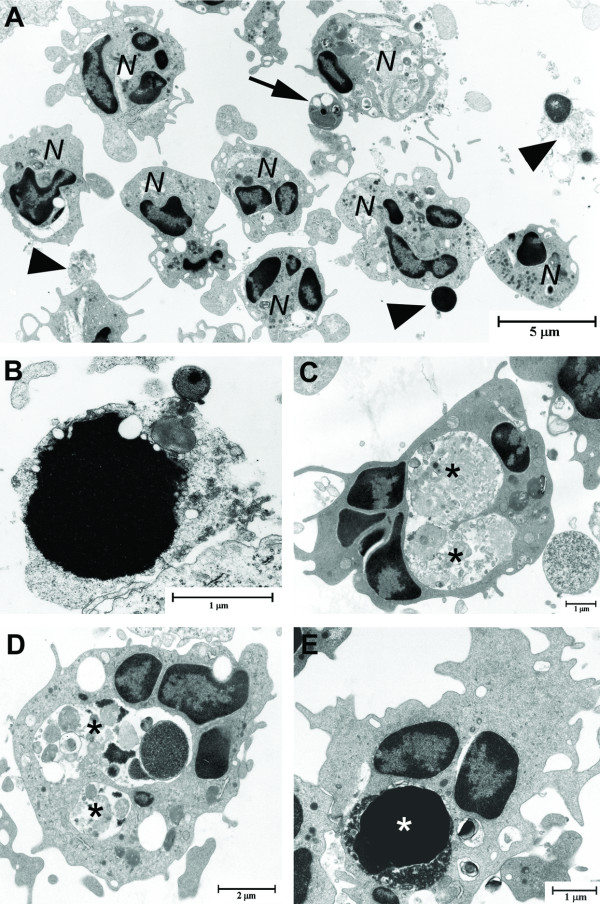
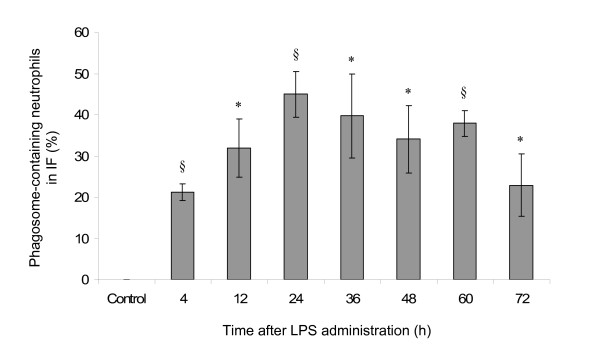
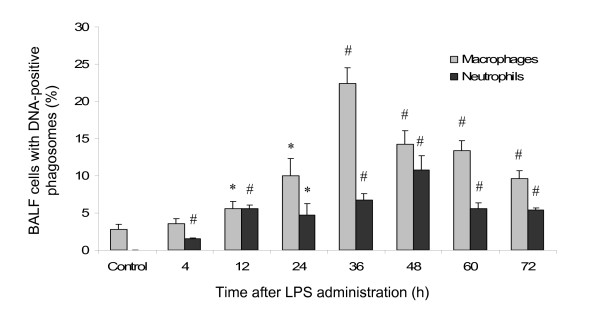
Electron microscopic studies revealed that phagocytosing neutrophils was common, at 24 h after LPS administration almost 50% of the total number of neutrophils contained phagosomes, and the engulfed material was mainly derived from other neutrophils. Histochemistry on bronchoalvolar lavage cells further showed phagocytosing neutrophils to be frequently occurring.
Neutrophils are previously known to phagocytose invading pathogens and harmful particles. However, this study demonstrates that neutrophils are also able to engulf apoptotic neutrophils or cell debris resulting from secondary necrosis of neutrophils. Neutrophils may thereby contribute to clearance and resolution of inflammation, thus acting as a back up system in situations when the macrophage clearance system is insufficient and/or overwhelmed.
在脂多糖诱导的肺部炎症过程中,会出现大量中性粒细胞聚集,通常在中性粒细胞凋亡后通过巨噬细胞吞噬作用将其清除。然而,在广泛凋亡的情况下,正常的清除系统可能会失效,导致广泛的中性粒细胞继发性坏死。本研究的目的是探讨以下假设:在肺部细胞广泛浸润区域的中性粒细胞,通过吞噬凋亡细胞和/或继发性坏死产生的细胞碎片来促进清除。
通过鼻内给予脂多糖诱导小鼠肺部炎症。在给药后的七个时间点处死动物,进行支气管肺泡灌洗并获取组织样本。使用电子显微镜和组织化学方法评估中性粒细胞的吞噬作用。
电子显微镜研究显示,吞噬性中性粒细胞很常见,在给予脂多糖后24小时,几乎50%的中性粒细胞总数含有吞噬体,吞噬的物质主要来自其他中性粒细胞。支气管肺泡灌洗细胞的组织化学进一步显示吞噬性中性粒细胞频繁出现。
以前已知中性粒细胞会吞噬入侵的病原体和有害颗粒。然而,本研究表明中性粒细胞也能够吞噬凋亡的中性粒细胞或中性粒细胞继发性坏死产生的细胞碎片。中性粒细胞可能因此有助于炎症的清除和消退,从而在巨噬细胞清除系统不足和/或不堪重负的情况下作为备用系统发挥作用。