Abate Aida, Zhao Hui, Wong Ronald J, Stevenson David K
Department of Pediatrics, Stanford University School of Medicine, 300 Pasteur Drive, Rm. S-230, Stanford, CA 94305, USA.
Biochem Biophys Res Commun. 2007 Mar 16;354(3):757-63. doi: 10.1016/j.bbrc.2007.01.050. Epub 2007 Jan 18.
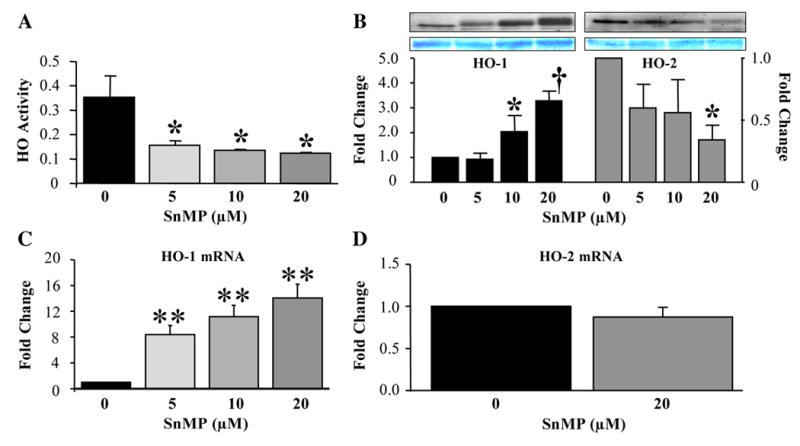
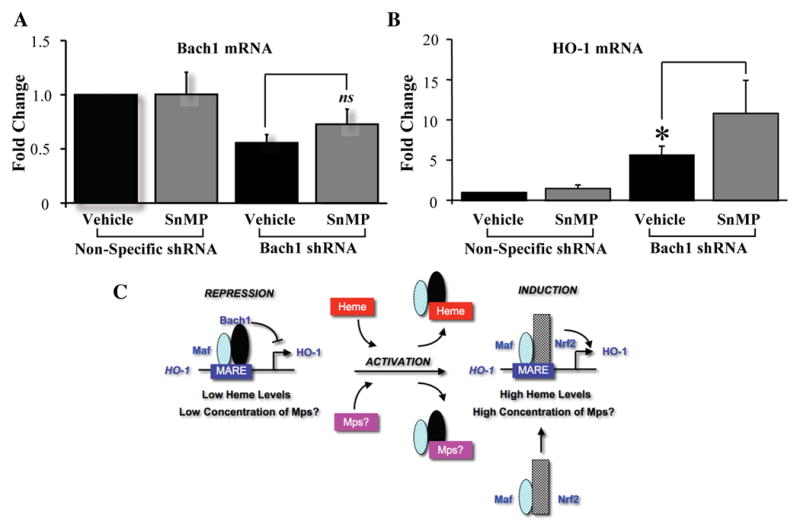
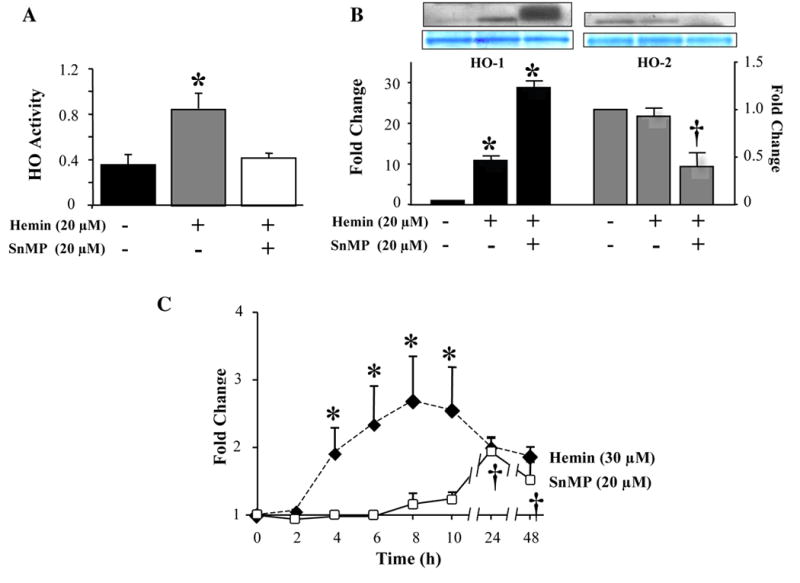
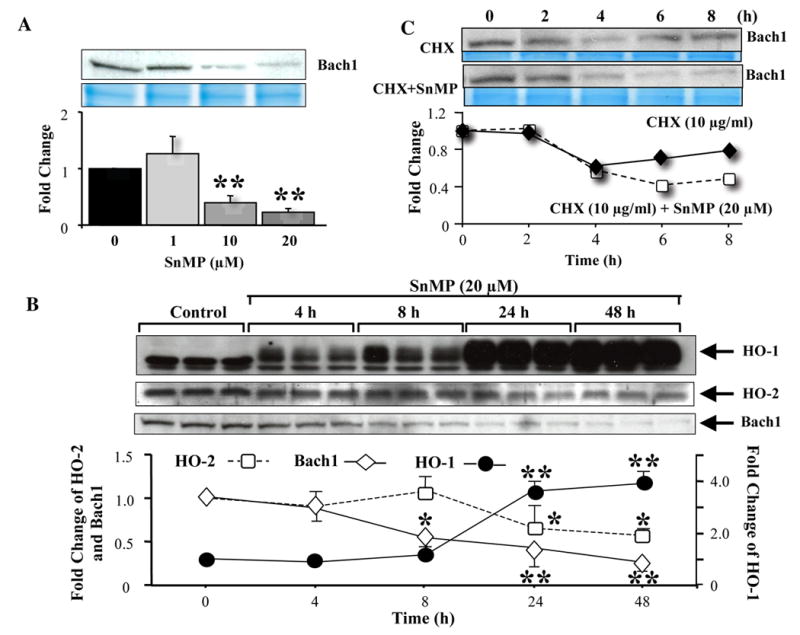
Tin mesoporphyrin (SnMP), a competitive heme oxygenase (HO) inhibitor, also induces HO-1 mRNA and protein expression by a mechanism that is not fully understood. We examined whether the induction by SnMP is mediated by a de-repression of Bach1, a transcription factor that suppresses the HO-1 gene. Incubation of NIH3T3-HO-1-luc cells with SnMP attenuated HO activity with a concomitant increase in HO-1 mRNA and protein and a decrease in Bach1 and HO-2 proteins, which was not due to transcriptional down-regulation, but accelerated protein decay. Similarly, HO-1 protein degradation was increased by SnMP, despite of an elevation in HO-1 transcription. Transfection of Bach1 shRNA in Hepa cells raised basal HO-1 expression significantly, and SnMP treatment further increased HO-1 mRNA. In conclusion, SnMP induces HO-1 expression not only by de-repressing the HO-1 promoter by binding Bach1, but also by accelerating Bach1 degradation.
锡原卟啉(SnMP)是一种竞争性血红素加氧酶(HO)抑制剂,它也通过一种尚未完全了解的机制诱导HO-1 mRNA和蛋白表达。我们研究了SnMP的诱导作用是否由Bach1的去抑制介导,Bach1是一种抑制HO-1基因的转录因子。用SnMP孵育NIH3T3-HO-1-luc细胞可减弱HO活性,同时HO-1 mRNA和蛋白增加,Bach1和HO-2蛋白减少,这不是由于转录下调,而是加速了蛋白降解。同样,尽管HO-1转录升高,但SnMP仍增加了HO-1蛋白降解。在Hepa细胞中转染Bach1 shRNA可显著提高基础HO-1表达,SnMP处理进一步增加HO-1 mRNA。总之,SnMP不仅通过结合Bach1去抑制HO-1启动子来诱导HO-1表达,还通过加速Bach1降解来诱导。