Department of Cardiology, Swiss Heart Center Bern, University Hospital, Bern, Switzerland.
PLoS One. 2007 Mar 14;2(3):e292. doi: 10.1371/journal.pone.0000292.
Increased activity of single ventricular L-type Ca(2+)-channels (L-VDCC) is a hallmark in human heart failure. Recent findings suggest differential modulation by several auxiliary beta-subunits as a possible explanation.
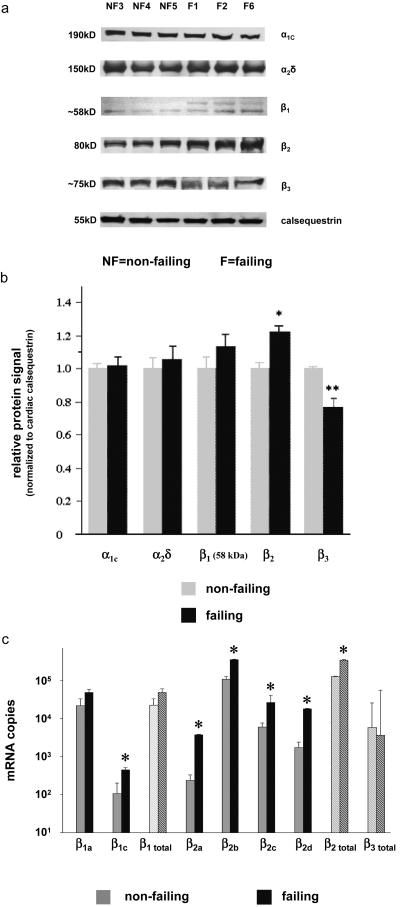
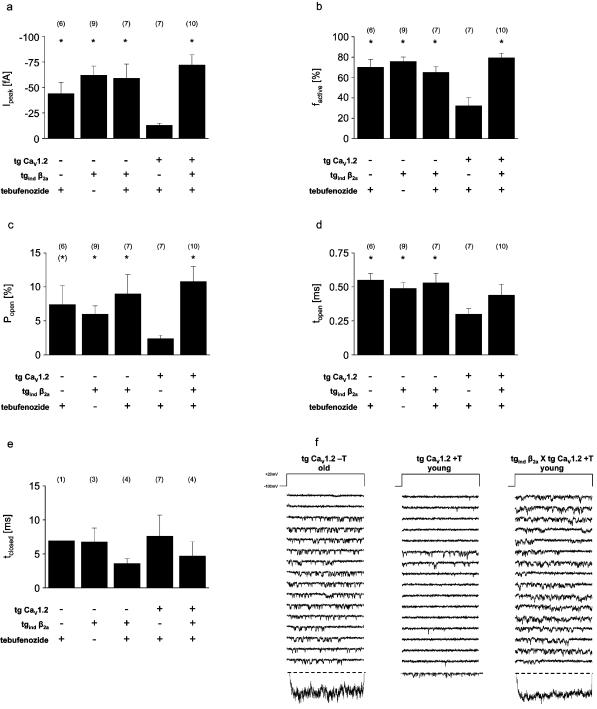
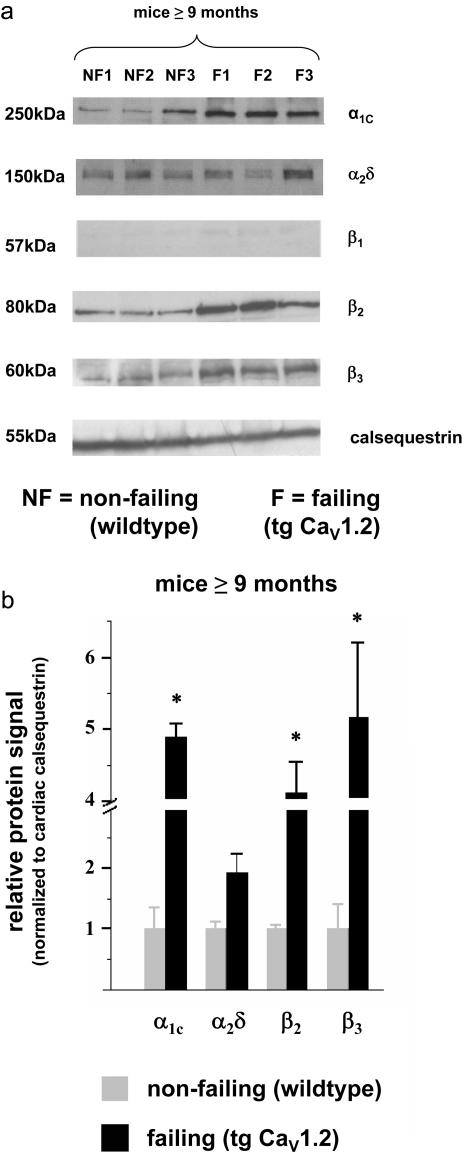
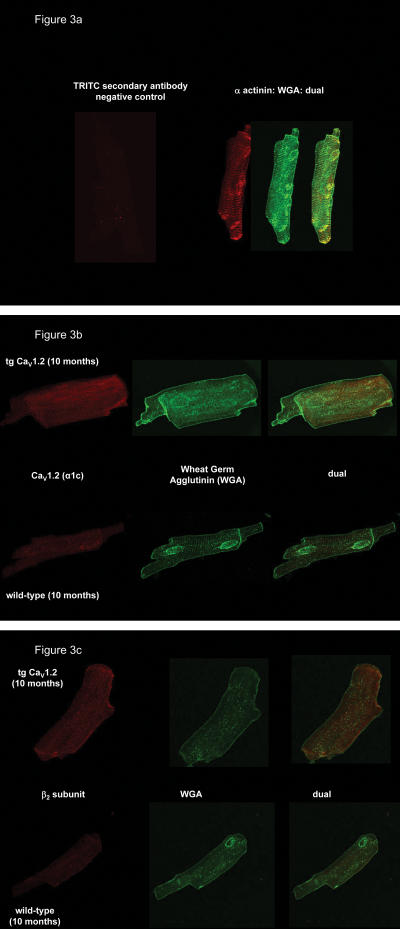
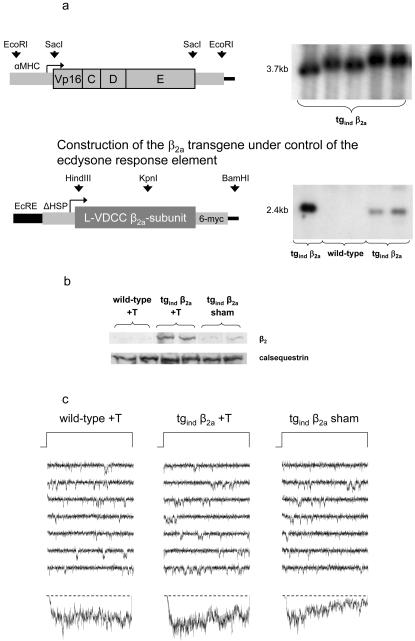
By molecular and functional analyses of human and murine ventricles, we find that enhanced L-VDCC activity is accompanied by altered expression pattern of auxiliary L-VDCC beta-subunit gene products. In HEK293-cells we show differential modulation of single L-VDCC activity by coexpression of several human cardiac beta-subunits: Unlike beta(1) or beta(3) isoforms, beta(2a) and beta(2b) induce a high-activity channel behavior typical of failing myocytes. In accordance, beta(2)-subunit mRNA and protein are up-regulated in failing human myocardium. In a model of heart failure we find that mice overexpressing the human cardiac Ca(V)1.2 also reveal increased single-channel activity and sarcolemmal beta(2) expression when entering into the maladaptive stage of heart failure. Interestingly, these animals, when still young and non-failing ("Adaptive Phase"), reveal the opposite phenotype, viz: reduced single-channel activity accompanied by lowered beta(2) expression. Additional evidence for the cause-effect relationship between beta(2)-subunit expression and single L-VDCC activity is provided by newly engineered, double-transgenic mice bearing both constitutive Ca(V)1.2 and inducible beta(2) cardiac overexpression. Here in non-failing hearts induction of beta(2)-subunit overexpression mimicked the increase of single L-VDCC activity observed in murine and human chronic heart failure.
Our study presents evidence of the pathobiochemical relevance of beta(2)-subunits for the electrophysiological phenotype of cardiac L-VDCC and thus provides an explanation for the single L-VDCC gating observed in human and murine heart failure.
单一心室 L 型钙通道(L-VDCC)活性增加是人类心力衰竭的一个标志。最近的研究结果表明,几种辅助β亚基的差异调节可能是其原因之一。
通过对人和鼠心室的分子和功能分析,我们发现 L-VDCC 活性的增强伴随着辅助 L-VDCC β亚基基因产物表达模式的改变。在 HEK293 细胞中,我们发现几种人类心脏β亚基的共表达对单个 L-VDCC 活性的调节作用不同:与β(1)或β(3)同工型不同,β(2a)和β(2b)诱导典型的衰竭心肌细胞的高活性通道行为。相应地,β(2)亚基 mRNA 和蛋白在衰竭的人类心肌中上调。在心力衰竭模型中,我们发现过度表达人类心脏 Ca(V)1.2 的小鼠在进入心力衰竭的适应性阶段时也表现出单个通道活性增加和肌膜β(2)表达增加。有趣的是,当这些动物仍然年轻且未衰竭(“适应性阶段”)时,表现出相反的表型,即:单个通道活性降低伴随着β(2)表达降低。β(2)亚基表达与单个 L-VDCC 活性之间因果关系的额外证据由新构建的、同时携带组成型 Ca(V)1.2 和诱导型β(2)心脏过表达的双转基因小鼠提供。在这里,非衰竭心脏中β(2)亚基过表达的诱导模拟了在小鼠和人类慢性心力衰竭中观察到的单个 L-VDCC 活性增加。
我们的研究为β(2)亚基在心脏 L-VDCC 的电生理表型中的病理生物化学相关性提供了证据,并为人类和鼠心力衰竭中观察到的单个 L-VDCC 门控提供了一种解释。