McAlearney Ann Scheck, Reeves Katherine W, Tatum Cathy, Paskett Electra D
Division of Health Services, Management and Policy, College of Public Health, The Ohio State University, Columbus, OH 43210, USA.
Ethn Health. 2007 Apr;12(2):189-203. doi: 10.1080/13557850601002387.
Breast cancer is a troublesome health problem, particularly among underserved and minority women. Early detection through screening mammography can reduce the impact of this disease, yet it remains underused. Objective. We examined cost as a barrier to screening mammography and studied the accuracy of women's perceptions of the cost of a mammogram among a rural, low-income, tri-racial (white, Native American and African American) population in need of a mammogram.
We interviewed 897 women age 40 and older, asking about cost as a barrier to mammography and perceptions about the actual costs of a screening mammogram. Face-to-face interviews were conducted between 1998 and 2000 among women participating in a randomized, controlled study to evaluate a health education intervention to improve mammography screening rates in an underserved population. All data used in these analyses were from the baseline interviews.
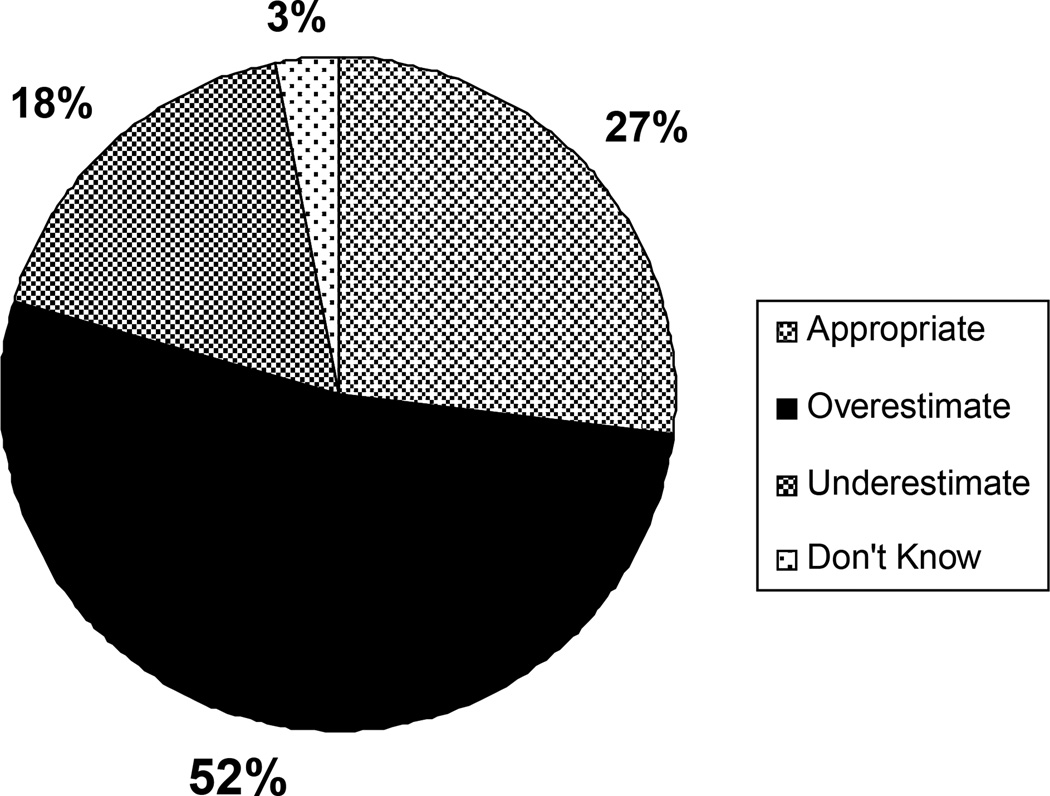
Cost acted as a barrier to screening mammography for a majority of the participants (53%). More than half of these women (52%), however, overestimated the cost of a screening mammogram, and overestimation of the cost was significantly related to mentioning cost as a barrier (OR 1.56, 95% CI 1.04-2.33). Higher estimates of out-of-pocket costs were associated with reporting cost as a barrier to mammography (OR 2.25, 95% CI 1.43-3.52 for $1-50 and OR 12.64, 95% CI 6.61-24.17 for >$50). Factors such as race, income and employment status were not related to reporting cost as a barrier to screening mammography.
Among a group of tri-racial, low-income, rural women who were in need of a mammogram, cost was a common barrier. Overestimating the cost, however, was significantly and positively associated with reporting cost as a barrier. Providing information about the actual cost women have to pay for mammograms may lessen the role of cost as a barrier to mammography screening, especially for underserved women, potentially improving utilization rates.
乳腺癌是一个棘手的健康问题,在医疗服务不足的女性和少数族裔女性中尤为突出。通过乳腺钼靶筛查进行早期检测可以降低这种疾病的影响,但该筛查方法仍未得到充分利用。目的:我们研究了费用作为乳腺钼靶筛查的障碍,并在一个需要进行乳腺钼靶检查的农村低收入、三种族(白人、美洲原住民和非裔美国人)人群中,研究了女性对乳腺钼靶检查费用认知的准确性。
我们采访了897名40岁及以上的女性,询问费用作为乳腺钼靶检查的障碍以及她们对乳腺钼靶筛查实际费用的认知。1998年至2000年期间,对参与一项随机对照研究的女性进行了面对面访谈,该研究旨在评估一项健康教育干预措施,以提高医疗服务不足人群的乳腺钼靶筛查率。这些分析中使用的所有数据均来自基线访谈。
费用对大多数参与者(53%)来说是乳腺钼靶筛查的障碍。然而,这些女性中有超过一半(52%)高估了乳腺钼靶筛查的费用,费用高估与将费用视为障碍显著相关(比值比1.56,95%置信区间1.04 - 2.33)。对自付费用的较高估计与将费用报告为乳腺钼靶检查的障碍相关(1 - 50美元时比值比2.25,95%置信区间1.43 - 3.52;超过50美元时比值比12.64,95%置信区间6.61 - 24.17)。种族、收入和就业状况等因素与将费用报告为乳腺钼靶筛查的障碍无关。
在一群需要进行乳腺钼靶检查的三种族、低收入农村女性中,费用是一个常见障碍。然而,高估费用与将费用报告为障碍显著正相关。提供女性进行乳腺钼靶检查实际需支付费用的信息,可能会减少费用作为乳腺钼靶筛查障碍的作用,特别是对医疗服务不足的女性,这可能会提高利用率。