Iijima Norio, Yokoyama Takahiko
Anatomy and Developmental Biology, Kyoto Prefectural University of Medicine, 465 Kajii-cho Kawaramachi-Hirokoji, Kamigyo-ku, Kyoto 602-0841, Japan.
Acta Histochem Cytochem. 2007 Feb 27;40(1):1-7. doi: 10.1267/ahc.06013. Epub 2007 Jan 19.
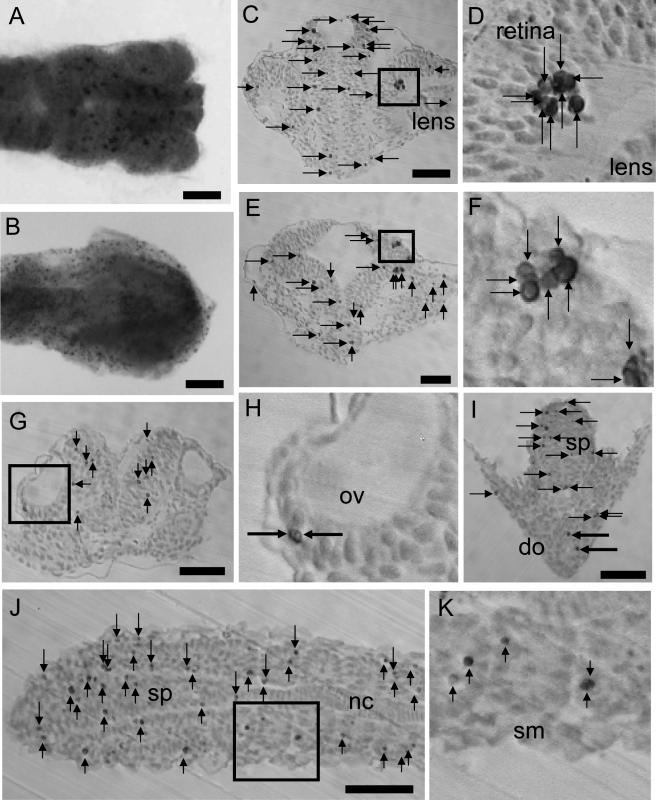
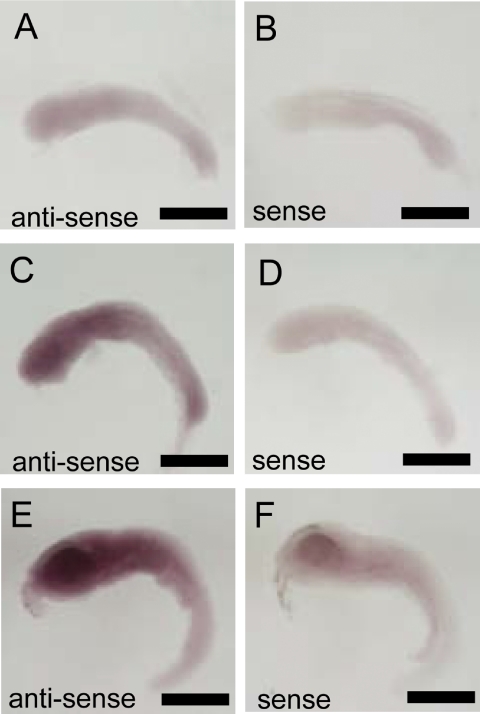
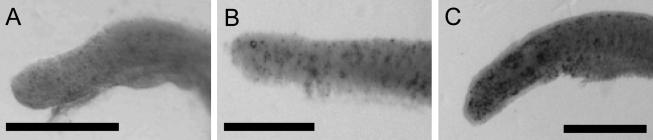
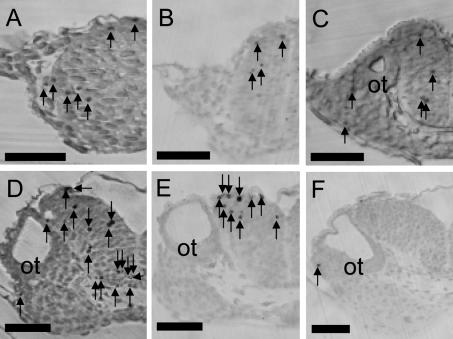
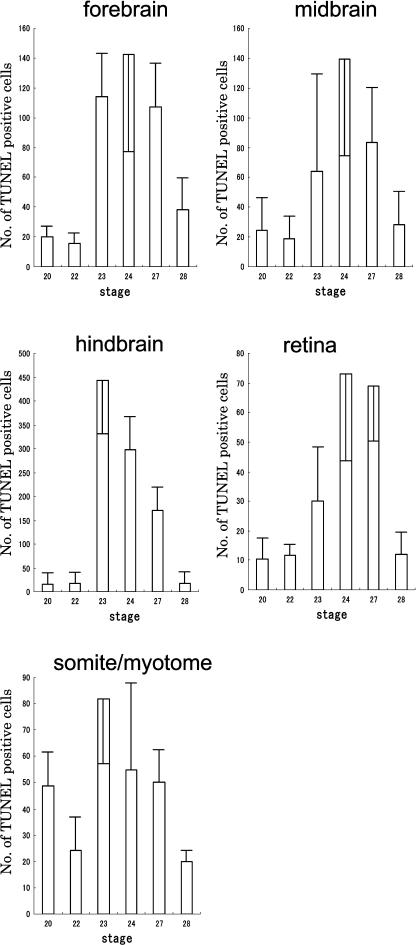
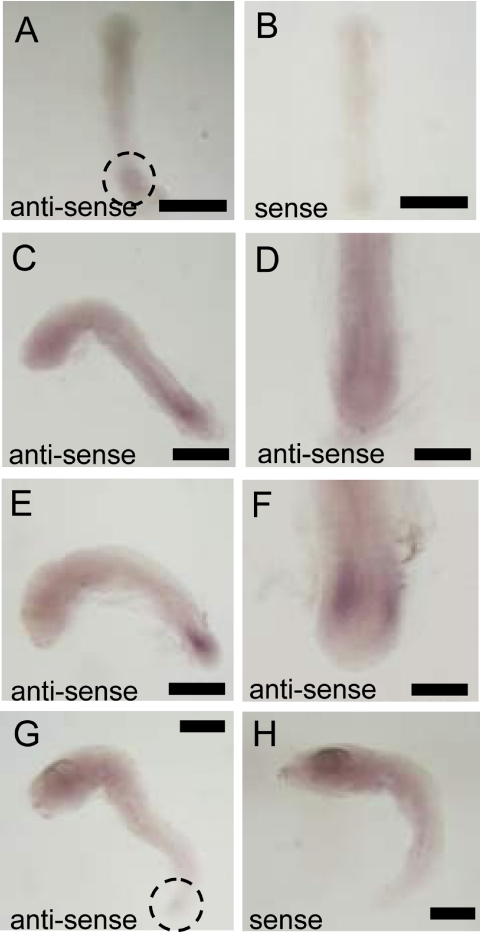
Apoptosis is an important event of the development of various organs. In this study, we used in situ terminal deoxynucleotidyl transferase-mediated dUTP nick-end labeling (TUNEL) to visualize the temporal and spatial distribution of apoptosis in the developing medaka embryo, which is a useful model for developmental biology and genetics. Most of the apoptotic cells were distributed in the central nervous system and tailbud. In the brain and retina, most of the apoptosis occurred in the restricted period. In situ hybridization against caspase 3A and caspase 3B showed that these were distributed in the tailbud and the head, respectively. These results suggested that two types of caspase 3 were involved in apoptosis in different areas.
细胞凋亡是各种器官发育过程中的一个重要事件。在本研究中,我们使用原位末端脱氧核苷酸转移酶介导的dUTP缺口末端标记法(TUNEL)来观察发育中的青鳉胚胎中细胞凋亡的时空分布,青鳉胚胎是发育生物学和遗传学研究的一个有用模型。大多数凋亡细胞分布在中枢神经系统和尾芽。在脑和视网膜中,大多数细胞凋亡发生在特定时期。针对半胱天冬酶3A和半胱天冬酶3B的原位杂交显示,它们分别分布在尾芽和头部。这些结果表明,两种类型的半胱天冬酶3参与了不同区域的细胞凋亡。