Debler Erik W, Kaufmann Gunnar F, Kirchdoerfer Robert N, Mee Jenny M, Janda Kim D, Wilson Ian A
Department of Molecular Biology and The Skaggs Institute for Chemical Biology, The Scripps Research Institute, 10550 North Torrey Pines Road, La Jolla, CA 92037, USA.
J Mol Biol. 2007 May 18;368(5):1392-402. doi: 10.1016/j.jmb.2007.02.081. Epub 2007 Mar 6.
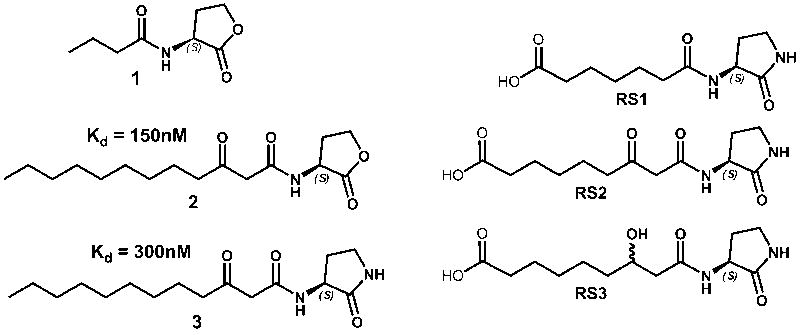
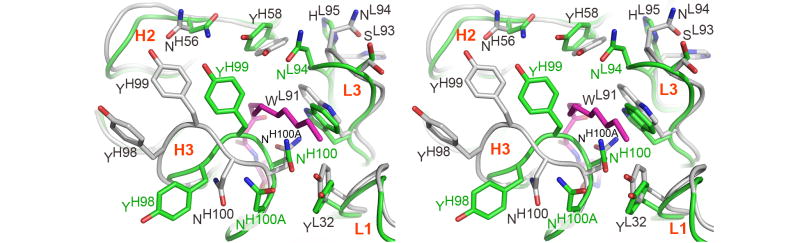
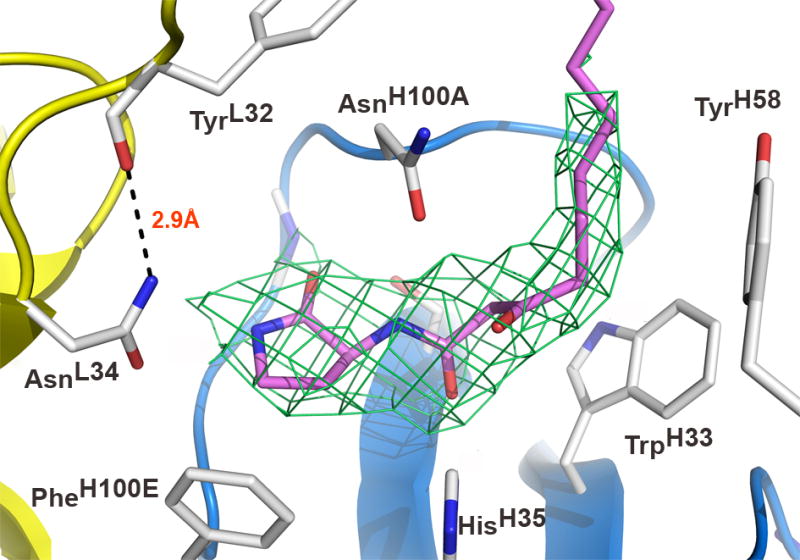
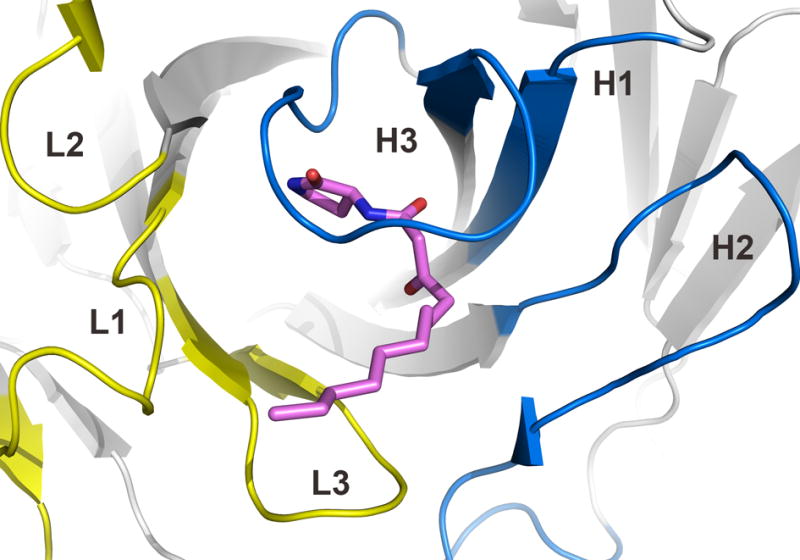
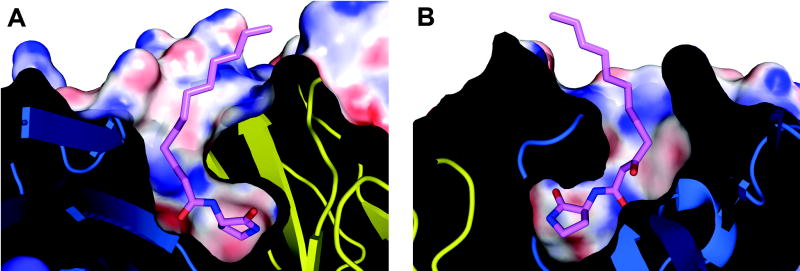
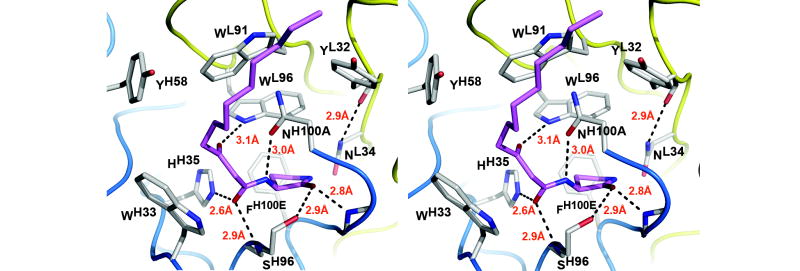
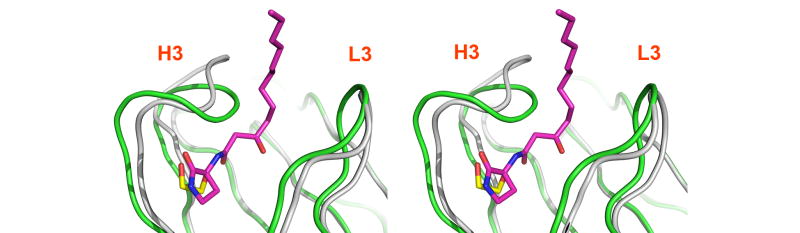
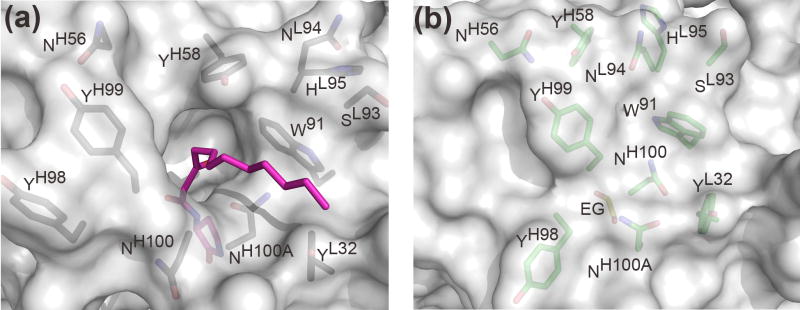
A large number of Gram-negative bacteria employ N-acyl homoserine lactones (AHLs) as signaling molecules in quorum sensing, which is a population density-dependent mechanism to coordinate gene expression. Antibody RS2-1G9 was elicited against a lactam mimetic of the N-acyl homoserine lactone and represents the only reported monoclonal antibody that recognizes the naturally-occuring N-acyl homoserine lactone with high affinity. Due to its high cross-reactivity, RS2-1G9 showed remarkable inhibition of quorum sensing signaling in Pseudomonas aeruginosa, a common opportunistic pathogen in humans. The crystal structure of Fab RS2-1G9 in complex with a lactam analog revealed complete encapsulation of the polar lactam moiety in the antibody-combining site. This mode of recognition provides an elegant immunological solution for tight binding to an aliphatic, lipid-like ligand with a small head group lacking typical haptenic features, such as aromaticity or charge, which are often incorporated into hapten design to generate high-affinity antibodies. The ability of RS2-1G9 to discriminate between closely related AHLs is conferred by six hydrogen bonds to the ligand. Conversely, cross-reactivity of RS2-1G9 towards the lactone is likely to originate from conservation of these hydrogen bonds as well as an additional hydrogen bond to the oxygen of the lactone ring. A short, narrow tunnel exiting at the protein surface harbors a portion of the acyl chain and would not allow entry of the head group. The crystal structure of the antibody without its cognate lactam or lactone ligands revealed a considerably altered antibody-combining site with a closed binding pocket. Curiously, a completely buried ethylene glycol molecule mimics the lactam ring and, thus, serves as a surrogate ligand. The detailed structural delineation of this quorum-quenching antibody will aid further development of an antibody-based therapy against bacterial pathogens by interference with quorum sensing.
大量革兰氏阴性菌利用N-酰基高丝氨酸内酯(AHLs)作为群体感应中的信号分子,群体感应是一种依赖群体密度来协调基因表达的机制。抗体RS2-1G9是针对N-酰基高丝氨酸内酯的内酰胺模拟物产生的,是唯一报道的能以高亲和力识别天然存在的N-酰基高丝氨酸内酯的单克隆抗体。由于其高交叉反应性,RS2-1G9对铜绿假单胞菌(一种常见的人类机会致病菌)的群体感应信号表现出显著抑制作用。Fab RS2-1G9与内酰胺类似物复合物的晶体结构显示,极性内酰胺部分完全包裹在抗体结合位点中。这种识别模式为紧密结合具有小头部基团的脂肪族、类脂配体提供了一种巧妙的免疫学解决方案,该头部基团缺乏典型的半抗原特征,如芳香性或电荷,而这些特征通常被纳入半抗原设计中以产生高亲和力抗体。RS2-1G9区分密切相关AHLs的能力是由与配体形成的六个氢键赋予的。相反,RS2-1G9对内酯的交叉反应性可能源于这些氢键的保守性以及与内酯环氧原子的额外氢键。在蛋白质表面有一个短而窄的通道,容纳部分酰基链,不允许头部基团进入。没有其同源内酰胺或内酯配体的抗体晶体结构显示,抗体结合位点有很大改变,结合口袋封闭。奇怪的是,一个完全埋藏的乙二醇分子模拟内酰胺环,因此可作为替代配体。这种群体感应淬灭抗体的详细结构描绘将有助于通过干扰群体感应进一步开发基于抗体的抗细菌病原体疗法。