Sakinah S A Sharifah, Handayani S Tri, Hawariah L P Azimahtol
School of Bioscience and Biotechnology, Faculty of Science and Technology, National University of Malaysia (UKM), 43600 Bangi, Selangor, Malaysia.
Cancer Cell Int. 2007 Apr 3;7:4. doi: 10.1186/1475-2867-7-4.
Zerumbone is a cytotoxic component isolated from Zingiber zerumbet Smith, a herbal plant which is also known as lempoyang. This new anticancer bioactive compound from Z. zerumbet was investigated for its activity and mechanism in human liver cancer cell lines.
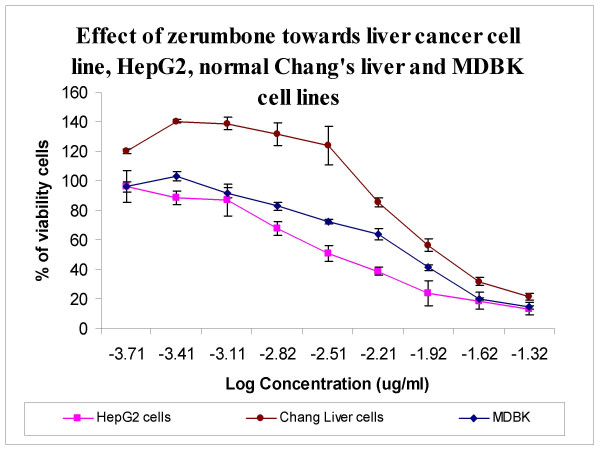
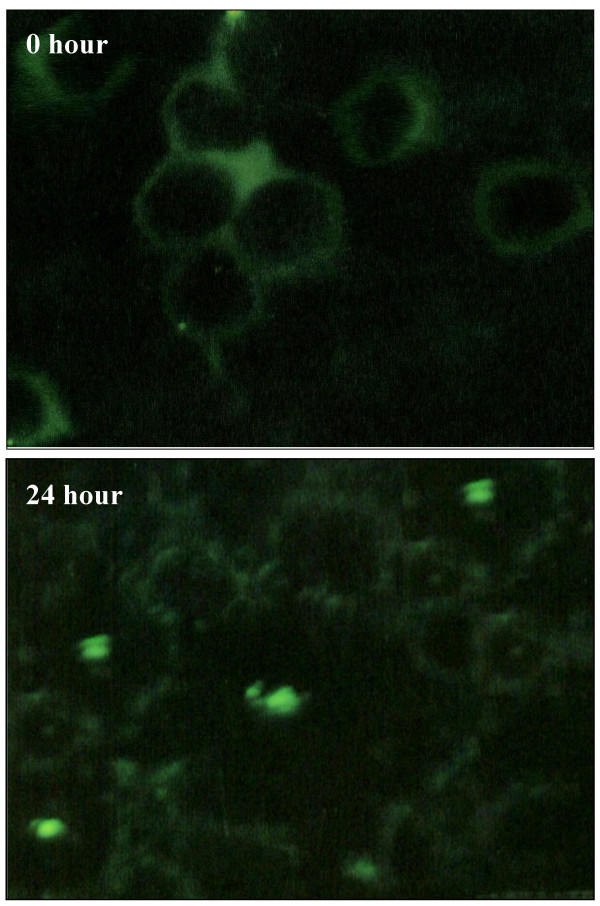
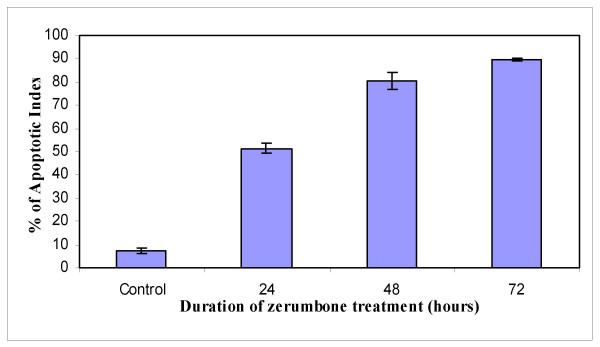
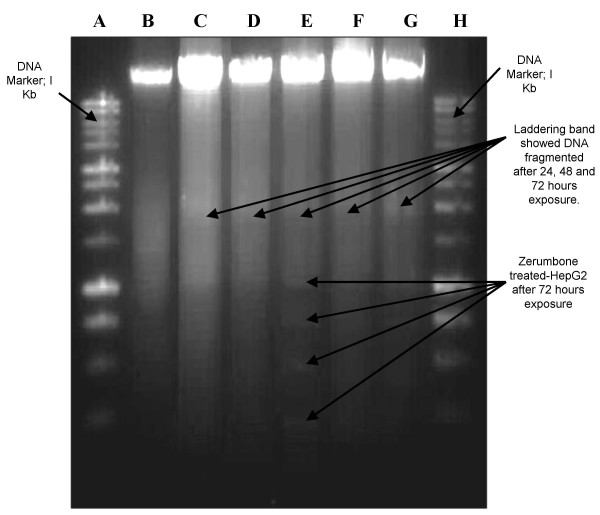
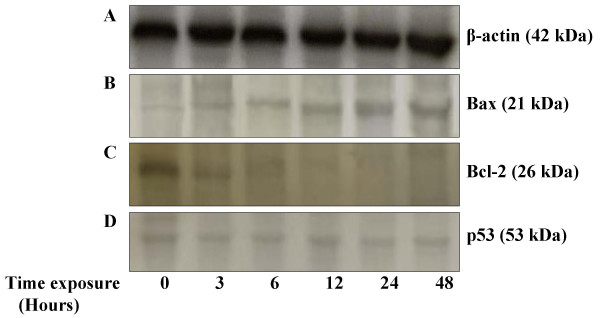
Zerumbone significantly showed an antiproliferative activity upon HepG2 cells with an IC50 of 3.45 +/- 0.026 microg/ml. Zerumbone was also found to inhibit the proliferation of non-malignant Chang Liver and MDBK cell lines. However the IC50 obtained was higher compared to the IC50 for HepG2 cells (> 10 microg/ml). The extent of DNA fragmentation was evaluated by the Tdt-mediated dUTP nick end labelling assay which showed that, zerumbone significantly increased apoptosis in HepG2 cells in a time-course manner. In detail, the apoptotic process triggered by zerumbone involved the up-regulation of pro-apoptotic Bax protein and the suppression of anti-apoptotic Bcl-2 protein expression. The changes that occurred in the levels of this antagonistic proteins Bax/Bcl-2, was independent of p53 since zerumbone did not affect the levels of p53 although this protein exists in a functional form. Western blotting analysis for Bax protein was further confirmed qualitatively with an immunoassay that showed the distribution of Bax protein in zerumbone-treated cells.
Therefore, zerumbone was found to induce the apoptotic process in HepG2 cells through the up and down regulation of Bax/Bcl-2 protein independently of functional p53 activity.
姜酮是从姜科植物红球姜(也称大良姜)中分离出的一种具有细胞毒性的成分。对这种从红球姜中提取的新型抗癌生物活性化合物在人肝癌细胞系中的活性和作用机制进行了研究。
姜酮对HepG2细胞显示出显著的抗增殖活性,IC50为3.45±0.026微克/毫升。还发现姜酮能抑制非恶性的张氏肝细胞和MDBK细胞系的增殖。然而,所获得的IC50与HepG2细胞的IC50相比更高(>10微克/毫升)。通过末端脱氧核苷酸转移酶介导的dUTP缺口末端标记法评估DNA片段化程度,结果表明,姜酮能以时间依赖性方式显著增加HepG2细胞的凋亡。具体而言,姜酮引发的凋亡过程涉及促凋亡蛋白Bax的上调和抗凋亡蛋白Bcl-2表达的抑制。这种拮抗蛋白Bax/Bcl-2水平的变化与p53无关,因为尽管p53以功能形式存在,但姜酮并不影响其水平。用免疫测定法对Bax蛋白进行的蛋白质印迹分析进一步从定性上证实了Bax蛋白在经姜酮处理的细胞中的分布。
因此,发现姜酮通过独立于功能性p53活性的Bax/Bcl-2蛋白的上调和下调诱导HepG2细胞的凋亡过程。