Dunlevy Louisa P E, Chitty Lyn S, Burren Katie A, Doudney Kit, Stojilkovic-Mikic Taita, Stanier Philip, Scott Rosemary, Copp Andrew J, Greene Nicholas D E
Neural Development Unit, Institute of Child Health, University College London, UK.
Brain. 2007 Apr;130(Pt 4):1043-9. doi: 10.1093/brain/awm028.
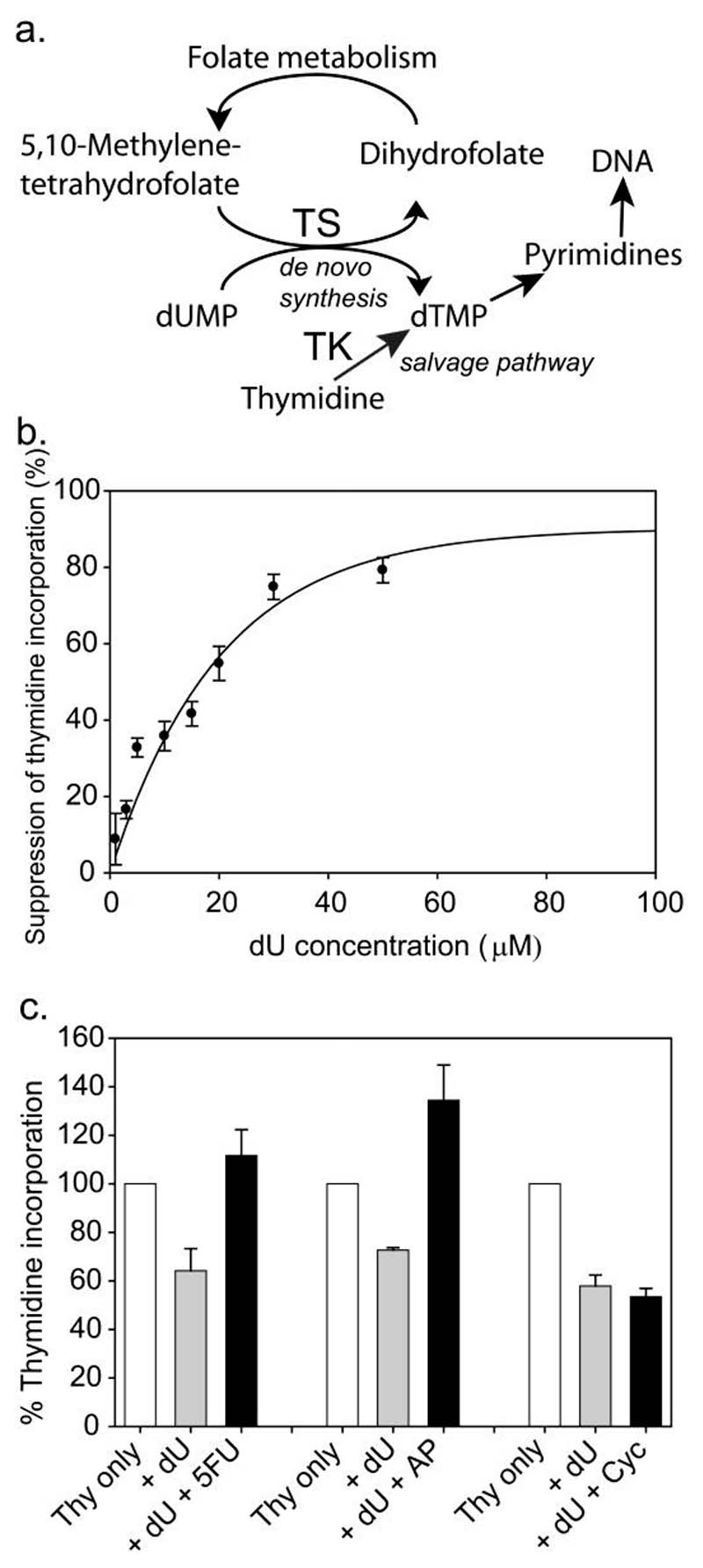
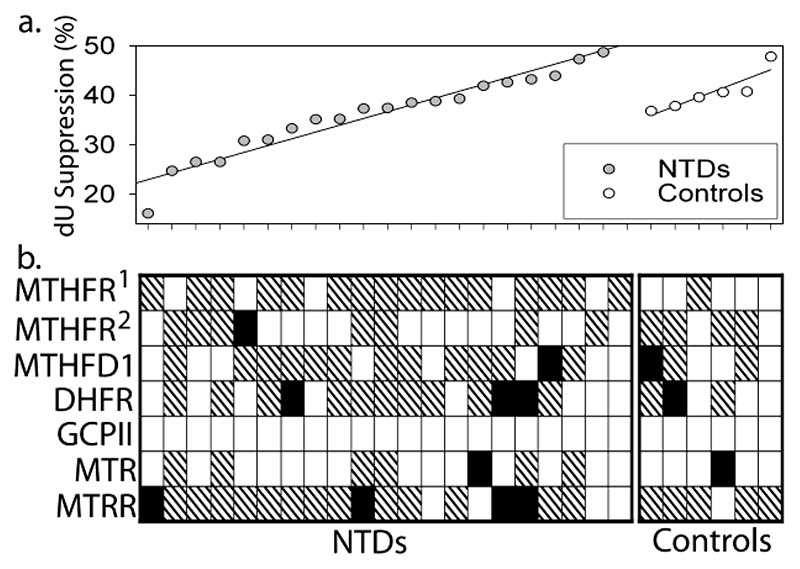
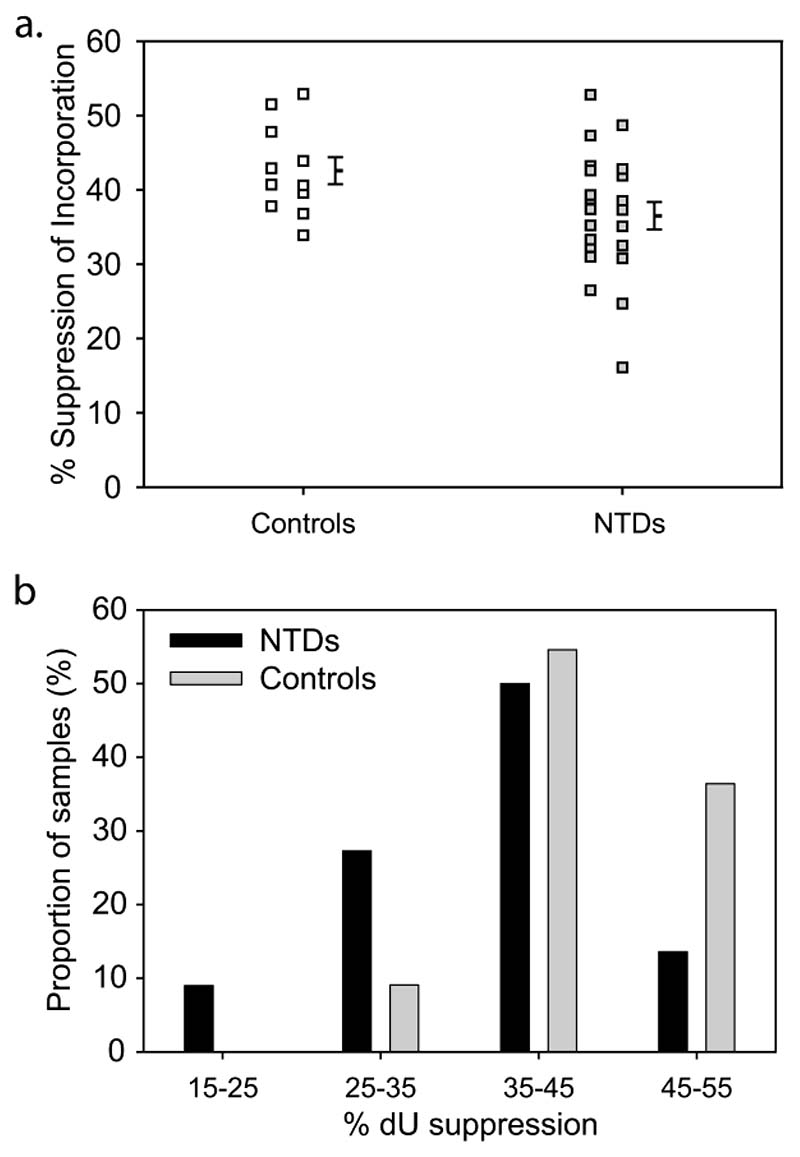
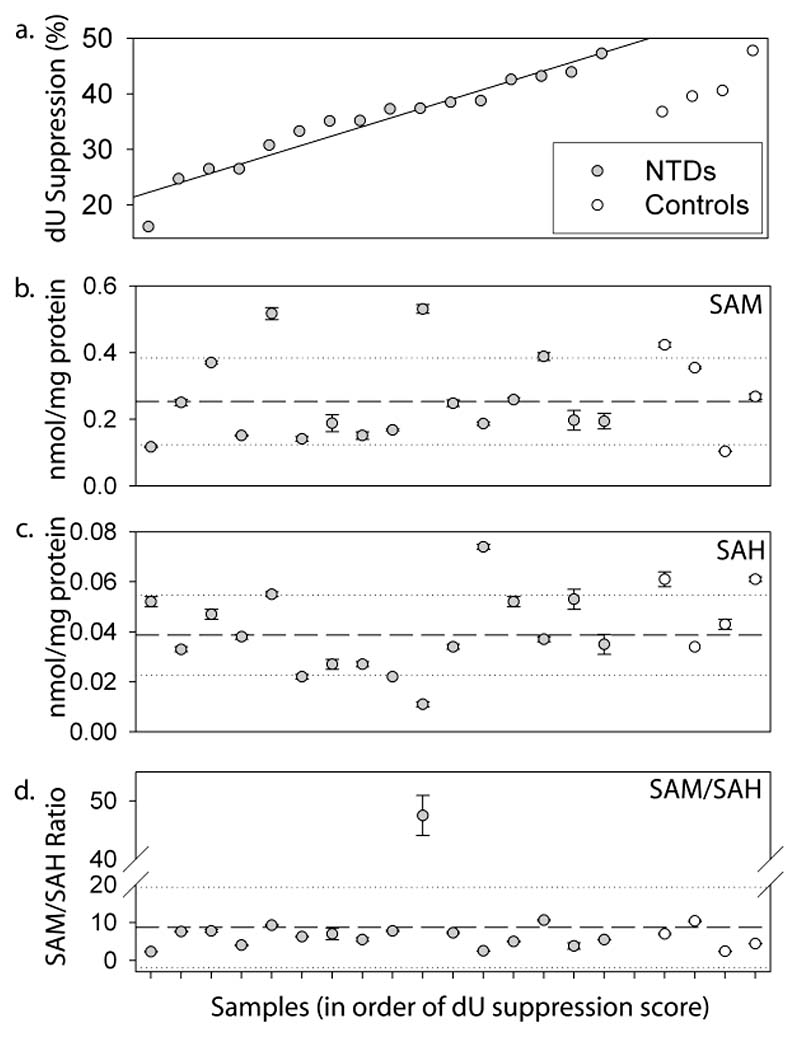
Folic acid supplementation can prevent many cases of neural tube defects (NTDs), whereas suboptimal maternal folate status is a risk factor, suggesting that folate metabolism is a key determinant of susceptibility to NTDs. Despite extensive genetic analysis of folate cycle enzymes, and quantification of metabolites in maternal blood, neither the protective mechanism nor the relationship between maternal folate status and susceptibility are understood in most cases. In order to investigate potential abnormalities in folate metabolism in the embryo itself, we derived primary fibroblastic cell lines from foetuses affected by NTDs and subjected them to the dU suppression test, a sensitive metabolic test of folate metabolism. Significantly, a subset of NTD cases exhibited low scores in this test, indicative of abnormalities in folate cycling that may be causally linked to the defect. Susceptibility to NTDs may be increased by suppression of the methylation cycle, which is interlinked with the folate cycle. However, reduced efficacy in the dU suppression test was not associated with altered abundance of the methylation cycle intermediates, s-adenosylmethionine and s-adenosylhomocysteine, suggesting that a methylation cycle defect is unlikely to be responsible for the observed abnormality of folate metabolism. Genotyping of samples for known polymorphisms in genes encoding folate-associated enzymes did not reveal any correlation between specific genotypes and the observed abnormalities in folate metabolism. These data suggest that as yet unrecognized genetic variants result in embryonic abnormalities of folate cycling that may be causally related to NTDs.
补充叶酸可预防许多神经管缺陷(NTDs)病例,而母亲叶酸水平欠佳是一个风险因素,这表明叶酸代谢是易患神经管缺陷的关键决定因素。尽管对叶酸循环酶进行了广泛的基因分析,并对母体血液中的代谢物进行了定量分析,但在大多数情况下,保护机制以及母体叶酸状态与易感性之间的关系仍不清楚。为了研究胚胎自身叶酸代谢的潜在异常,我们从受神经管缺陷影响的胎儿中获取了原代成纤维细胞系,并对其进行了dU抑制试验,这是一种对叶酸代谢敏感的代谢试验。值得注意的是,一部分神经管缺陷病例在该试验中得分较低,表明叶酸循环存在异常,这可能与该缺陷存在因果关系。抑制与叶酸循环相互关联的甲基化循环可能会增加患神经管缺陷的易感性。然而,dU抑制试验中效力降低与甲基化循环中间体s-腺苷甲硫氨酸和s-腺苷同型半胱氨酸丰度的改变无关,这表明甲基化循环缺陷不太可能是观察到的叶酸代谢异常的原因。对编码叶酸相关酶的基因中已知多态性的样本进行基因分型,未发现特定基因型与观察到的叶酸代谢异常之间存在任何相关性。这些数据表明,尚未被识别的基因变异导致胚胎叶酸循环异常,这可能与神经管缺陷存在因果关系。