Weeks Andrew R, Turelli Michael, Harcombe William R, Reynolds K Tracy, Hoffmann Ary A
Department of Genetics, Centre for Environmental Stress and Adaptation Research, University of Melbourne, Parkville, Victoria, Australia.
PLoS Biol. 2007 May;5(5):e114. doi: 10.1371/journal.pbio.0050114.
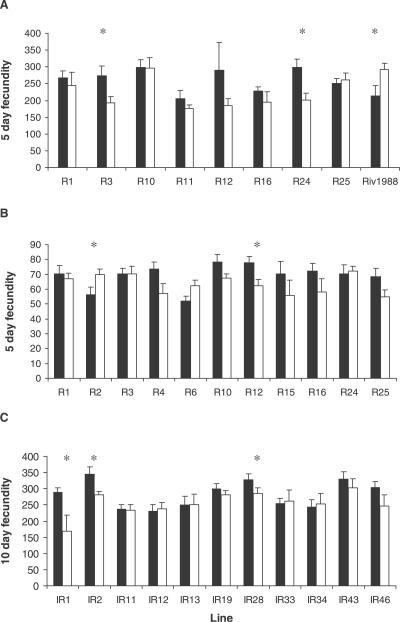
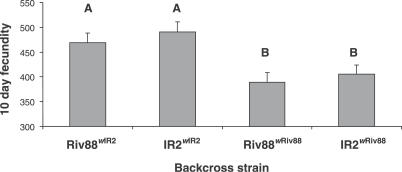
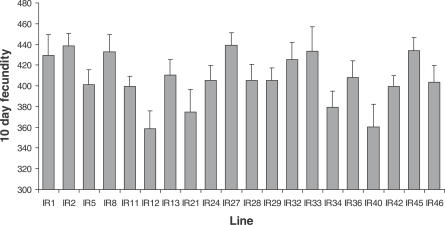
Wolbachia are maternally inherited bacteria that commonly spread through host populations by causing cytoplasmic incompatibility, often expressed as reduced egg hatch when uninfected females mate with infected males. Infected females are frequently less fecund as a consequence of Wolbachia infection. However, theory predicts that because of maternal transmission, these "parasites" will tend to evolve towards a more mutualistic association with their hosts. Drosophila simulans in California provided the classic case of a Wolbachia infection spreading in nature. Cytoplasmic incompatibility allowed the infection to spread through individual populations within a few years and from southern to northern California (more than 700 km) within a decade, despite reducing the fecundity of infected females by 15%-20% under laboratory conditions. Here we show that the Wolbachia in California D. simulans have changed over the last 20 y so that infected females now exhibit an average 10% fecundity advantage over uninfected females in the laboratory. Our data suggest smaller but qualitatively similar changes in relative fecundity in nature and demonstrate that fecundity-increasing Wolbachia variants are currently polymorphic in natural populations.
沃尔巴克氏体是通过母体遗传的细菌,通常通过引起细胞质不亲和在宿主种群中传播,细胞质不亲和常表现为未感染的雌性交配感染的雄性时,卵孵化率降低。由于感染沃尔巴克氏体,受感染的雌性通常繁殖力较低。然而,理论预测,由于母体传播,这些“寄生虫”将倾向于朝着与宿主形成更互利共生的关系进化。加利福尼亚的拟暗果蝇提供了沃尔巴克氏体感染在自然界传播的经典案例。细胞质不亲和使得这种感染在几年内通过各个种群传播,并在十年内从加利福尼亚南部传播到北部(超过700公里),尽管在实验室条件下感染的雌性繁殖力降低了15%-20%。我们在此表明,加利福尼亚拟暗果蝇体内的沃尔巴克氏体在过去20年中发生了变化,现在在实验室中,受感染的雌性比未感染的雌性平均具有10%的繁殖力优势。我们的数据表明,自然界中相对繁殖力的变化较小但性质相似,并证明目前繁殖力增强的沃尔巴克氏体变体在自然种群中是多态的。