DeRose-Wilson Leah J, Gaut Brandon S
Dept. of Ecology and Evolutionary Biology, U.C. Irvine, Irvine, CA 92697, USA.
BMC Evol Biol. 2007 Apr 23;7:66. doi: 10.1186/1471-2148-7-66.
There has been remarkably little study of nucleotide substitution rate variation among plant nuclear genes, in part because orthology is difficult to establish. Orthology is even more problematic for intergenic regions of plant nuclear genomes, because plant genomes generally harbor a wealth of repetitive DNA. In theory orthologous intergenic data is valuable for studying rate variation because nucleotide substitutions in these regions should be under little selective constraint compared to coding regions. As a result, evolutionary rates in intergenic regions may more accurately reflect genomic features, like recombination and GC content, that contribute to nucleotide substitution.
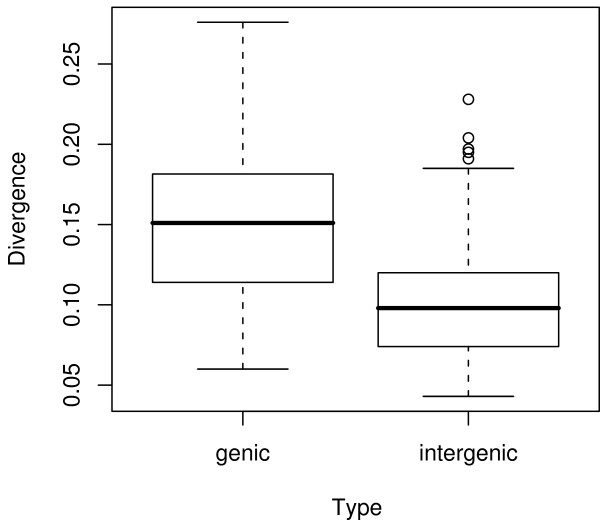
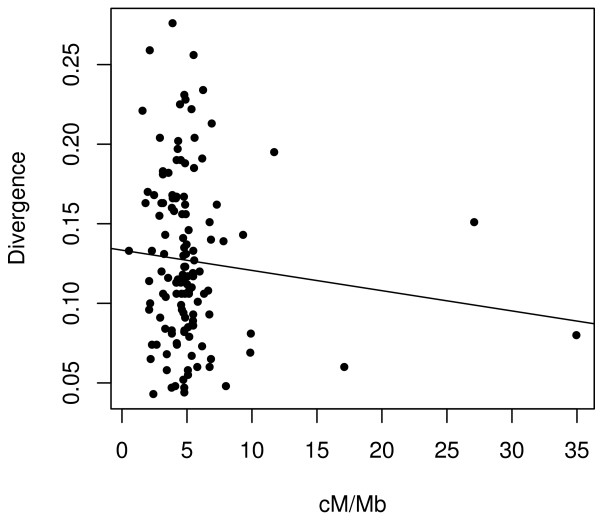
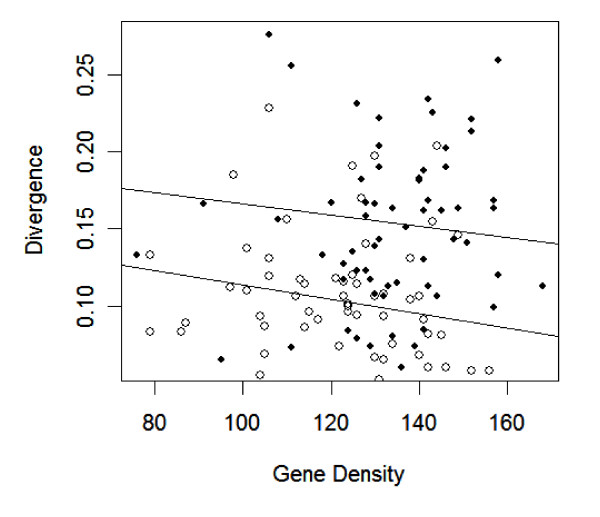
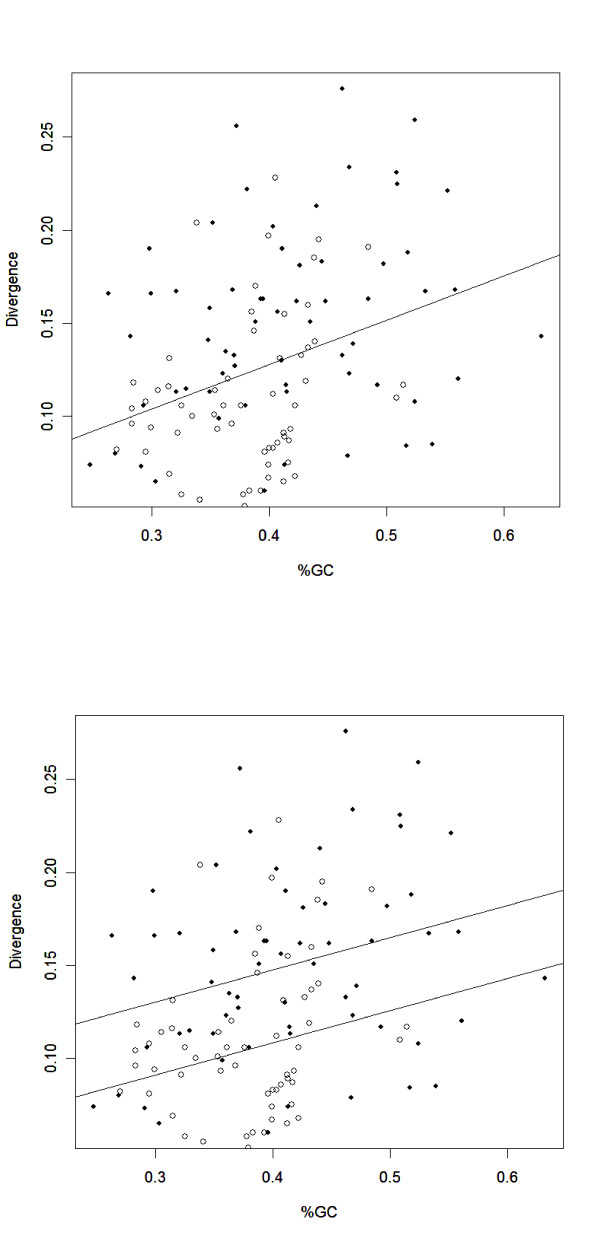
We generated a set of 66 intergenic sequences in Arabidopsis lyrata, a close relative of Arabidopsis thaliana. The intergenic regions included transposable element (TE) remnants and regions flanking the TEs. We verified orthology of these amplified regions both by comparison of existing A. lyrata--A. thaliana genetic maps and by using molecular features. We compared substitution rates among the 66 intergenic loci, which exhibit ~5-fold rate variation, and compared intergenic rates to a set of 64 orthologous coding sequences. Our chief observations were that the average rate of nucleotide substitution is slower in intergenic regions than in synonymous sites, that rate variation in both intergenic and coding regions correlate with GC content, that GC content alone is not sufficient to explain differences in rates between intergenic and coding regions, and that rates of evolution in intergenic regions correlate negatively with gene density.
Our observations indicated that mutation rates vary among genomics regions as a function of base composition, suggesting that previous observations of "selective constraint" on non-coding regions could more accurately be attributed to a GC effect instead of selection. The negative correlation between nucleotide substitution rate and gene density provides a potential neutral explanation for a previously documented correlation between gene density and polymorphism levels within A. thaliana. Finally, we discuss potential forces that could contribute to rapid synonymous rates, and provide evidence to suggest that transcription-related mutation contributes to rate differences between intergenic and synonymous sites.
关于植物核基因间核苷酸替换率的变化,相关研究非常少,部分原因是直系同源关系很难确定。对于植物核基因组的基因间区域来说,直系同源关系的确定更是问题重重,因为植物基因组通常含有大量的重复DNA。理论上,直系同源的基因间数据对于研究替换率变化很有价值,因为与编码区相比,这些区域的核苷酸替换应该很少受到选择限制。因此,基因间区域的进化速率可能更准确地反映了有助于核苷酸替换的基因组特征,如重组和GC含量。
我们在拟南芥的近缘物种琴叶拟南芥中生成了一组66个基因间序列。这些基因间区域包括转座元件(TE)残余以及TE两侧的区域。我们通过比较现有的琴叶拟南芥-拟南芥遗传图谱以及利用分子特征,验证了这些扩增区域的直系同源关系。我们比较了66个基因间位点的替换率,这些位点的替换率变化约为5倍,并将基因间区域的替换率与一组64个直系同源编码序列的替换率进行了比较。我们的主要观察结果是,基因间区域的核苷酸平均替换率比同义位点慢,基因间区域和编码区域的替换率变化都与GC含量相关,仅GC含量不足以解释基因间区域和编码区域之间的速率差异,并且基因间区域的进化速率与基因密度呈负相关。
我们的观察结果表明,突变率在基因组区域之间因碱基组成而异,这表明先前关于非编码区域“选择限制”的观察结果可能更准确地归因于GC效应而非选择。核苷酸替换率与基因密度之间的负相关为先前记录的拟南芥基因密度与多态性水平之间的相关性提供了一种潜在的中性解释。最后,我们讨论了可能导致快速同义速率的潜在因素,并提供证据表明转录相关突变导致了基因间区域和同义位点之间的速率差异。