Centro Interdisciplinar de Terapia Gênica (CINTERGEN), Universidade Federal de São Paulo-Escola Paulista de Medicina, São Paulo, Brazil.
PLoS One. 2007 Apr 25;2(4):e393. doi: 10.1371/journal.pone.0000393.
Following infection with viruses, bacteria or protozoan parasites, naïve antigen-specific CD8(+) T cells undergo a process of differentiation and proliferation to generate effector cells. Recent evidences suggest that the timing of generation of specific effector CD8(+) T cells varies widely according to different pathogens. We hypothesized that the timing of increase in the pathogen load could be a critical parameter governing this process.
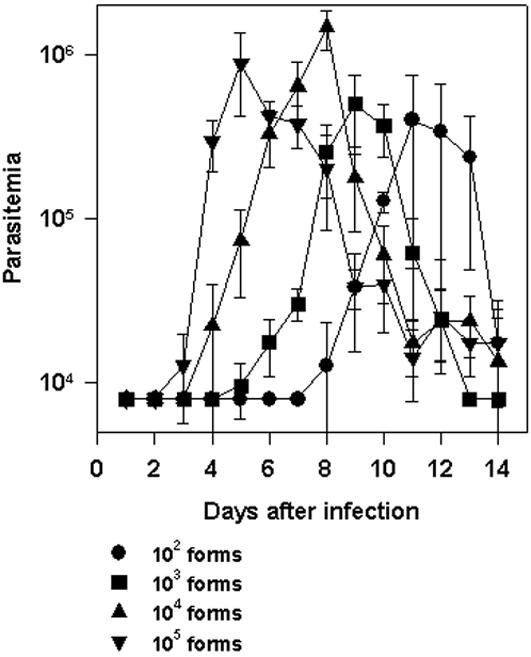
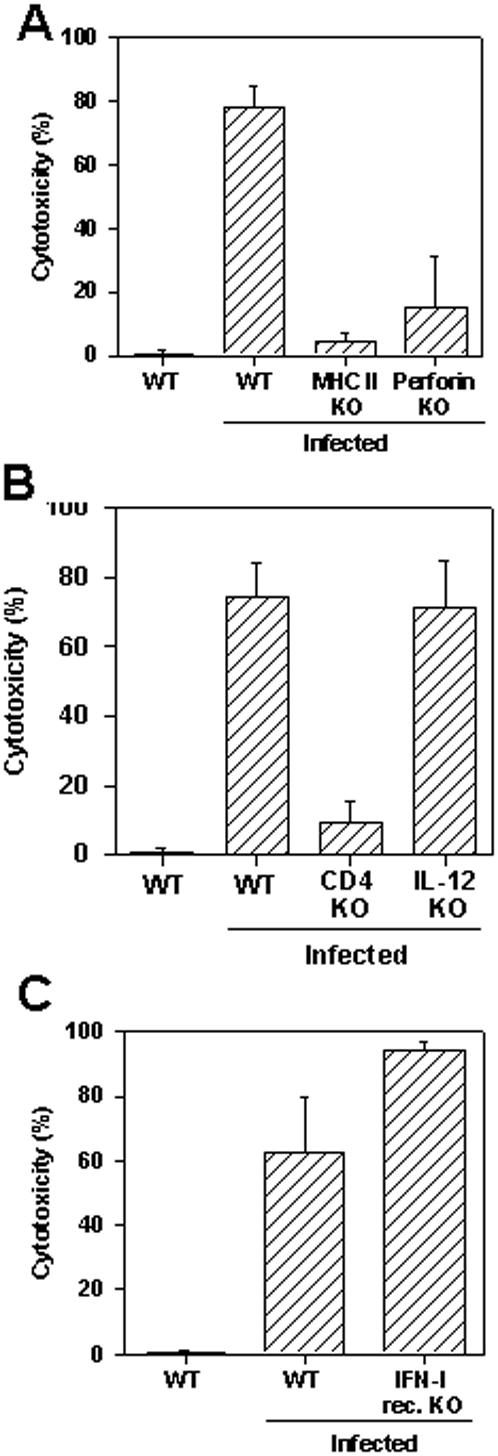
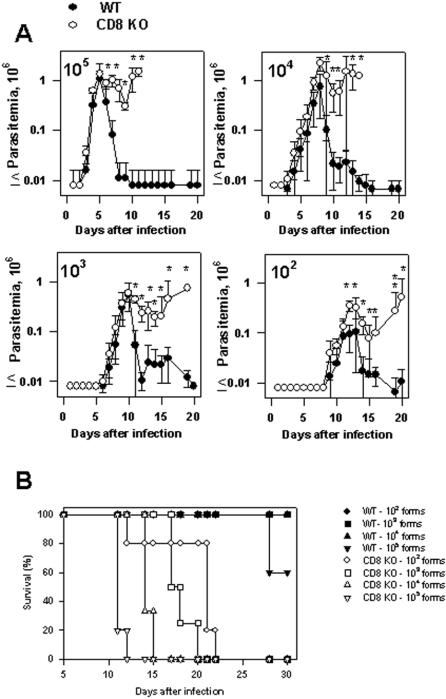
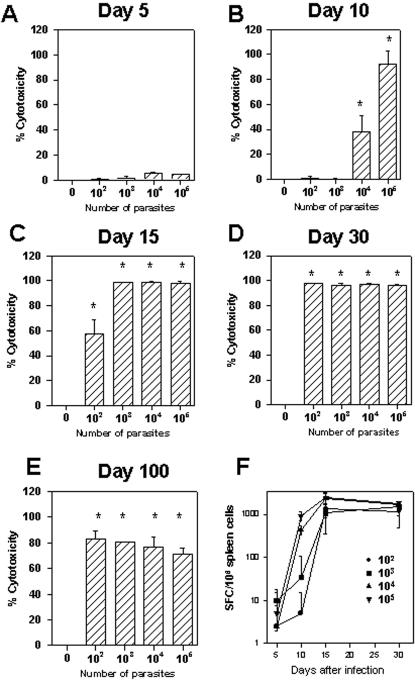
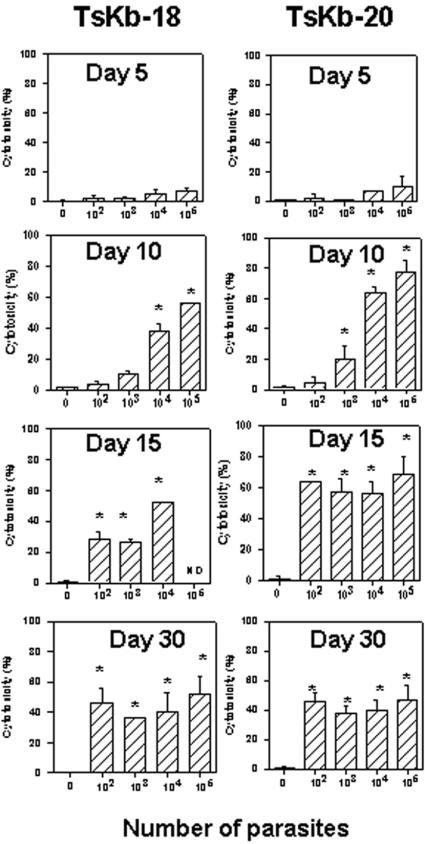
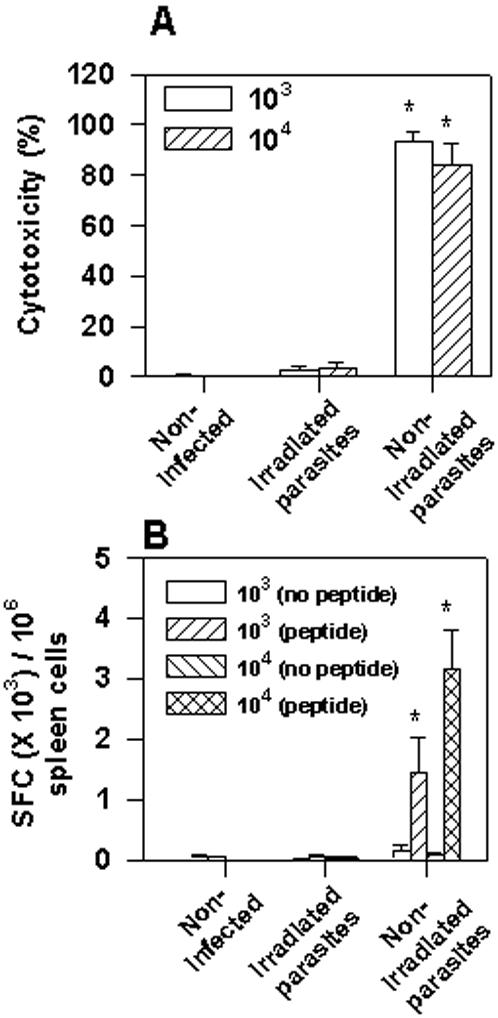
METHODOLOGY/PRINCIPAL FINDINGS: Using increasing doses of the protozoan parasite Trypanosoma cruzi to infect C57BL/6 mice, we observed a significant acceleration in the timing of parasitemia without an increase in mouse susceptibility. In contrast, in CD8 deficient mice, we observed an inverse relationship between the parasite inoculum and the timing of death. These results suggest that in normal mice CD8(+) T cells became protective earlier, following the accelerated development of parasitemia. The evaluation of specific cytotoxic responses in vivo to three distinct epitopes revealed that increasing the parasite inoculum hastened the expansion of specific CD8(+) cytotoxic T cells following infection. The differentiation and expansion of T. cruzi-specific CD8(+) cytotoxic T cells is in fact dependent on parasite multiplication, as radiation-attenuated parasites were unable to activate these cells. We also observed that, in contrast to most pathogens, the activation process of T. cruzi-specific CD8(+) cytotoxic T cells was dependent on MHC class II restricted CD4(+) T cells.
CONCLUSIONS/SIGNIFICANCE: Our results are compatible with our initial hypothesis that the timing of increase in the pathogen load can be a critical parameter governing the kinetics of CD4(+) T cell-dependent expansion of pathogen-specific CD8(+) cytotoxic T cells.
在感染病毒、细菌或原生动物寄生虫后,幼稚的抗原特异性 CD8(+) T 细胞经历分化和增殖过程,产生效应细胞。最近的证据表明,根据不同的病原体,特异性效应 CD8(+) T 细胞的产生时间差异很大。我们假设病原体负荷增加的时间可以是控制这一过程的关键参数。
方法/主要发现:使用原生动物寄生虫 Trypanosoma cruzi 的递增剂量感染 C57BL/6 小鼠,我们观察到寄生虫血症的发生时间明显加快,而小鼠易感性没有增加。相比之下,在 CD8 缺陷小鼠中,我们观察到寄生虫接种量与死亡时间之间存在反比关系。这些结果表明,在正常小鼠中,CD8(+) T 细胞更早地变得具有保护作用,随后寄生虫血症加速发展。体内对三个不同表位的特异性细胞毒性反应的评估表明,随着感染后寄生虫的扩增,增加寄生虫接种量会加速特异性 CD8(+)细胞毒性 T 细胞的扩增。T. cruzi 特异性 CD8(+)细胞毒性 T 细胞的分化和扩增实际上取决于寄生虫的增殖,因为辐射减毒寄生虫无法激活这些细胞。我们还观察到,与大多数病原体不同,T. cruzi 特异性 CD8(+)细胞毒性 T 细胞的激活过程依赖于 MHC 类 II 限制的 CD4(+) T 细胞。
结论/意义:我们的结果与我们最初的假设一致,即病原体负荷增加的时间可以是控制 CD4(+) T 细胞依赖性病原体特异性 CD8(+)细胞毒性 T 细胞扩增动力学的关键参数。