Kawano Mitsuoki, Aravind L, Storz Gisela
Cell Biology and Metabolism Branch, National Institute of Child Health and Human Development, National Institutes of Health, Bethesda, MD 20892, USA.
Mol Microbiol. 2007 May;64(3):738-54. doi: 10.1111/j.1365-2958.2007.05688.x.
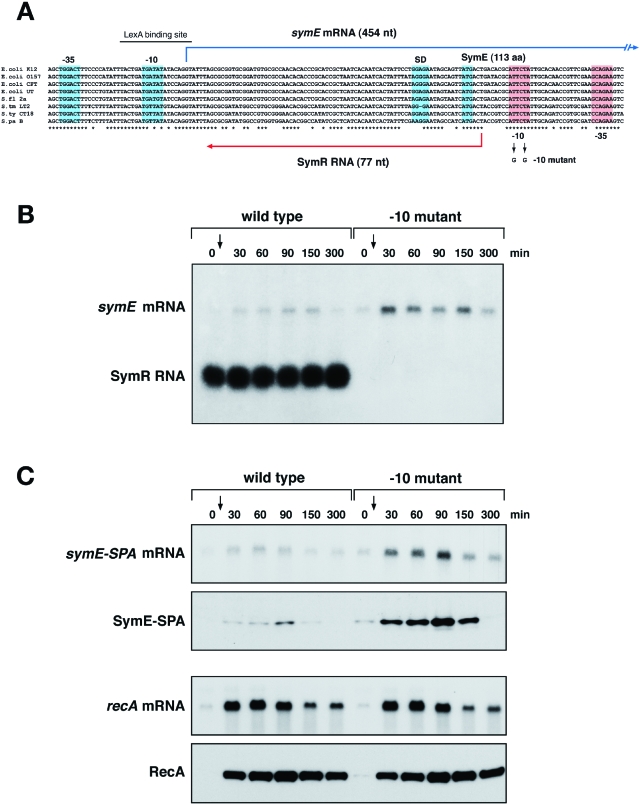
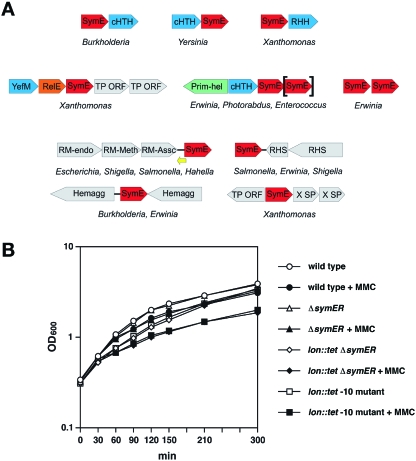
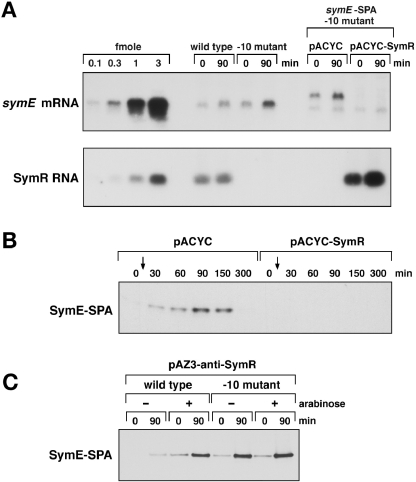
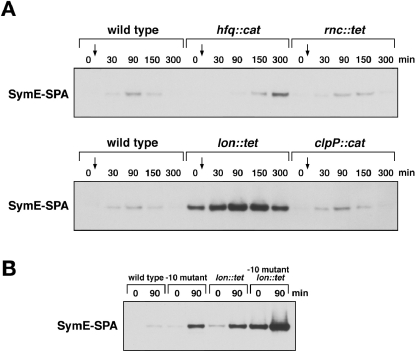
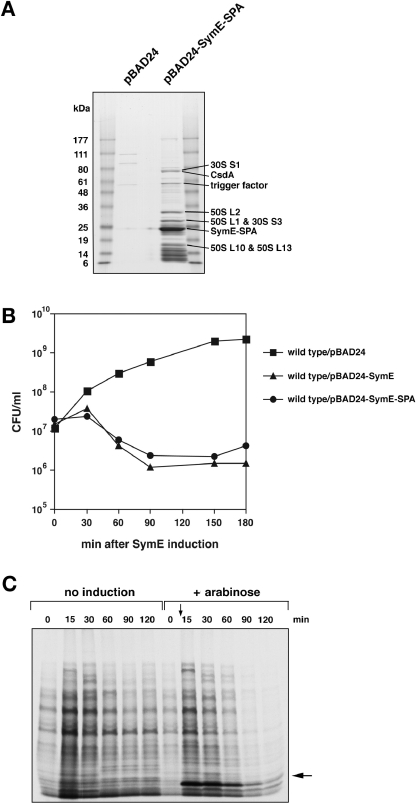
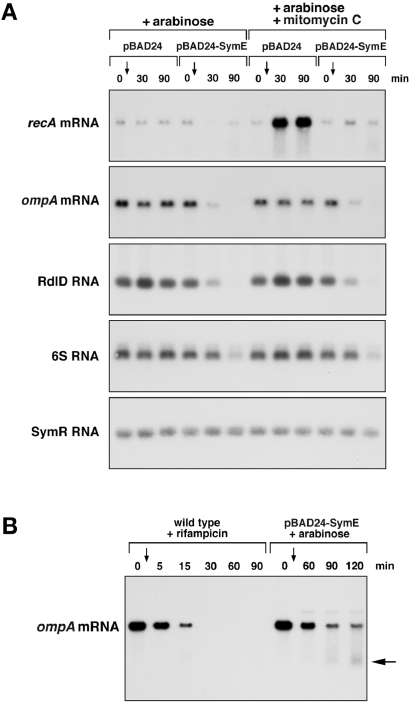
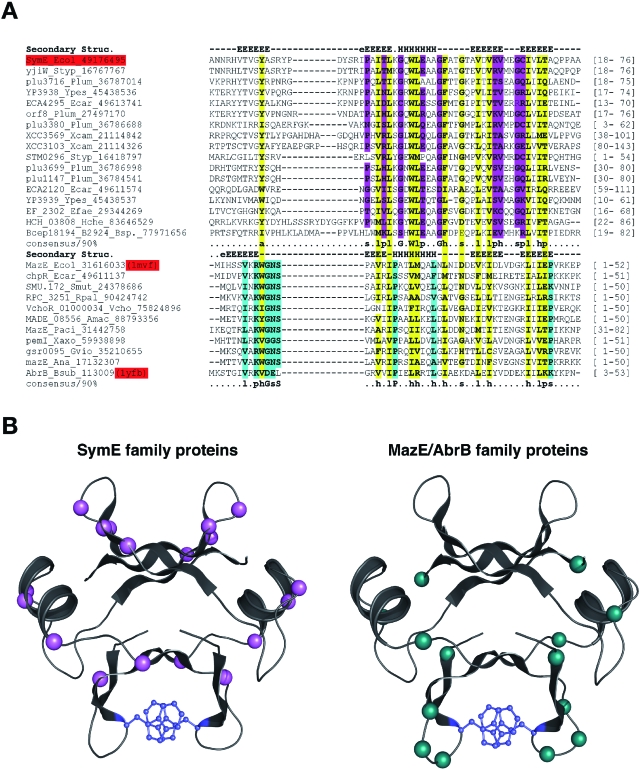
Only few small, regulatory RNAs encoded opposite another gene have been identified in bacteria. Here, we report the characterization of a locus where a small RNA (SymR) is encoded in cis to an SOS-induced gene whose product shows homology to the antitoxin MazE (SymE). Synthesis of the SymE protein is tightly repressed at multiple levels by the LexA repressor, the SymR RNA and the Lon protease. SymE co-purifies with ribosomes and overproduction of the protein leads to cell growth inhibition, decreased protein synthesis and increased RNA degradation. These properties are shared with several RNA endonuclease toxins of the toxin-antitoxin modules, and we show that the SymE protein represents evolution of a toxin from the AbrB fold, whose representatives are typically antitoxins. We suggest that SymE promotion of RNA cleavage may be important for the recycling of RNAs damaged under SOS-inducing conditions.
在细菌中,仅发现少数几个与另一个基因反向编码的小调控RNA。在此,我们报道了一个基因座的特征,其中一个小RNA(SymR)与一个SOS诱导基因顺式编码,该基因的产物与抗毒素MazE(SymE)具有同源性。LexA阻遏蛋白、SymR RNA和Lon蛋白酶在多个水平上严格抑制SymE蛋白的合成。SymE与核糖体共纯化,该蛋白的过量表达导致细胞生长抑制、蛋白质合成减少和RNA降解增加。这些特性与毒素-抗毒素模块的几种RNA内切酶毒素相同,并且我们表明SymE蛋白代表了来自AbrB折叠的毒素的进化,其代表通常是抗毒素。我们认为,SymE促进RNA切割对于在SOS诱导条件下受损RNA的回收可能很重要。