Dickstein Dara L, Kabaso Doron, Rocher Anne B, Luebke Jennifer I, Wearne Susan L, Hof Patrick R
Department of Neuroscience, Mount Sinai School of Medicine, New York 10029, USA.
Aging Cell. 2007 Jun;6(3):275-84. doi: 10.1111/j.1474-9726.2007.00289.x. Epub 2007 Apr 26.
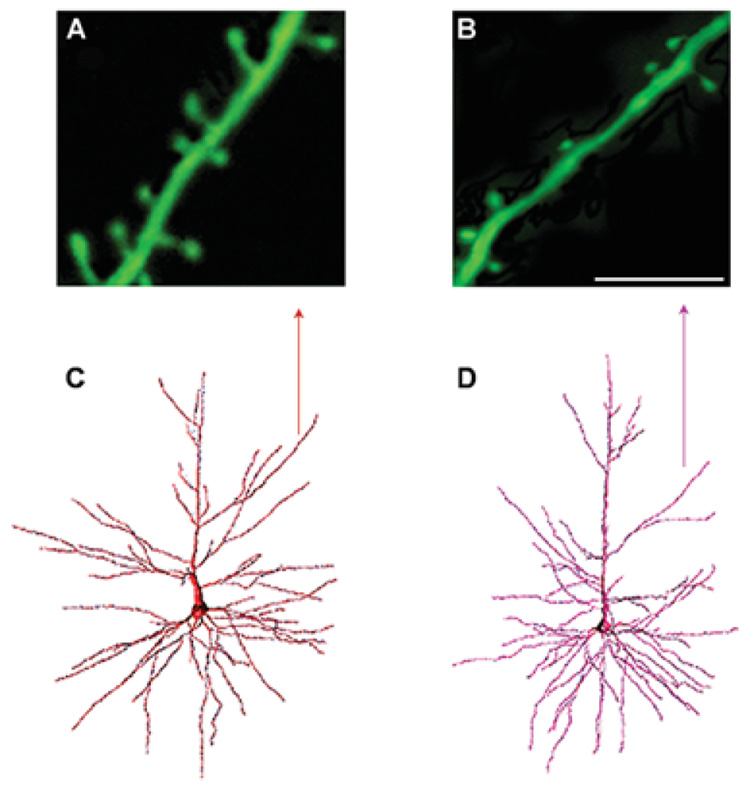
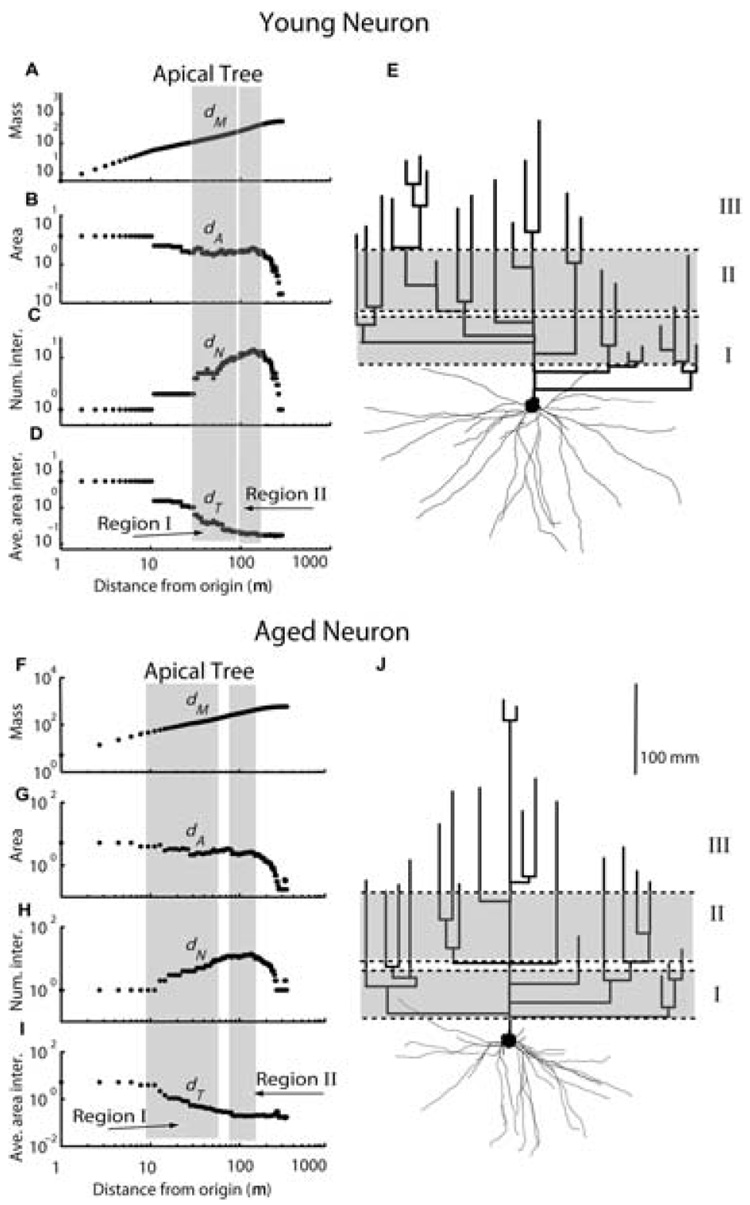
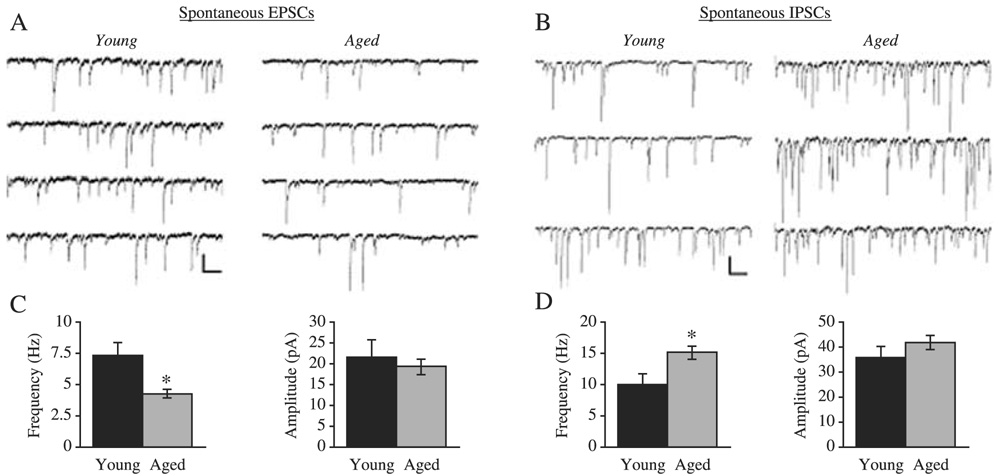
Structural changes of neurons in the brain during aging are complex and not well understood. Neurons have significant homeostatic control of essential brain functions, including synaptic excitability, gene expression, and metabolic regulation. Any deviations from the norm can have severe consequences as seen in aging and injury. In this review, we present some of the structural adaptations that neurons undergo throughout normal and pathological aging and discuss their effects on electrophysiological properties and cognition. During aging, it is evident that neurons undergo morphological changes such as a reduction in the complexity of dendrite arborization and dendritic length. Spine numbers are also decreased, and because spines are the major sites for excitatory synapses, changes in their numbers could reflect a change in synaptic densities. This idea has been supported by studies that demonstrate a decrease in the overall frequency of spontaneous glutamate receptor-mediated excitatory responses, as well as a decrease in the levels of alpha-amino-3-hydroxy-5-methylisoxazole-4-propionic acid and N-methyl-d-aspartate receptor expression. Other properties such as gamma-aminobutyric acid A receptor-mediated inhibitory responses and action potential firing rates are both significantly increased with age. These findings suggest that age-related neuronal dysfunction, which must underlie observed decline in cognitive function, probably involves a host of other subtle changes within the cortex that could include alterations in receptors, loss of dendrites, and spines and myelin dystrophy, as well as the alterations in synaptic transmission. Together these multiple alterations in the brain may constitute the substrate for age-related loss of cognitive function.
大脑中神经元在衰老过程中的结构变化复杂且尚未被充分理解。神经元对大脑的基本功能具有重要的稳态控制作用,包括突触兴奋性、基因表达和代谢调节。任何偏离正常状态的情况都可能产生严重后果,如在衰老和损伤中所见。在本综述中,我们介绍了神经元在正常衰老和病理性衰老过程中所经历的一些结构适应性变化,并讨论了它们对电生理特性和认知的影响。在衰老过程中,很明显神经元会发生形态学变化,如树突分支复杂性和树突长度的减少。棘突数量也会减少,由于棘突是兴奋性突触的主要部位,其数量的变化可能反映突触密度的改变。这一观点得到了一些研究的支持,这些研究表明自发谷氨酸受体介导的兴奋性反应的总体频率降低,以及α-氨基-3-羟基-5-甲基异恶唑-4-丙酸和N-甲基-D-天冬氨酸受体表达水平的降低。其他特性,如γ-氨基丁酸A受体介导的抑制性反应和动作电位发放率,都会随着年龄的增长而显著增加。这些发现表明,与年龄相关的神经元功能障碍必然是观察到的认知功能下降的基础,可能涉及皮质内许多其他细微变化,包括受体改变、树突和棘突丧失以及髓鞘营养不良,以及突触传递的改变。大脑中这些多种变化共同可能构成与年龄相关的认知功能丧失的基础。