Yamada Takumi
Division of Cardiovascular Diseases, University of Alabama at Birmingham, Birmingham, AL 35294-0019, USA.
Indian Pacing Electrophysiol J. 2007 Apr 1;7(2):97-109.
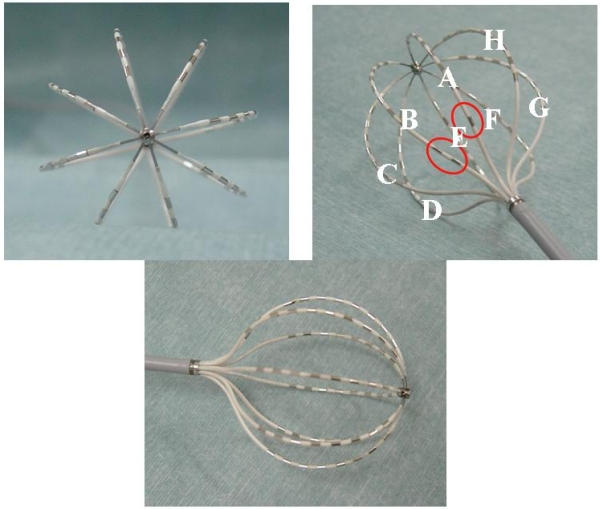
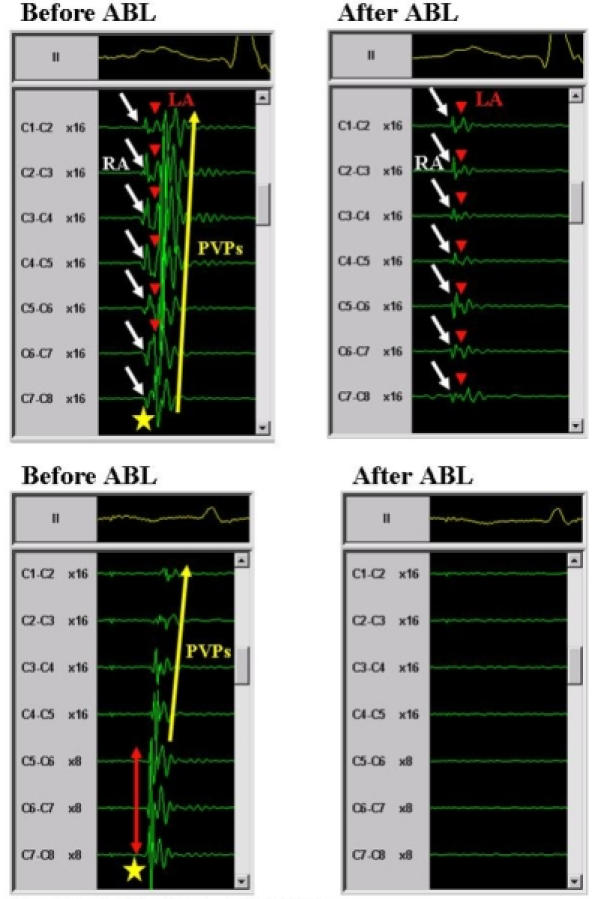
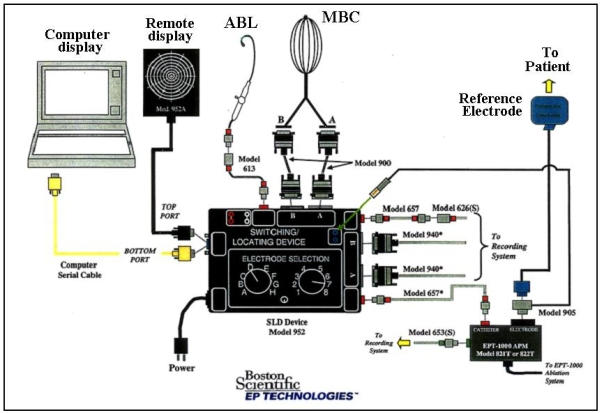
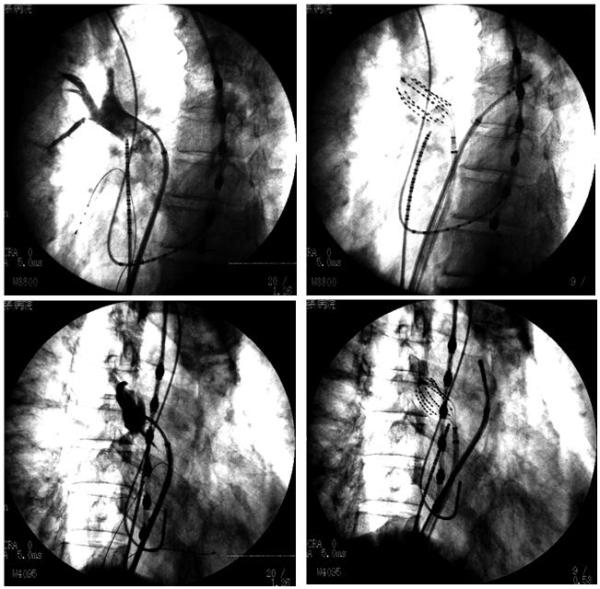
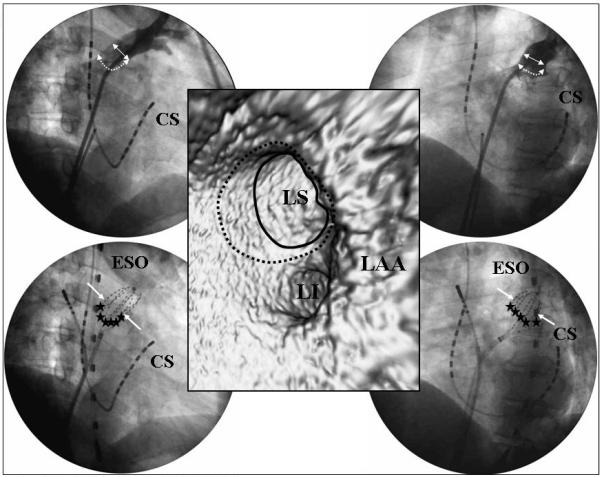
Pulmonary vein (PV) isolation (PVI) techniques have evolved as a curative treatment of atrial fibrillation (AF) since PVI guided by circumferential mapping with a circular catheter was initially proposed. A multielectrode basket catheter (MBC) is also useful for PVI because of some advantages; (1) an MBC provides some information about the PV anatomy on the fluoroscopic image, (2) an MBC can utilize the non-fluoroscopic navigation system, (3) an MBC enables the direct three-dimensional mapping around the PV ostium and antrum, (4) the distal electrodes of the MBC can be used to monitor some activation changes within the PV in real time and thereby indicate the effects of ablation at the ostium and antrum as radiofrequency lesions are created. PVI with an MBC is an effective and safe procedure to cure AF by integrating the PV anatomy and electrophysiology in combination with a non-fluoroscopic three-dimensional navigation system for the ablation catheter.
自从最初提出使用环形导管进行圆周标测指导下的肺静脉(PV)隔离(PVI)以来,PVI技术已发展成为一种治疗心房颤动(AF)的治愈性方法。多电极篮状导管(MBC)由于具有一些优势,也可用于PVI;(1)MBC在荧光透视图像上提供有关PV解剖结构的一些信息,(2)MBC可利用非荧光透视导航系统,(3)MBC能够在PV口和窦周围进行直接三维标测,(4)MBC的远端电极可用于实时监测PV内的一些激动变化,从而在创建射频损伤时指示在PV口和窦处的消融效果。通过将PV解剖结构和电生理学与用于消融导管的非荧光透视三维导航系统相结合,使用MBC进行PVI是一种有效且安全的治愈AF的方法。