Sasai Ken, Akagi Tsuyoshi, Aoyanagi Eiko, Tabu Kouichi, Kaneko Sadao, Tanaka Shinya
Laboratory of Molecular and Cellular Pathology, Hokkaido University Graduate School of Medicine, Kita-ku, Sapporo, Japan.
Mol Cancer. 2007 Jun 5;6:36. doi: 10.1186/1476-4598-6-36.
A novel alkylating agent, temozolomide, has proven efficacious in the treatment of malignant gliomas. However, expression of O6-methylguanine-DNA methyltransferase (MGMT) renders glioma cells resistant to the treatment, indicating that identification of mechanisms underlying the gene regulation of MGMT is highly required. Although glioma-derived cell lines have been widely employed to understand such mechanisms, those models harbor numerous unidentified genetic lesions specific for individual cell lines, which complicates the study of specific molecules and pathways.
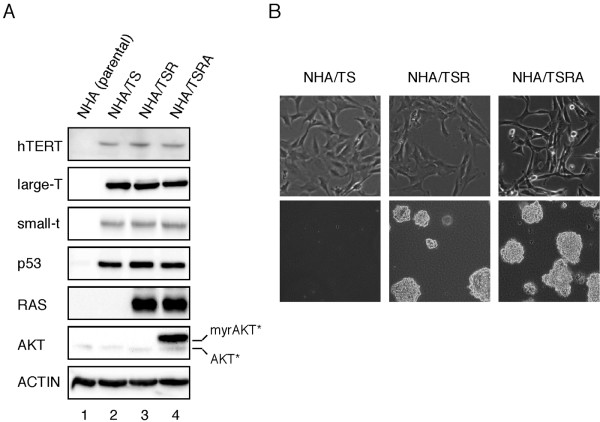
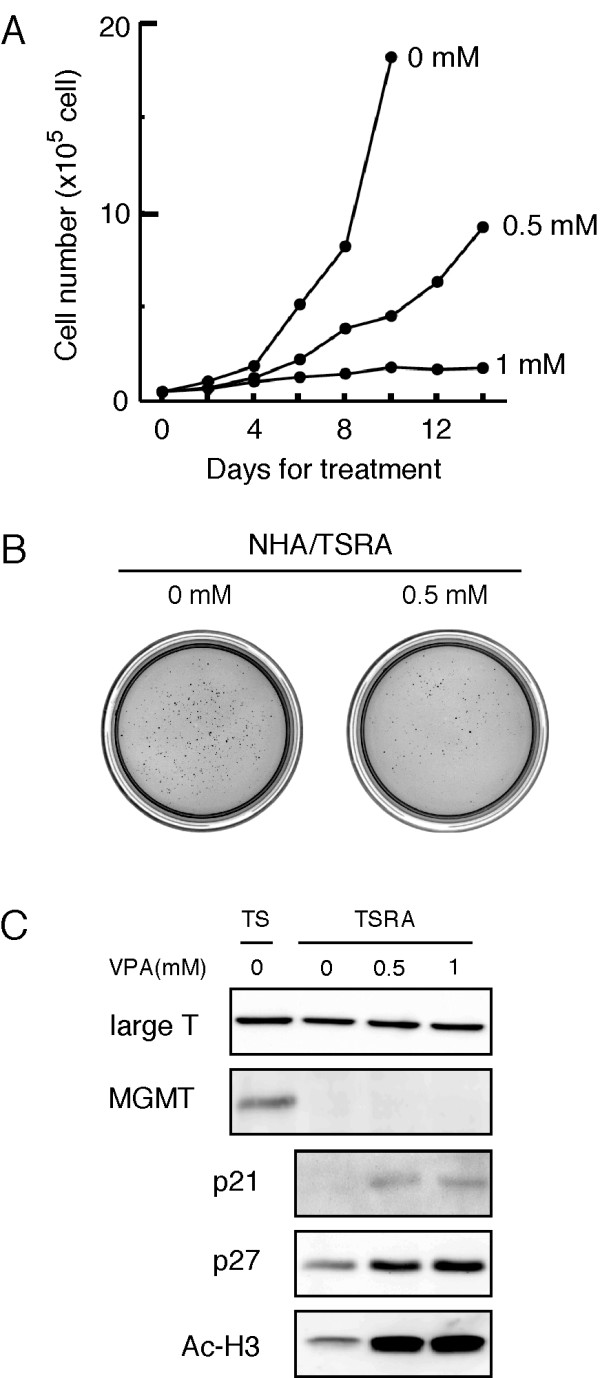
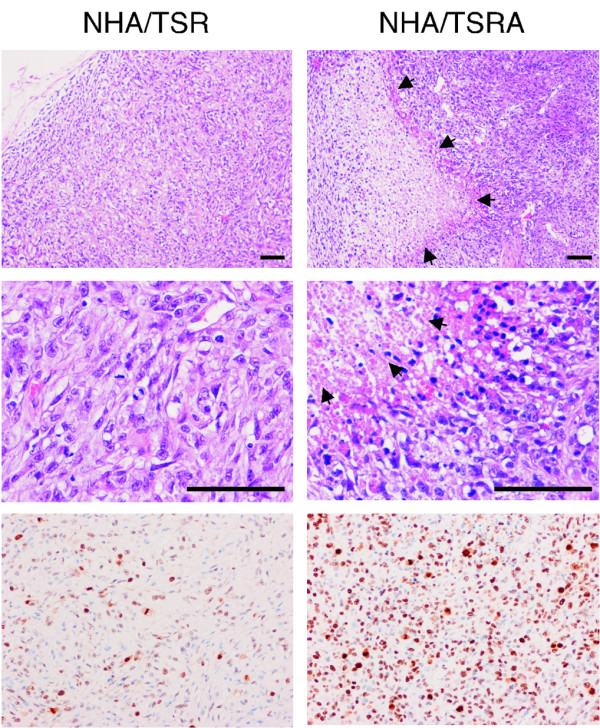
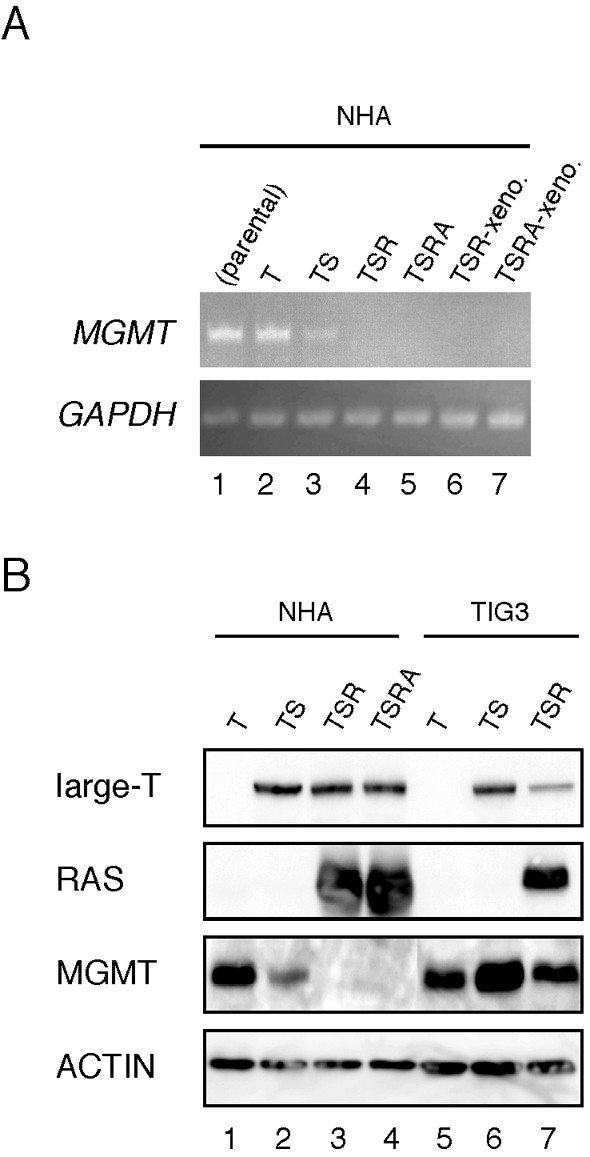
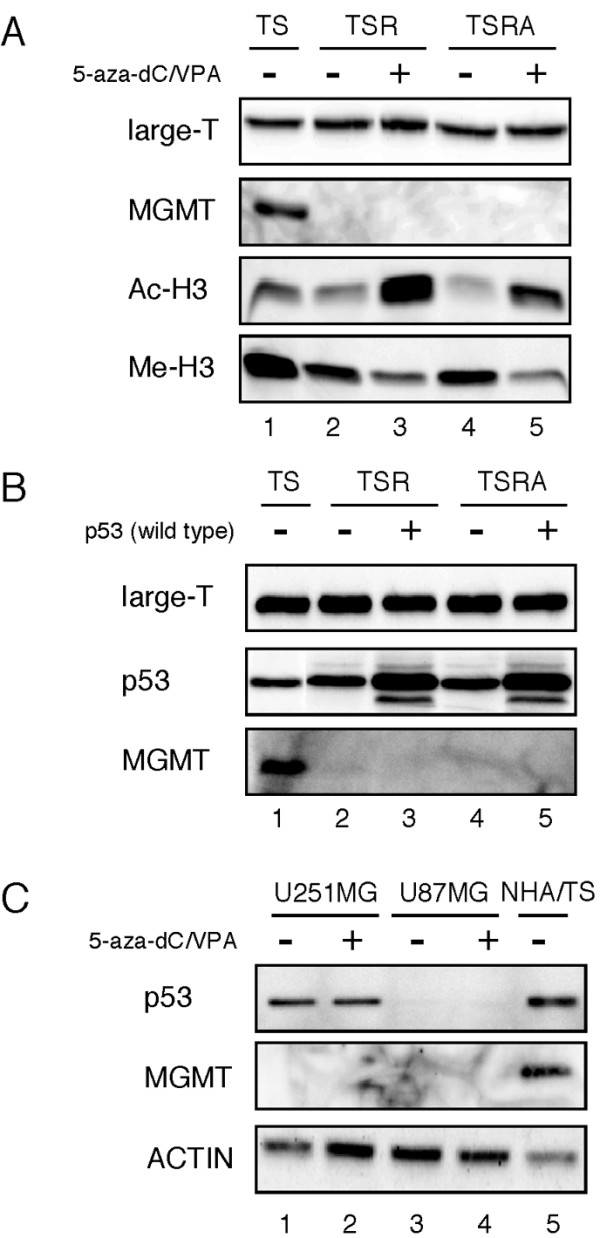
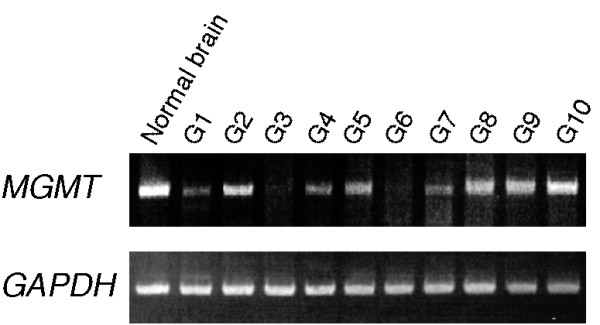
We established glioma models by transforming normal human astrocyte cells via retroviral-mediated gene transfer of defined genetic elements and found that MGMT was downregulated in the transformed cells. Interestingly, inhibitors of DNA methylation and histone deacetylation failed to increase MGMT protein levels in the transformed astrocyte cells as well as cultured glioblastoma cell lines, whereas the treatment partially restored mRNA levels. These observations suggest that downregulation of MGMT may depend largely on cellular factors other than promoter-hypermethylation of MGMT genes, which is being used in the clinic to nominate patients for temozolomide treatment. Furthermore, we discovered that Valproic acid, one of histone deacetylase inhibitors, suppressed growth of the transformed astrocyte cells without increasing MGMT protein, suggesting that such epigenetic compounds may be used to some types of gliomas in combination with alkylating agents.
Normal human astrocyte cells allow us to generate experimental models of human gliomas by direct manipulation with defined genetic elements, in contrast to tumor-derived cell lines which harbor numerous unknown genetic abnormalities. Thus, we propose that the study using the transformed astrocyte cells would be useful for identifying the mechanisms underlying MGMT regulation in tumor and for the development of rational drug combination in glioma therapies.
一种新型烷化剂替莫唑胺已被证明对恶性胶质瘤的治疗有效。然而,O6-甲基鸟嘌呤-DNA甲基转移酶(MGMT)的表达使胶质瘤细胞对该治疗产生抗性,这表明迫切需要确定MGMT基因调控的潜在机制。尽管胶质瘤来源的细胞系已被广泛用于理解此类机制,但这些模型存在许多特定于单个细胞系的未识别遗传损伤,这使得对特定分子和途径的研究变得复杂。
我们通过逆转录病毒介导的特定遗传元件基因转移转化正常人星形胶质细胞建立了胶质瘤模型,发现转化细胞中MGMT表达下调。有趣的是,DNA甲基化和组蛋白去乙酰化抑制剂未能增加转化星形胶质细胞以及培养的胶质母细胞瘤细胞系中的MGMT蛋白水平,而该处理部分恢复了mRNA水平。这些观察结果表明,MGMT的下调可能很大程度上取决于MGMT基因启动子高甲基化以外的细胞因子,而目前临床上正是利用该启动子高甲基化来筛选适合替莫唑胺治疗的患者。此外,我们发现组蛋白去乙酰化酶抑制剂之一丙戊酸可抑制转化星形胶质细胞的生长,而不增加MGMT蛋白,这表明此类表观遗传化合物可与烷化剂联合用于某些类型的胶质瘤。
与含有众多未知遗传异常的肿瘤来源细胞系相比,正常人星形胶质细胞使我们能够通过直接操纵特定遗传元件来生成人类胶质瘤的实验模型。因此,我们建议使用转化星形胶质细胞进行的研究将有助于确定肿瘤中MGMT调控的潜在机制,并有助于开发合理的胶质瘤联合药物治疗方案。