Fichino Silvia Nápole, Lewis Doris Ruthy, Fávero Mariana Lopes
PUC-SP.
Braz J Otorhinolaryngol. 2007 Mar-Apr;73(2):251-6. doi: 10.1016/s1808-8694(15)31074-0.
The differential diagnosis of hearing loss with air and bone Auditory Brainstem Response in small children has not been enough studied in Brazil.
To compare air and bone Auditory Brainstem Response results in children under 2 months of age with normal hearing.
clinical with transversal cohort.
12 children who passed the hearing screening were evaluated using air and bone Auditory Brainstem Response. No contralateral masking was used in the bone conduction test. The responses were compared and analyzed by the McNemar test and repetitive measurements of the variance test.
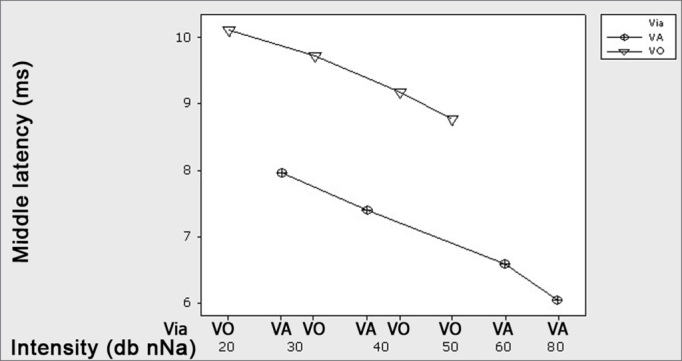
There were no statistic differences between air and bone conduction Auditory Brainstem Response thresholds (p>0.05). The bone conduction latency for wave V was statistically higher than air conduction latency (p=0.000).
There was agreement on the results recorded for air and bone conduction Auditory Brainstem Response for threshold intensities; latency for bone conduction wave V was statistically higher than the air conduction latency.
在巴西,针对幼儿气导和骨导听觉脑干反应听力损失的鉴别诊断研究不足。
比较2个月以下听力正常儿童的气导和骨导听觉脑干反应结果。
横向队列临床研究。
对12名通过听力筛查的儿童进行气导和骨导听觉脑干反应评估。骨传导测试未使用对侧掩蔽。通过McNemar检验和方差重复测量检验对反应进行比较和分析。
气导和骨导听觉脑干反应阈值之间无统计学差异(p>0.05)。V波的骨传导潜伏期在统计学上高于气导潜伏期(p = 0.000)。
气导和骨导听觉脑干反应阈值强度的记录结果一致;骨传导V波潜伏期在统计学上高于气导潜伏期。