Rebersek Matej, Faurie Cécile, Kanduser Masa, Corović Selma, Teissié Justin, Rols Marie-Pierre, Miklavcic Damijan
University of Ljubljana, Faculty of Electrical Engineering, TrZaska 25, Ljubljana, Slovenia.
Biomed Eng Online. 2007 Jul 2;6:25. doi: 10.1186/1475-925X-6-25.
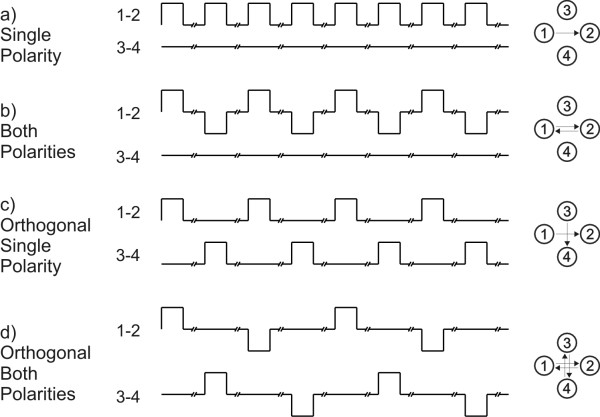
Gene electrotransfer is a non-viral method used to transfer genes into living cells by means of high-voltage electric pulses. An exposure of a cell to an adequate amplitude and duration of electric pulses leads to a temporary increase of cell membrane permeability. This phenomenon, termed electroporation or electropermeabilization, allows various otherwise non-permeant molecules, including DNA, to cross the membrane and enter the cell. The aim of our research was to develop and test a new system and protocol that would improve gene electrotransfer by automatic change of electric field direction between electrical pulses.
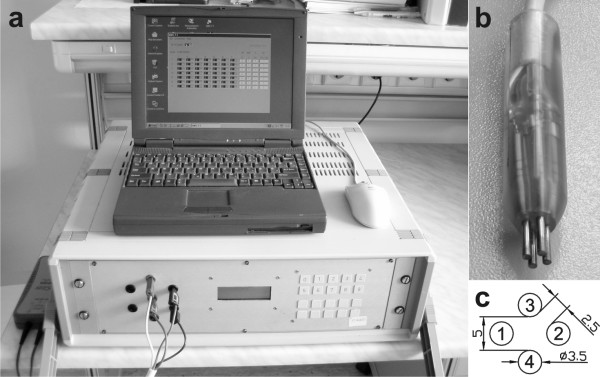
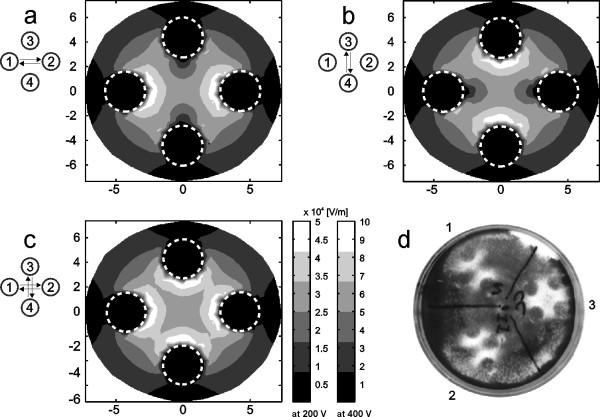
For this aim we used electroporator (EP-GMS 7.1) and developed new electrodes. We used finite-elements method to calculate and evaluate the electric field homogeneity between these new electrodes. Quick practical test was performed on confluent cell culture, to confirm and demonstrate electric field distribution. Then we experimentally evaluated the effectiveness of the new system and protocols on CHO cells. Gene transfection and cell survival were evaluated for different electric field protocols.
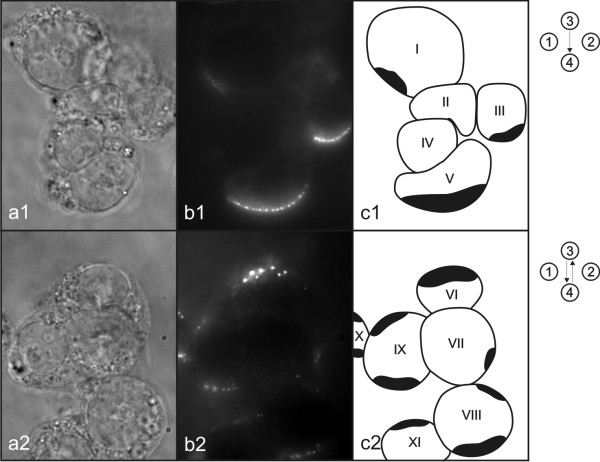
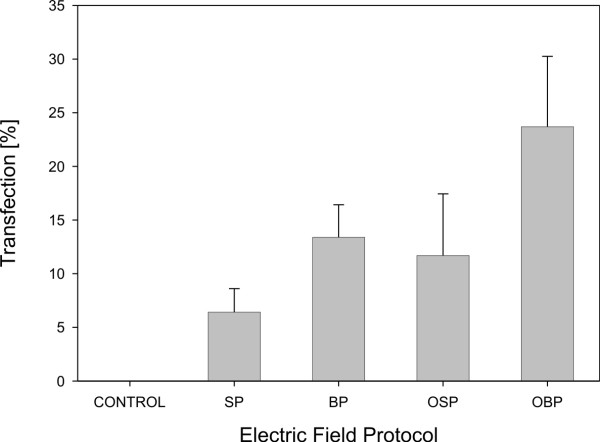
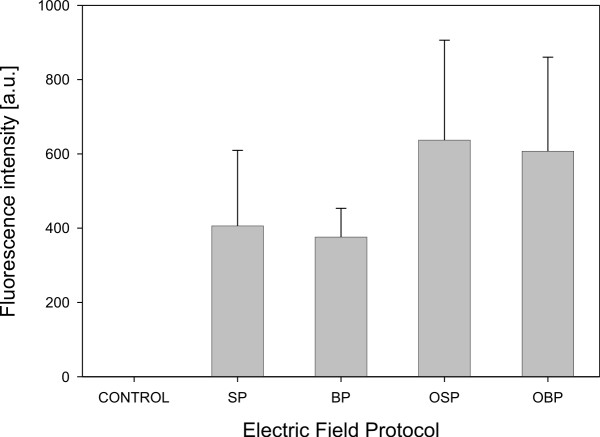
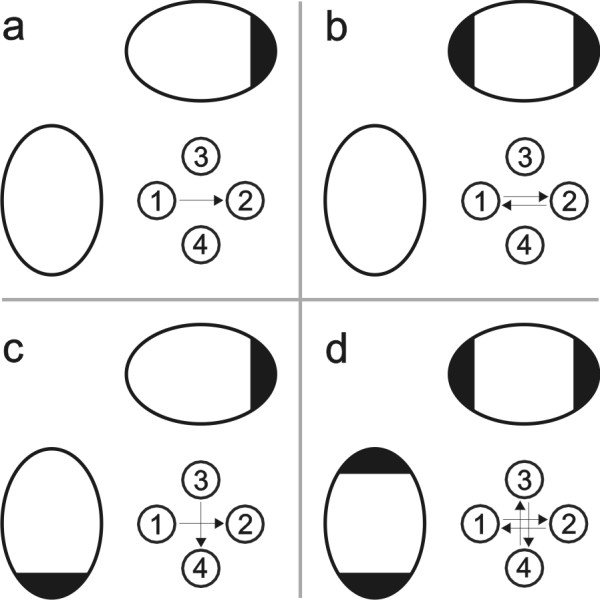
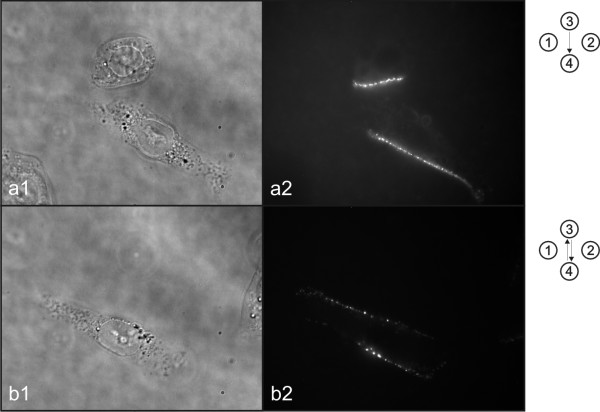
The results of in-vitro gene electrotransfer experiments show that the fraction of transfected cells increases by changing the electric field direction between electrical pulses. The fluorescence intensity of transfected cells and cell survival does not depend on electric field protocol. Moreover, a new effect a shading effect was observed during our research. Namely, shading effect is observed during gene electrotransfer when cells are in clusters, where only cells facing negative electro-potential in clusters become transfected and other ones which are hidden behind these cells do not become transfected.
On the basis of our results we can conclude that the new system can be used in in-vitro gene electrotransfer to improve cell transfection by changing electric field direction between electrical pulses, without affecting cell survival.
基因电穿孔是一种非病毒方法,通过高压电脉冲将基因导入活细胞。细胞暴露于适当幅度和持续时间的电脉冲会导致细胞膜通透性暂时增加。这种现象称为电穿孔或电通透化,使包括DNA在内的各种原本无法透过的分子能够穿过细胞膜并进入细胞。我们研究的目的是开发和测试一种新的系统和方案,通过在电脉冲之间自动改变电场方向来改善基因电穿孔。
为此,我们使用了电穿孔仪(EP-GMS 7.1)并开发了新的电极。我们使用有限元方法来计算和评估这些新电极之间的电场均匀性。在汇合细胞培养物上进行了快速实际测试,以确认和展示电场分布。然后我们通过实验评估了新系统和方案对CHO细胞的有效性。针对不同的电场方案评估了基因转染和细胞存活率。
体外基因电穿孔实验结果表明,通过改变电脉冲之间的电场方向,转染细胞的比例会增加。转染细胞的荧光强度和细胞存活率不依赖于电场方案。此外,在我们的研究中观察到了一种新的效应——阴影效应。也就是说,在基因电穿孔过程中,当细胞成簇时会观察到阴影效应,此时只有簇中面对负电位的细胞会被转染,而隐藏在这些细胞后面的其他细胞则不会被转染。
根据我们的结果可以得出结论,新系统可用于体外基因电穿孔,通过改变电脉冲之间的电场方向来提高细胞转染率,而不影响细胞存活。