Lenk Guy M, Tromp Gerard, Weinsheimer Shantel, Gatalica Zoran, Berguer Ramon, Kuivaniemi Helena
Center for Molecular Medicine and Genetics, Wayne State University School of Medicine, Detroit, MI, USA.
BMC Genomics. 2007 Jul 16;8:237. doi: 10.1186/1471-2164-8-237.
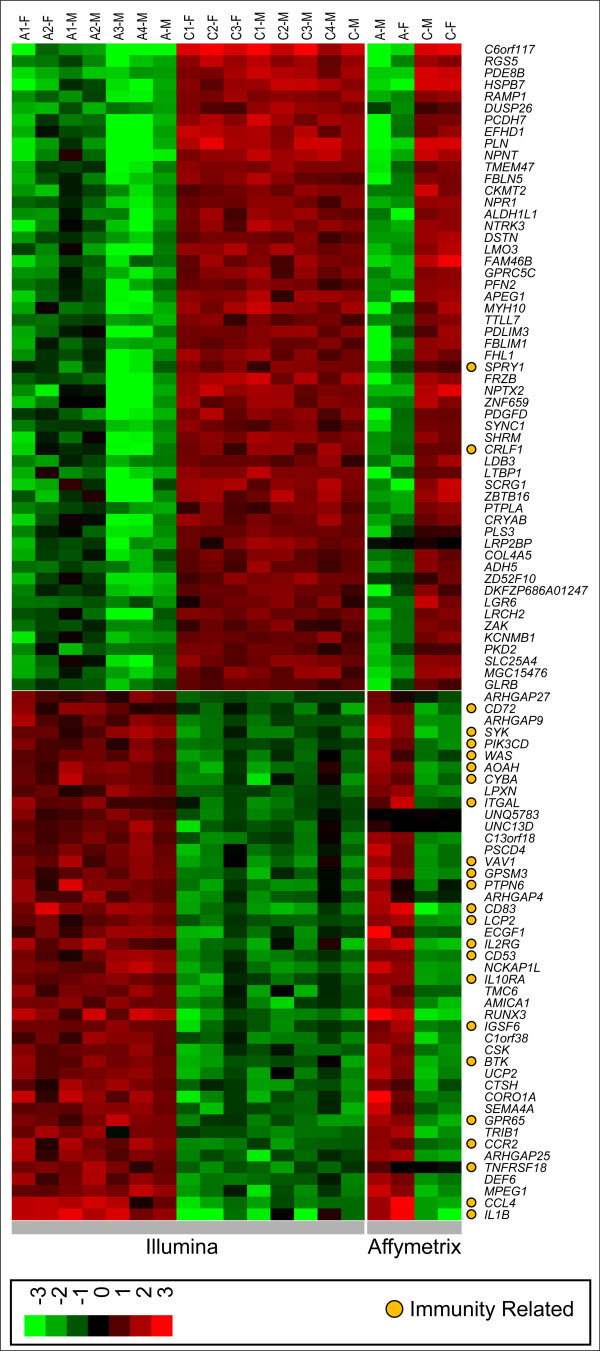
Abdominal aortic aneurysms are a common disorder with an incompletely understood etiology. We used Illumina and Affymetrix microarray platforms to generate global gene expression profiles for both aneurysmal (AAA) and non-aneurysmal abdominal aorta, and identified genes that were significantly differentially expressed between cases and controls.
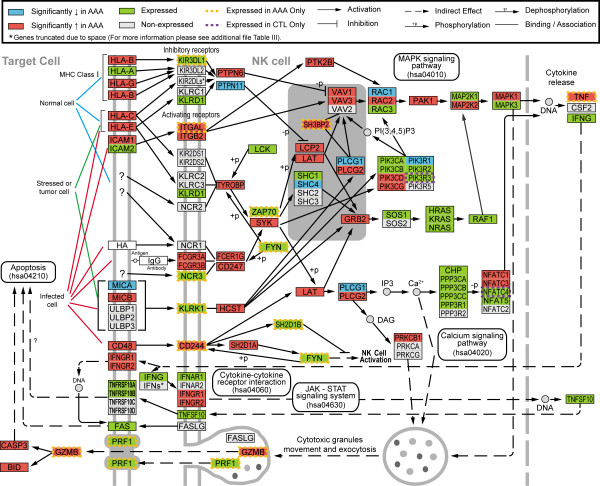
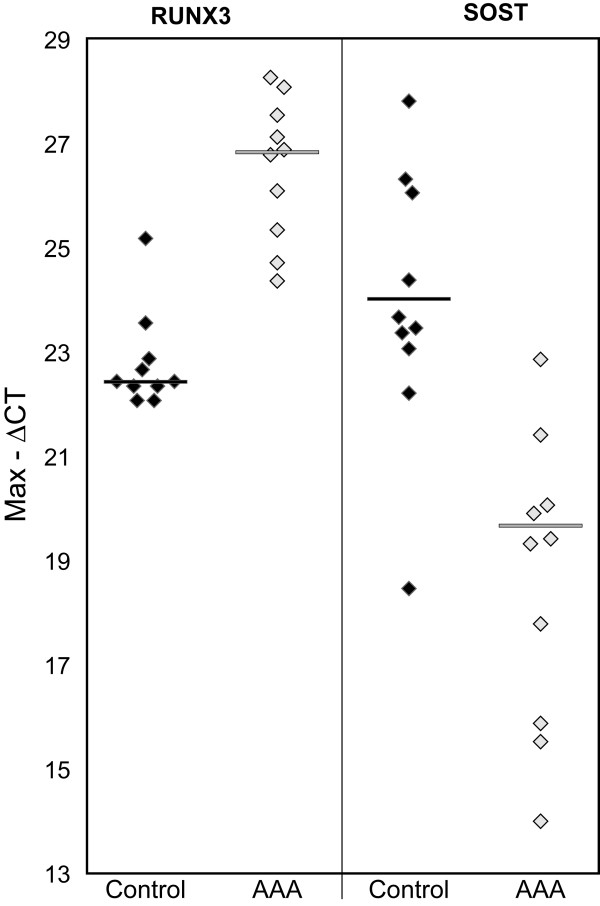
Affymetrix and Illumina arrays included 18,057 genes in common; 11,542 (64%) of these genes were considered to be expressed in either aneurysmal or normal abdominal aorta. There were 3,274 differentially expressed genes with a false discovery rate (FDR) </= 0.05. Many of these genes were not previously known to be involved in AAA, including SOST and RUNX3, which were confirmed using Q-RT-PCR (Pearson correlation coefficient for microarray and Q-RT-PCR data = 0.89; p-values for differences in expression between AAA and controls for SOST: 4.87 x 10⁻⁴ and for RUNX3: 4.33 x 10⁻⁵). Analysis of biological pathways, including Gene Ontology (GO) and Kyoto Encyclopedia of Genes and Genomes (KEGG), indicated extreme overrepresentation of immune related categories. The enriched categories included the GO category Immune Response (GO:0006955; FDR = 2.1 x 10⁻¹⁴), and the KEGG pathways natural killer cell mediated cytotoxicity (hsa04650; FDR = 5.9 x 10⁻⁶) and leukocyte transendothelial migration (hsa04670; FDR = 1.1 x 10⁻⁵).
Previous studies have provided evidence for the involvement of the immune system in AAA. The current expression analysis extends these findings by demonstrating broad coordinate gene expression in immunological pathways. A large number of genes involved in immune function were differentially expressed in AAA, and the pathway analysis gave these results a biological context. The data provide valuable insight for future studies to dissect the pathogenesis of human AAA. These pathways might also be used as targets for the development of therapeutic agents for AAA.
腹主动脉瘤是一种常见疾病,其病因尚未完全明确。我们使用Illumina和Affymetrix微阵列平台生成了动脉瘤性(AAA)和非动脉瘤性腹主动脉的全基因组表达谱,并鉴定了病例组和对照组之间显著差异表达的基因。
Affymetrix和Illumina阵列共有18,057个共同基因;其中11,542个(64%)基因被认为在动脉瘤性或正常腹主动脉中表达。有3,274个差异表达基因,错误发现率(FDR)≤0.05。这些基因中许多以前并不认为与腹主动脉瘤有关,包括SOST和RUNX3,通过定量逆转录聚合酶链反应(Q-RT-PCR)得到了证实(微阵列数据与Q-RT-PCR数据的皮尔逊相关系数 = 0.89;AAA组与对照组之间SOST表达差异的p值:4.87×10⁻⁴,RUNX3:4.33×10⁻⁵)。对包括基因本体论(GO)和京都基因与基因组百科全书(KEGG)在内的生物途径分析表明,免疫相关类别极度富集。富集的类别包括GO类别免疫应答(GO:0006955;FDR = 2.1×10⁻¹⁴),以及KEGG途径自然杀伤细胞介导的细胞毒性(hsa04650;FDR = 5.9×10⁻⁶)和白细胞跨内皮迁移(hsa04670;FDR = 1.1×10⁻⁵)。
先前的研究已为免疫系统参与腹主动脉瘤提供了证据。当前的表达分析通过证明免疫途径中广泛的协同基因表达扩展了这些发现。大量参与免疫功能的基因在腹主动脉瘤中差异表达,途径分析为这些结果提供了生物学背景。这些数据为未来剖析人类腹主动脉瘤发病机制的研究提供了有价值的见解。这些途径也可能用作开发腹主动脉瘤治疗药物的靶点。