Cheung Louisa, Andersen Malin, Gustavsson Carolina, Odeberg Jacob, Fernández-Pérez Leandro, Norstedt Gunnar, Tollet-Egnell Petra
Department of Molecular Medicine, Karolinska Institutet, Karolinska Hospital, Stockholm, Sweden.
BMC Mol Biol. 2007 Jul 17;8:60. doi: 10.1186/1471-2199-8-60.
CD36 is a multiligand receptor involved in various metabolic pathways, including cellular uptake of long-chain fatty acids. Defect function or expression of CD36 can result in dyslipidemia or insulin resistance. We have previously shown that CD36 expression is female-predominant in rat liver. In the present study, hormonal and nutritional regulation of hepatic CD36 expression was examined in male and female rats. Since alternative transcription start sites have been described in murine and human Cd36, we investigated whether alternative CD36 transcripts are differentially regulated in rat liver during these conditions.
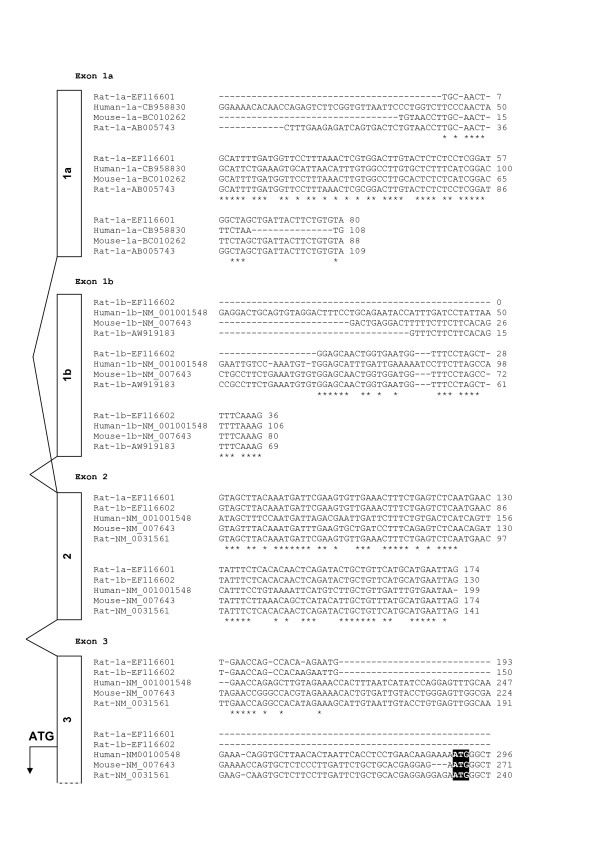
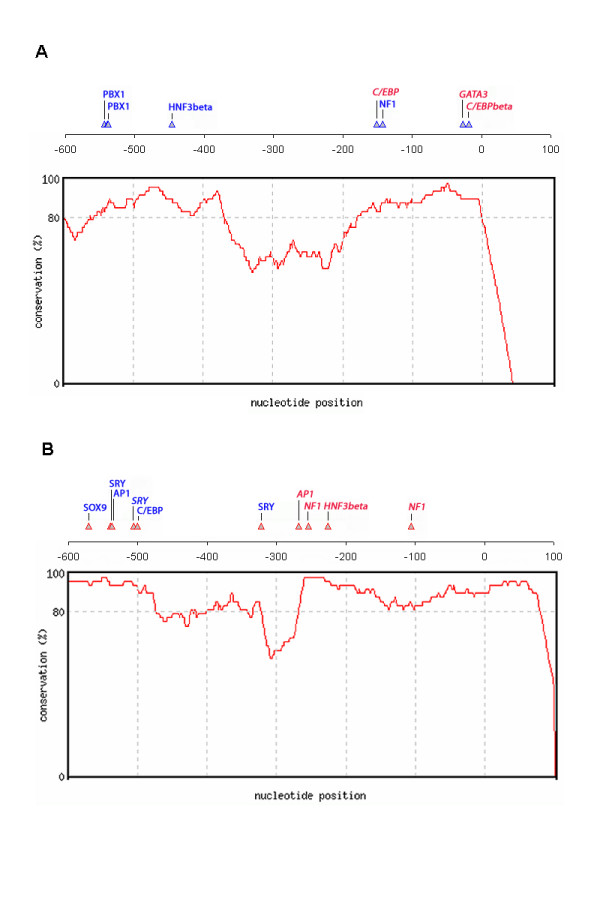
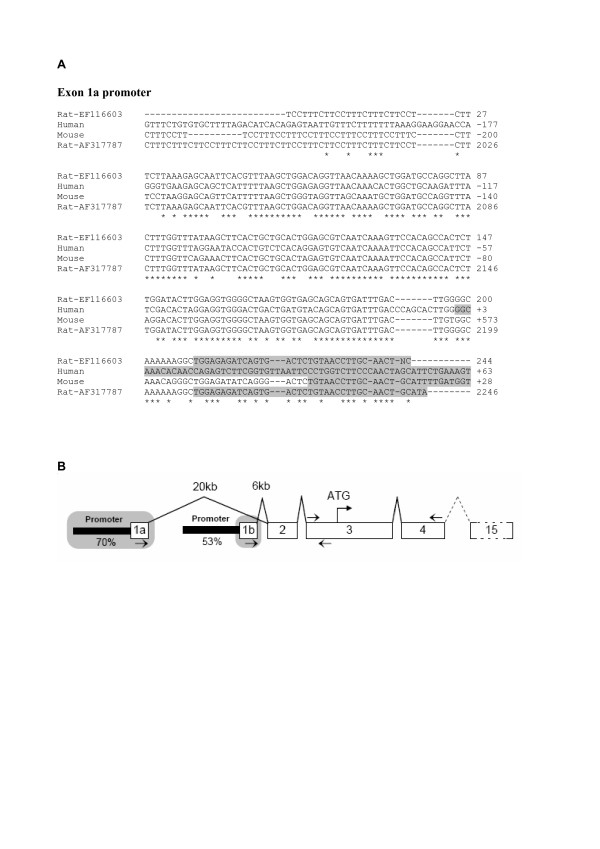
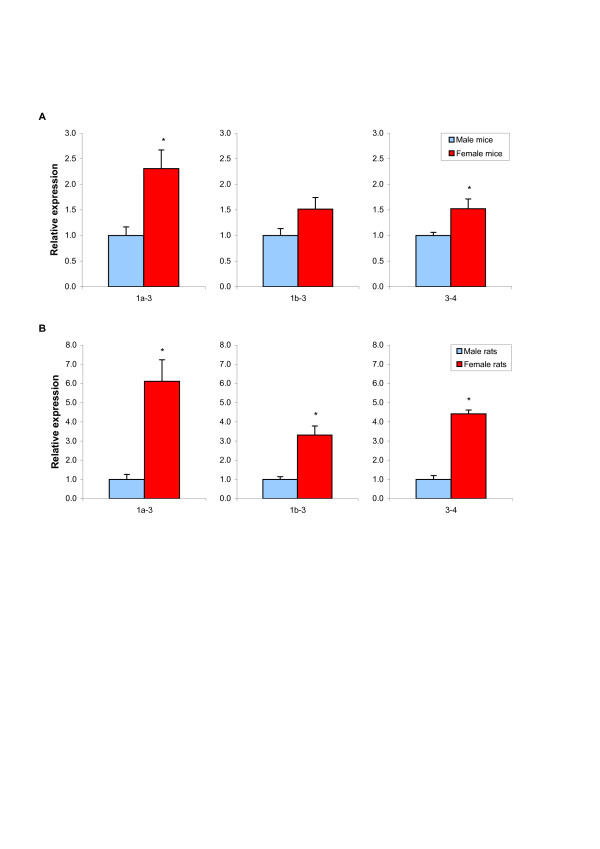
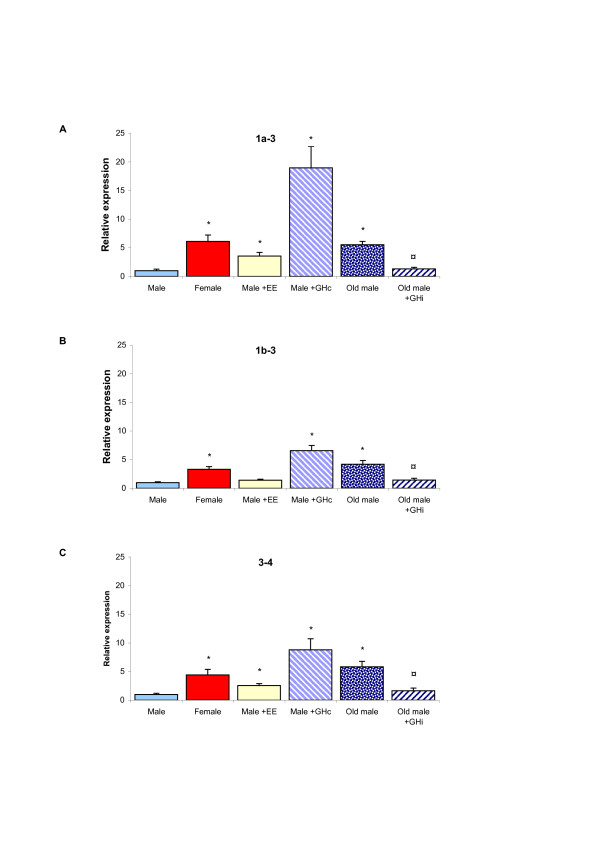
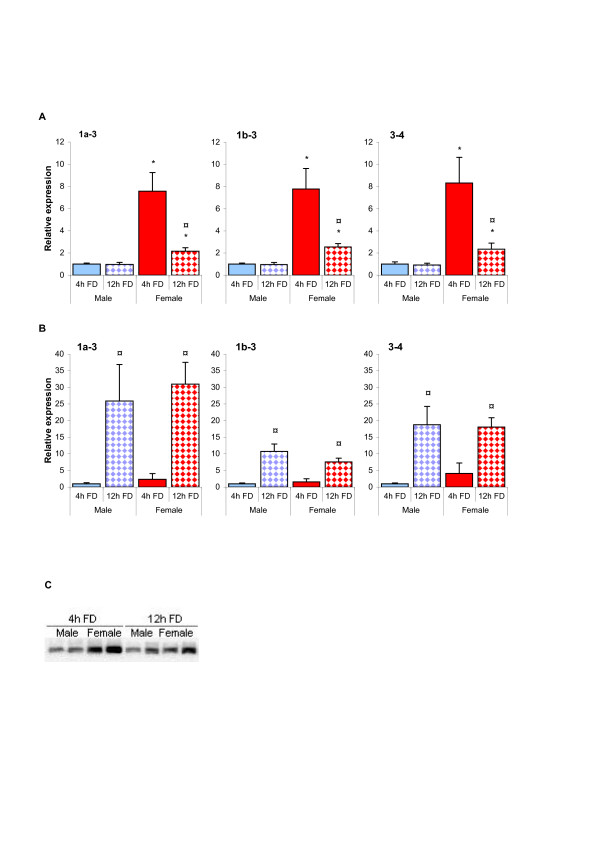
Sequence information of the rat Cd36 5'-UTR was extended, showing that the gene structure of Cd36 in rat is similar to that previously described in mouse with at least two alternative first exons. The rat Cd36 exon 1a promoter was sequenced and found to be highly similar to murine and human Cd36. We show that alternative first exon usage is involved in the female-predominant expression of CD36 in rat liver and during certain hormonal states that induce CD36 mRNA abundance. Estrogen treatment or continuous infusion of growth hormone (GH) in male rats induced CD36 expression preferentially through the exon 1a promoter. Old age was associated with increased CD36 expression in male rats, albeit without any preferential first exon usage. Intermittent GH treatment in old male rats reversed this effect. Mild starvation (12 hours without food) reduced CD36 expression in female liver, whereas its expression was increased in skeletal muscle.
The results obtained in this study confirm and extend our previous observation that GH is an important regulator of hepatic CD36, and depending on the mode of treatment (continuous or intermittent) the gene might be either induced or repressed. We suggest that the effects of continuous GH secretion in females (which is stimulatory) and intermittent GH secretion in males (which is inhibitory) explains the sex-different expression of this gene. Furthermore, a female-specific repression of hepatic CD36 in response to food deprivation was found, which was in contrast to a stimulatory effect in skeletal muscle. This demonstrates a tissue-specific regulation of Cd36.
CD36是一种多配体受体,参与多种代谢途径,包括细胞对长链脂肪酸的摄取。CD36功能或表达缺陷可导致血脂异常或胰岛素抵抗。我们之前已经表明,CD36在大鼠肝脏中的表达以雌性为主。在本研究中,我们检测了雄性和雌性大鼠肝脏中CD36表达的激素和营养调节。由于在小鼠和人类Cd36中已描述了可变转录起始位点,我们研究了在这些条件下大鼠肝脏中可变CD36转录本是否受到差异调节。
大鼠Cd36 5'-UTR的序列信息得到扩展,表明大鼠Cd36的基因结构与先前在小鼠中描述的相似,至少有两个可变的第一外显子。对大鼠Cd36外显子1a启动子进行测序,发现其与小鼠和人类Cd36高度相似。我们表明,可变第一外显子的使用参与了大鼠肝脏中CD36以雌性为主的表达,以及在某些诱导CD36 mRNA丰度的激素状态下的表达。对雄性大鼠进行雌激素处理或持续输注生长激素(GH)可优先通过外显子1a启动子诱导CD36表达。老年雄性大鼠CD36表达增加,尽管没有任何优先的第一外显子使用情况。对老年雄性大鼠进行间歇性GH处理可逆转这种效应。轻度饥饿(禁食12小时)会降低雌性肝脏中CD36的表达,但在骨骼肌中其表达会增加。
本研究获得的结果证实并扩展了我们之前的观察结果,即GH是肝脏CD36的重要调节因子,根据治疗方式(持续或间歇性),该基因可能被诱导或抑制。我们认为,雌性中持续GH分泌的作用(具有刺激作用)和雄性中间歇性GH分泌的作用(具有抑制作用)解释了该基因在性别上的不同表达。此外,发现雌性肝脏中CD36对食物剥夺有特异性抑制作用,这与骨骼肌中的刺激作用相反。这证明了Cd36的组织特异性调节。