Kim Eungseok, Ma Wen-Lung, Lin Din-Lii, Inui Shigeki, Chen Yuh-Ling, Chang Chawnshang
George Whipple Lab for Cancer Research, Department of Pathology, University of Rochester Medical Center, Rochester, NY 14642, USA.
Biochem Biophys Res Commun. 2007 Sep 21;361(2):323-8. doi: 10.1016/j.bbrc.2007.06.168. Epub 2007 Jul 10.
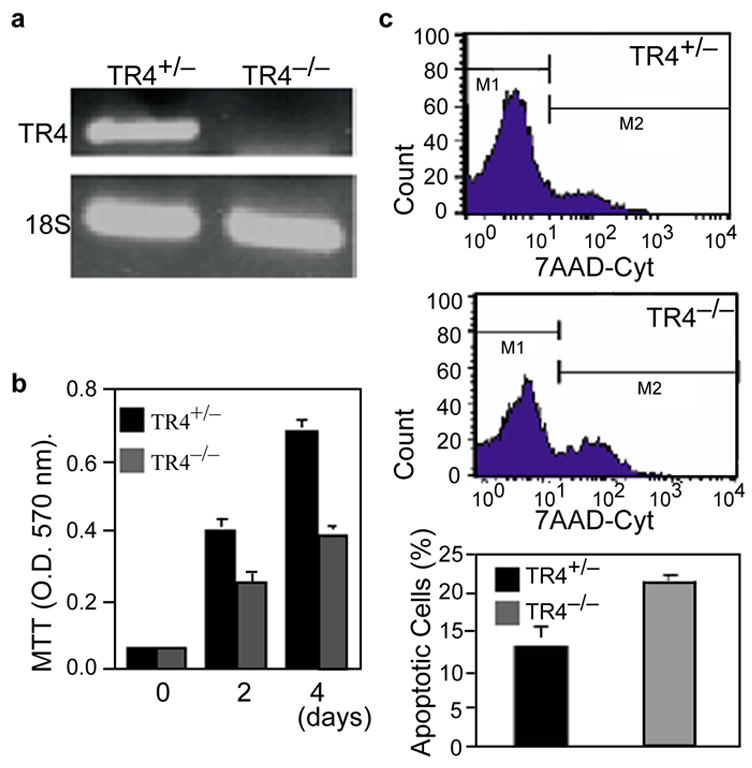
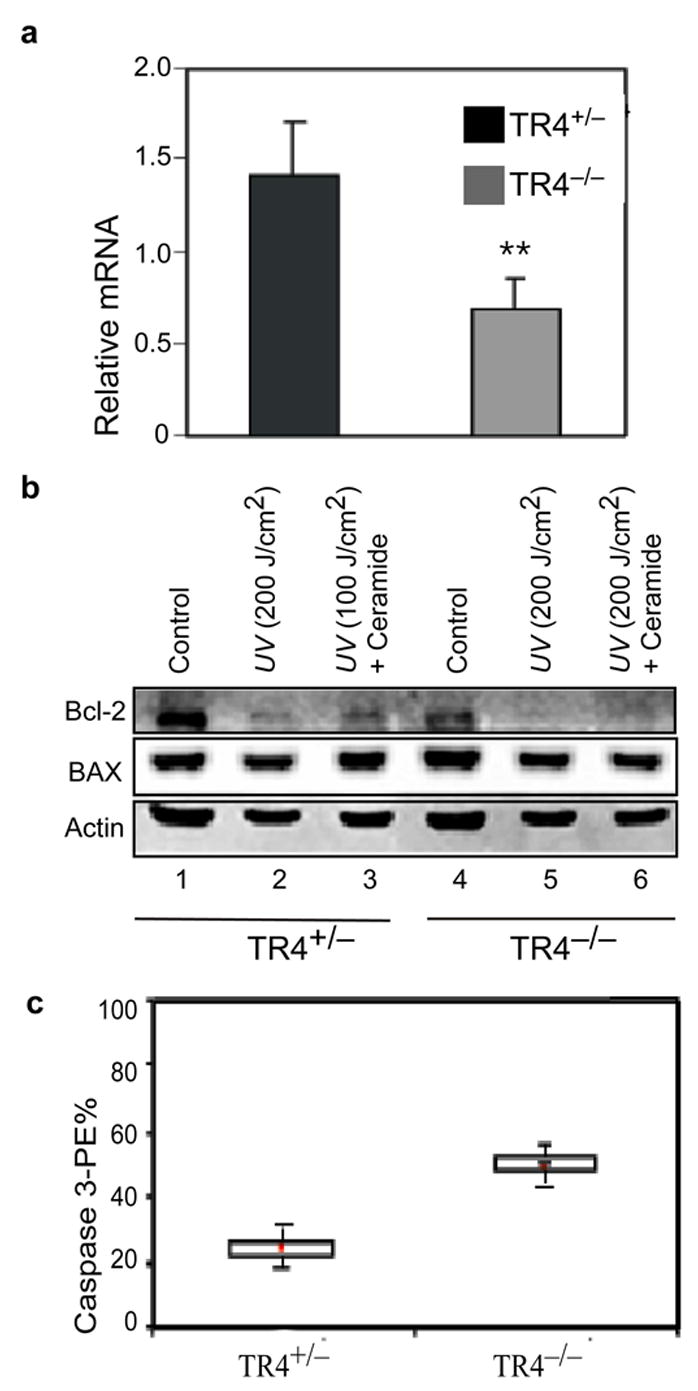
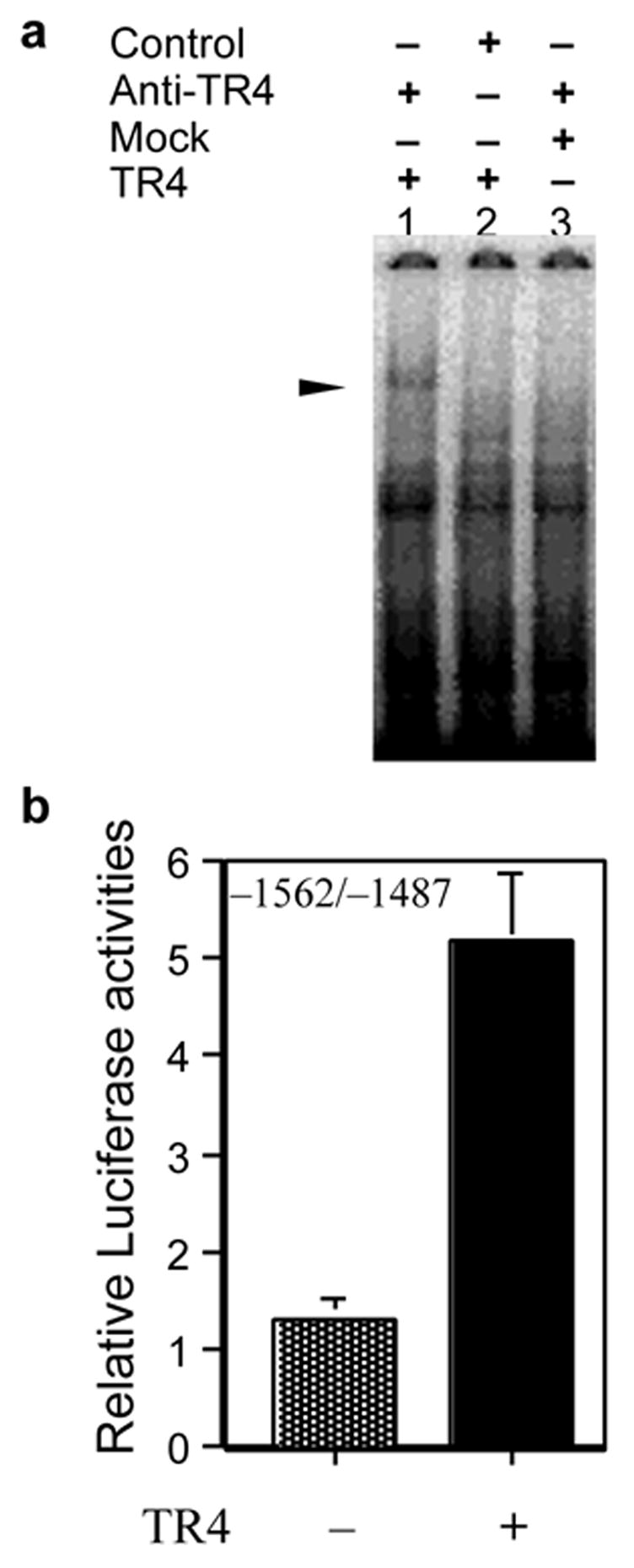
While Bcl-2 plays an important role in cell apoptosis, its relationship to the orphan nuclear receptors remains unclear. Here we report that mouse embryonic fibroblast (MEF) cells prepared from TR4-deficient (TR4(-/-)) mice are more susceptible to UV-irradiation mediated apoptosis compared to TR4-Wildtype (TR4(+/+)) littermates. Substantial increasing TR4(-/-) MEF apoptosis to UV-irradiation was correlated to the down-regulation of Bcl-2 RNA and protein expression and collaterally increased caspase-3 activity. Furthermore, this TR4-induced Bcl-2 gene expression can be suppressed by co-transfection with TR4 coregulators, such as androgen receptor (AR) and receptor-interacting protein 140 (RIP140) in a dose-dependent manner. Together, our results demonstrate that TR4 might function as an apoptosis modulator through induction of Bcl-2 gene expression.
虽然Bcl-2在细胞凋亡中起重要作用,但其与孤儿核受体的关系仍不清楚。在此我们报告,与TR4野生型(TR4(+/+))同窝小鼠相比,从TR4缺陷(TR4(-/-))小鼠制备的小鼠胚胎成纤维细胞(MEF)对紫外线辐射介导的凋亡更敏感。TR4(-/-) MEF对紫外线辐射的凋亡显著增加与Bcl-2 RNA和蛋白质表达的下调相关,并伴随半胱天冬酶-3活性增加。此外,这种TR4诱导的Bcl-2基因表达可通过与TR4共调节因子(如雄激素受体(AR)和受体相互作用蛋白140(RIP140))共转染以剂量依赖性方式被抑制。总之,我们的结果表明TR4可能通过诱导Bcl-2基因表达作为一种凋亡调节因子发挥作用。